Amazon is in talks to hand roughly \$8 billion of Nvidia's most advanced AI chips to outside investors — and then rent them back. According to a Financial Times report citing people familiar with the matter, the company would move thousands of Grace Blackwell accelerators it has installed in United States data centers into a special-purpose vehicle (SPV), a standalone legal entity created to hold specific assets and raise money against them.
The mechanism is a sale-leaseback dressed as an offload. The SPV would issue debt to outside investors and, per the report, offer an equity stake of up to 10%, meaning Amazon would hold no ownership in the entity at all. Amazon would then sign a lease to keep using every chip. The company declined to comment, and the talks are described as ongoing and subject to change, so nothing here appears in a filing yet.
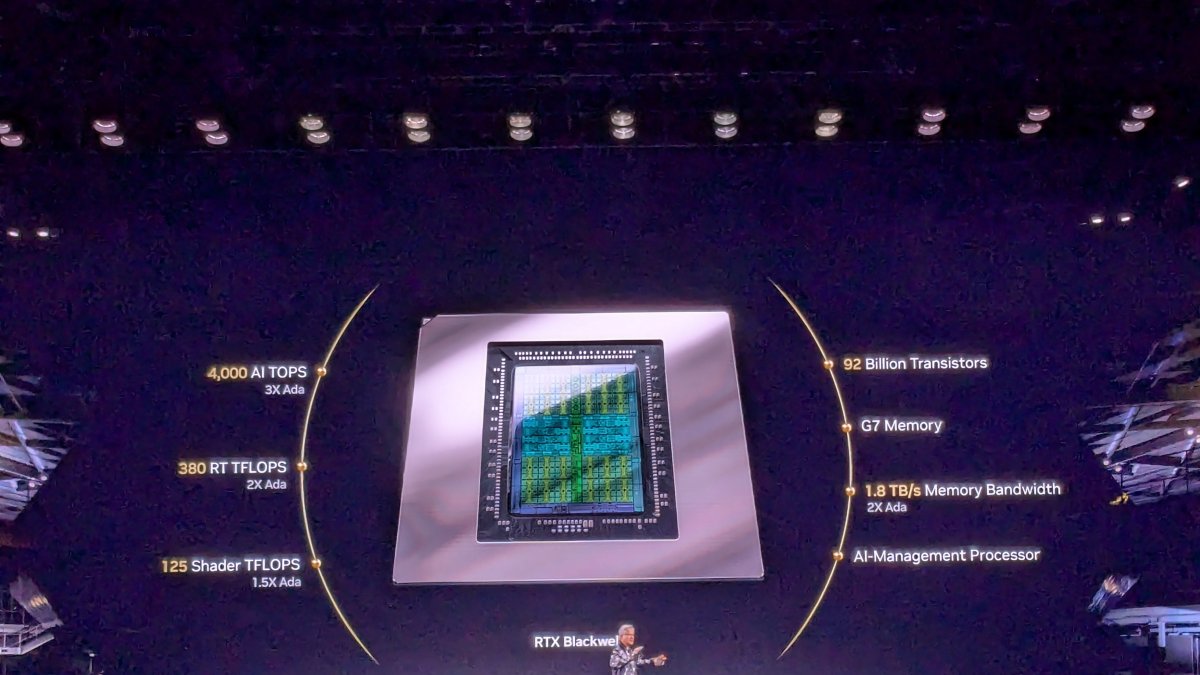
The hardware is not marginal. Grace Blackwell pairs two Blackwell GPUs with one Grace CPU over Nvidia's NVLink-C2C interconnect, and was Nvidia's flagship until the Blackwell Ultra refresh in March. AI infrastructure provider Modal estimates a single Grace Blackwell accelerator costs \$60,000 to \$70,000, which implies the deal covers somewhere between 114,000 and 133,000 chips. According to the report, they sit in more than a dozen data centers across five states, including Nevada and Virginia, and some are owned by Amazon while others are leased.
Investors expect the vehicle to earn an investment-grade rating that rides on Amazon's own AA credit standing rather than on the hardware itself — a structure that would open the debt to insurance funds and pension funds. That is the entire point. Nvidia's silicon depreciates fast as the product line iterates, so an SPV buyer is effectively underwriting the residual value of leased AI hardware, the same wager now being priced across the sector.
The context is a capital-spending race that has outgrown conventional financing. Amazon is expected to spend about \$220 billion this year, most of it inside AWS, and it has already leaned on debt markets: a roughly \$50 billion bond sale in March that was upsized from \$37 billion on strong demand, followed by \$25 billion in July that drew weaker appetite at the long end. In the second quarter of 2026 the company booked \$62.6 billion of net income on \$200.6 billion of revenue, so this is not distress — it is balance-sheet capacity management.
Amazon is not alone in engineering around its own credit. Peers have used residual-value guarantees to reassure lenders about the future worth of chips or data centers, and Meta sold an 80% stake in its flagship Hyperion campus to an investment firm. The Wall Street Journal recently reported that Amazon, Google and seven other technology giants together carry about \$3 trillion in off-balance-sheet obligations, much of it tied to AI infrastructure.
What that means: the headline number to watch is no longer how many GPUs a hyperscaler buys, but who ends up owning them. Moving accelerators and the debt used to buy them into a separate legal entity makes the AI build-out look lighter than it is while leaving operational control unchanged. If demand for AI compute softens, the first stress will show up not in cloud earnings but in the pricing of these vehicles — and in how much residual value investors are willing to assume for last year's flagship silicon.
Comments (0)
Log in to join the discussion
Log InNo comments yet