Xspark AI, a Shenzhen startup founded in 2025 to build tactile data infrastructure for embodied AI, has released Spark-0, a vision-tactile-language-action model it describes as natively tactile — touch is built in from pretraining rather than fused on as an afterthought. The announcement came alongside a new angel-plus funding round, the company's latest since its first round in July, bringing cumulative financing to several hundred million yuan.
The problem Spark-0 targets is familiar to anyone who has watched a robot fail at an egg. Vision-only systems handle commands and object recognition well, but stumble on contact-rich tasks — inserting plugs, packing boxes, straightening objects — because force, deformation and slip simply are not visible, and a gripper blocks the camera's view at the exact moment precision matters. The company frames the field's blockers as threefold: too little high-quality whole-hand tactile data, models that treat touch as an extra input stream grafted onto the back end, and benchmarks that rarely measure contact-rich control alongside general manipulation.
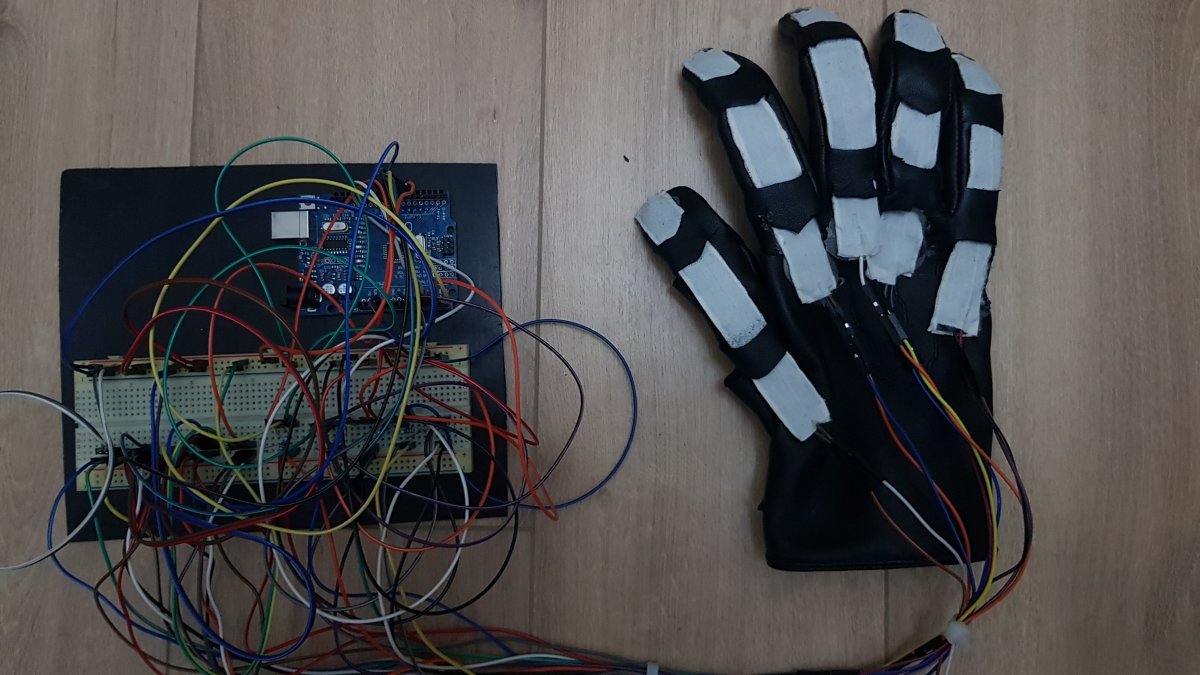
The data bet is HumanTouch, a dataset of 1,000 hours of whole-hand tactile human manipulation covering more than 100 task types performed by 32 operators, with 360 contact points per hand synchronized against hand pose and multi-view video. The design choice that matters: human hands and robot hands share the same tactile interface, so the touch experience people accumulate in ordinary manipulation can transfer directly into robot capability instead of being locked in a different format.
In Spark-0, touch plays two roles. During training, full-hand tactile readings are projected onto the visual input, teaching the model where contact is happening — effectively using touch as the teacher of vision. At runtime the polarity flips: pressure changes stream into the action expert as feedback, closing the loop on how contact is evolving moment to moment. The same trained weights work both vision-only and with tactile closed-loop control, which matters for fleets that cannot guarantee sensors on every unit.
On benchmarks, the company says Spark-0 outperformed pi0.5, GR00T and nine other mainstream models across its three evaluations — SparkArena simulation, real-robot trials on its Sky-1 dual-arm dexterous hand platform, and a cross-embodiment Ego Humanoid test. Those are self-reported numbers from the company's own benchmark and have not been independently verified, a caveat that applies to most claims in this space and should be weighed accordingly.
The team reads like a translation layer between lab and factory. CEO Xiong Qi previously led perception and large-model delivery at NIO; chief scientist Ding Wenbo is a tenured associate professor at Tsinghua and a leading figure in Chinese tactile research, whose earlier SuperTac multispectral sensor work was published in Nature Sensors; CTO Chen Tianxing came up through a direct PhD track at the University of Hong Kong. The angel-plus round drew Liedao Investment, Huashan Capital, Yuanhang Capital, Pudong Venture Capital Group, Junyuan Capital, Nanshan's strategic emerging investment vehicle and Shuimu Ventures.
The money tracks a broader repricing of embodied AI in China: peer Qianjue Robotics closed a nine-figure strategic round in September, and tactile data infrastructure specifically is getting both policy tailwinds and capital. Xspark says it is now validating Spark-0 at real workstations in light-load industrial scenarios, with service settings to follow. That is the right place to prove it — a tactile model's value is decided on a production line, not on a leaderboard.
Comments (0)
Log in to join the discussion
Log InNo comments yet