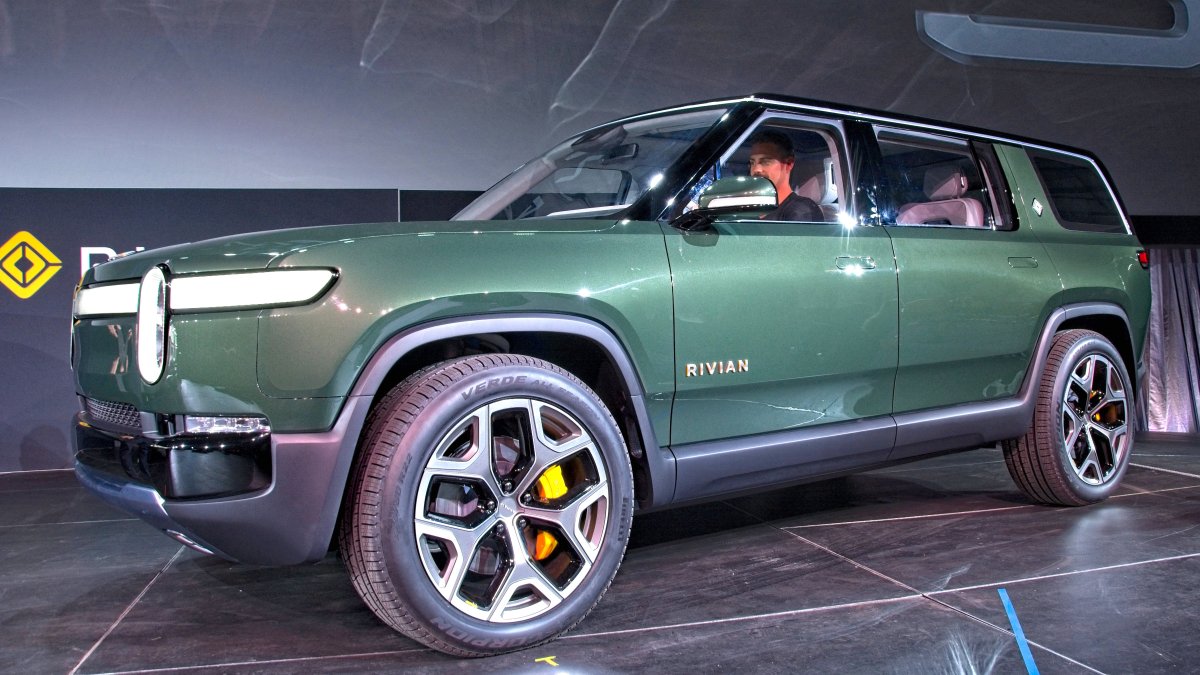
Rivian disclosed on October 29, in its third-quarter investor presentation, that it is licensing elements of its in-house AI voice assistant technology to Volkswagen Group as part of the two companies' joint venture. The licensing extends a partnership that was originally framed around Rivian's electrical architecture and vehicle software, formalized in November 2024 through an independent company.
Rivian did not disclose licensing fees, payment terms, or which Volkswagen models will carry the assistant. Reuters reported the first Volkswagen vehicle using Rivian technology — a low-cost electric car for Europe, the ID EVERY1 — remains on track for a 2027 launch, making it the natural first candidate. The joint venture's financial scope has already grown once, from an initial value of up to $5 billion to $5.8 billion in committed Volkswagen investment through 2027.
The assistant itself is two years of internal work. Rivian rolled it out to its flagship R1S SUV and R1T pickup in May 2026 and to the new midsize R2 SUV in October. CEO RJ Scaringe has described an in-house agentic framework that understands what a driver wants to do and routes the request to the right part of the vehicle's software — an architecture he said could eventually run agents built by other companies, including Anthropic.
The licensing is also a proof point for Rivian's vertical-integration pitch. The company rebuilt its flagship vehicles around a new electrical architecture that cut electronic control units from 17 to 7 and sharply reduced wiring, a foundation it argues is what lets it ship vehicle-wide software and AI features quickly — and what persuaded Volkswagen to pay for it in the first place.
The announcement landed inside a stronger-than-usual quarter for the EV maker. Rivian recorded 19,248 deliveries, with the R2 outselling both the R1 lineup and its commercial van in its first full production quarter, and said cost of goods per vehicle fell by more than $12,000 from the prior quarter, though it still loses money on every car it builds.
Scaringe also told Reuters the company expects to hit an autonomy milestone by year-end that unlocks a $250 million tranche of Uber's investment — part of up to $1.25 billion through 2031 tied to autonomy milestones — with driverless R2 robotaxis planned on Uber's network from 2028, starting in a couple of cities and expanding to roughly 25 within about 18 months. For Volkswagen, the message is that the JV is no longer just a rescue line for its software troubles; Rivian's AI stack is becoming product it can sell twice.
Comments (0)
Log in to join the discussion
Log InNo comments yet