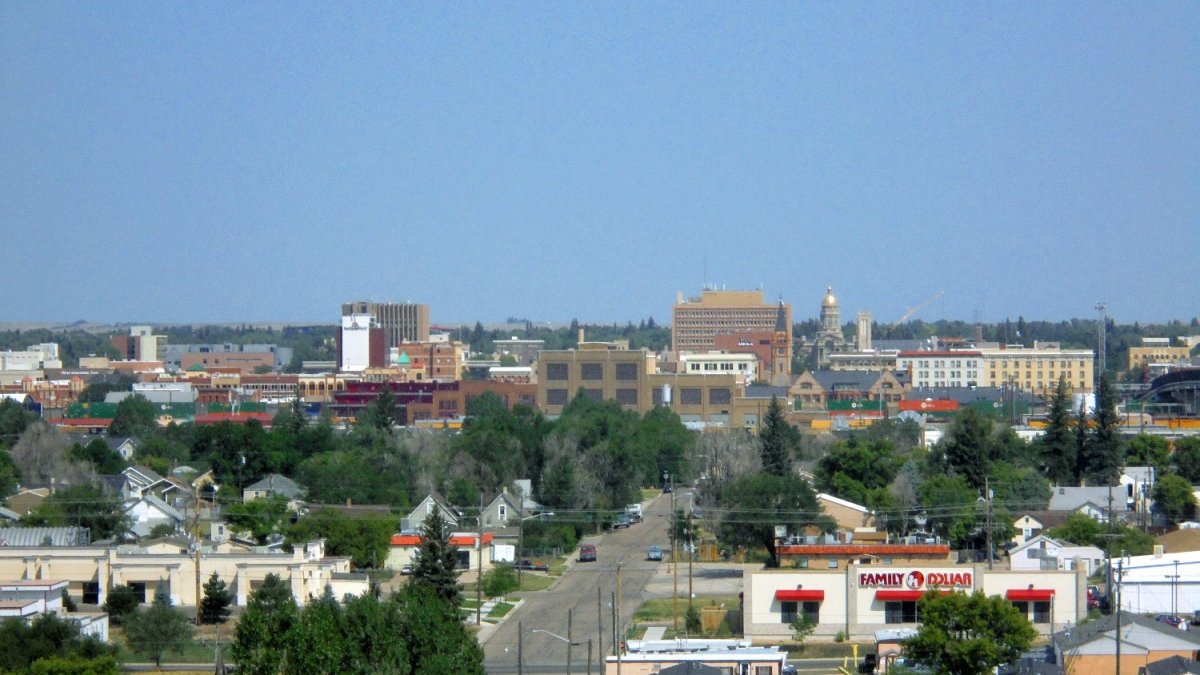
Google has committed $17 billion to build its first data center in Wyoming, a state that until now had no hyperscale footprint, choosing Laramie County near Cheyenne as the site. The announcement, made alongside binding agreements with Tallgrass Energy, Black Hills Energy, American Electric Power and Related Digital, is as much an energy announcement as a computing one: the campus will be anchored by a 702-megawatt commercial fuel-cell deployment that the company describes as the largest planned project of its kind.
The fuel cells, supplied by San Jose-based Bloom Energy, convert natural gas into electricity through an electrochemical reaction rather than combustion, which Google says cuts both emissions and water use compared with conventional generation. The harder problem is the carbon that remains. The project pairs the fleet with carbon capture and storage: captured CO2 will be piped to Tallgrass Energy's Eastern Wyoming Sequestration Hub for permanent geological burial. Google says this is its second operational CCS project in the United States, and that its total contracted carbon-capture capacity now approaches one gigawatt.
The company is also hedging on the gas side. A front-end engineering and design study will evaluate retrofitting Tallgrass's combined-cycle gas turbines with capture equipment, a step that could extend CCS beyond the fuel-cell fleet. Company statements about reduced emissions and lower water consumption are its own and have not been independently verified; CCS deployments of this scale remain rare in practice.
Some of the design choices read as a direct response to the politics of data-center growth. Google says it will pay for 100 percent of the power the facility consumes, cover infrastructure costs directly driven by the project, and use air cooling instead of water-intensive evaporative systems — an expensive trade-off in a region where water rights are contested. The company projects hundreds of millions of dollars in property tax contributions for Laramie County and the local school district, and has formed a community committee with its utility partners, alongside grants for STEM education and workforce training. A community meeting in Cheyenne drew more than 200 residents, with questions about job quality and cumulative strain from multiple projects converging on the region.
Steve Walter, Google's vice president of global infrastructure and energy, framed the investment around responsible growth, but the timing is hard to read as accidental. The announcement came days after the midterm elections, in which opposition to data-center construction crossed party lines and became one of the few issues voters agreed on. Meta's president Dina Powell McCormick said this week that the results will make building new data centers "harder," and industry executives gathered at Jensen Huang's election-day event voiced the same concern.
Wyoming, meanwhile, is the opposite of the constrained coastal markets that Google has built in until now. The state offers natural gas pipeline access, open land and minimal grid congestion, and the company says the facility's air-cooled design was chosen partly because of drought pressure across the West. The location logic suggests training workloads — the compute-heavy processes that do not need to sit near users — are migrating toward energy-abundant states, while inference stays closer to population centers.
For the AI infrastructure sector, the Wyoming deal is a template worth watching. It bundles a hyperscale capex commitment with utility contracts, a CCS pipeline, community compensation and local tax projections in a single announcement — the kind of package that has become necessary wherever these campuses are proposed. If the anti-data-center political wave holds, expect more announcements shaped like this one in Montana, North Dakota and other energy-rich states, and fewer shaped like the straightforward land-and-power deals of the past two years.
Comments (0)
Log in to join the discussion
Log InNo comments yet