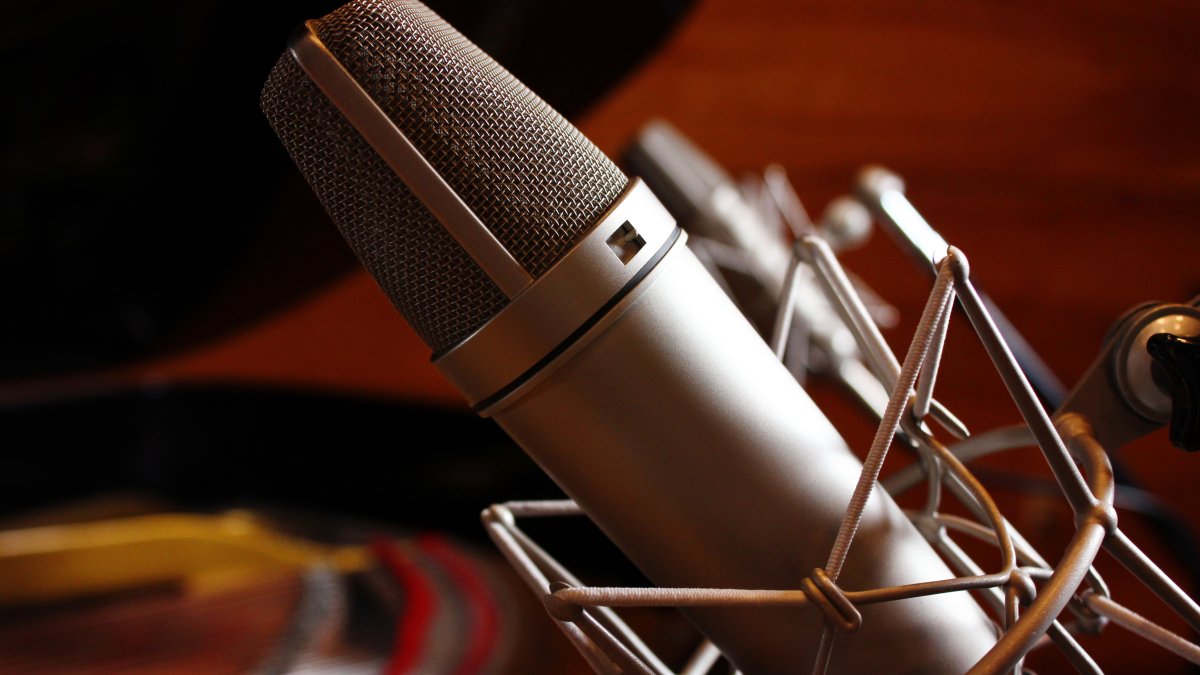
While most of the industry races to build bigger models, one-person-era startup Underdog is going the other way — and has now shipped a speech generator smaller than a typical smartphone photo. The company released Woof, a speech-generation model just 32MB in size with 31 million parameters, and demonstrated it through a browser game built entirely on the model's output.
The demo, called Escape and playable at underdog.ai/escape, is styled as a room of retro technology: a typewriter, a CRT monitor and a desk lamp that clicks when you flip its switch. Type anything on the typewriter and the game speaks it aloud; rotate a music tuner and it generates different kinds of music. Everything runs in the browser through the speech model itself, which Underdog says works on most devices with no internet connection — and the model is open for anyone to download.
The intro screen sets the tone with a wink, warning players about "intrusive" cloud providers in the town — a pointed jab at cloud-dependent speech services. Founder Sigil Wen told TechCrunch he built the demo because he wanted a personal system that runs on the user's own device and keeps their data local, instead of relying on cloud notetakers like Granola.
"I think we will be able to run most capable models of today on the devices you already own within months," Wen said, pointing to his manifesto. "We just want to train the best open models that are American-made, that are open, that are capable and allow people to have private AI."
Woof arrives weeks after Underdog launched Bark, a 167MB speech-to-text model designed to run on edge devices for transcription and dictation. The company has also released a 27-billion-parameter model that it says runs on laptops, and maintains a waitlisted app positioned as a locally hosted alternative to Muse and Instinct — putting it in the small but growing camp arguing that the most private AI is the kind that never leaves your machine.
Temper the hype appropriately: a 31-million-parameter model will not replace frontier speech systems, and nobody is confusing its output with a studio-grade voice engine. But the use cases it targets — local assistant responses, dictation, personalized audio — do not need one. If on-device models keep closing the gap at this pace, the interesting question is not whether small models can talk, but how much of the assistant stack stops needing a data center at all.
Comments (0)
Log in to join the discussion
Log InNo comments yet