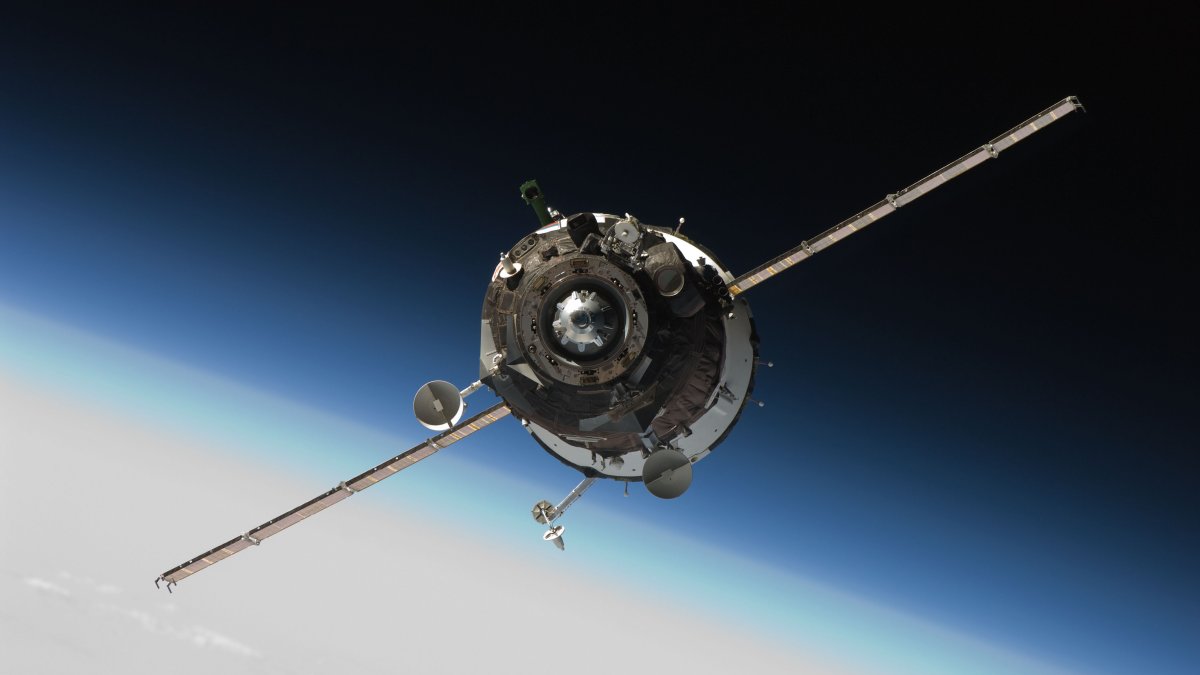
Google's prototype space data center is officially open for business — sort of. The first Project Suncatcher satellite, which launched earlier this month atop a SpaceX Falcon 9 alongside more than 100 other spacecraft, has completed roughly three weeks of commissioning and is now online and communicating with the ground. When engineers sent the first prompt this week, they asked the model pre-loaded on the satellite — Google DeepMind's Gemma 4 — to write a haiku about being in space. It complied: "Blue marble below / Data streams in silent grace / Starlight feeds my core."
The demo was playful, but the constraints behind it are not. The satellite carries four Tensor Processing Units, yet thanks to its power budget — it generates up to 1 kW of electricity — it can switch on only one TPU at a time, and only for about 20 minutes per session, according to a TechCrunch interview with Google. The correction matters: this is a feasibility testbed, not a data center in orbit. Google says the spacecraft is operating nominally, and beyond poetry it has also been asked to report on the orbital conditions around it.
The real test campaign is just beginning. The team will examine how the chips hold up under thermal stress and in the space radiation environment — a hazard Google has so far only simulated, including extensive particle-accelerator testing on Earth. Radiation causes bit flips, corrupting stored values in memory in ways that can evade standard monitoring tools. Ground testing suggested radiation's impact would be minimal for inference workloads and more problematic for training; the orbit data will show whether that prediction survives contact with reality.
If the TPUs prove capable, the next milestone is already scheduled: two more satellites in 2027, equipped with more advanced chips, higher power generation and — crucially — inter-satellite optical links. That is what separates Suncatcher from nearly every other space-data-center pitch. Google plans networks of close-flying satellites performing large, coherent distributed inference workloads in orbit. SpaceX's orbital data center ambitions are expected to use laser links too, but with satellites orbiting too far apart to share processing effectively, while startups like Starcloud and Cowboy Space plan single-satellite inference.
The economics remain the hard part, and Google's own researchers have been blunt about them. A peer-reviewed analysis published earlier this month estimated SpaceX would need to fly Starship 1,800 times to achieve the same learning-driven cost reductions it saw with earlier vehicles — a reminder that the whole vision depends on a heavy-lift rocket that is still in development. Alphabet, Google's parent company, holds a significant stake in SpaceX, aligning the two companies' interests even as they sketch competing architectures.
Suncatcher is a classic Google moonshot, aimed at infrastructure that will be economical in the 2030s. Whether the company stays patient for it is a near-term question: Alphabet's stock plunged this month after it reported that AI features are eating into search ad revenue growth, the kind of pressure that has historically forced moonshot budgets to defend themselves. For now, though, the first TPU in orbit has done its job — it answered, in seventeen syllables, from 500 kilometers up.
Comments (0)
Log in to join the discussion
Log InNo comments yet