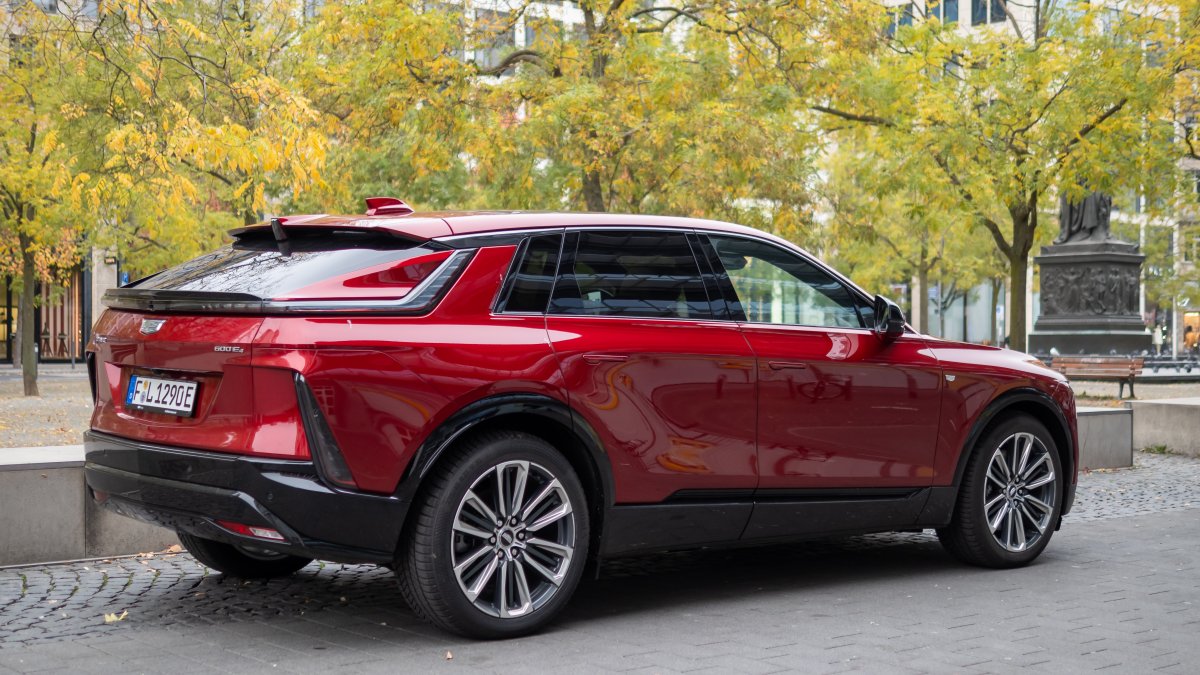
General Motors used its GM Forward event in New York on Wednesday to give its 30-year-old telematics service its biggest rethink yet: OnStar, long known for crash response and operator-assisted directions, is being rebuilt into what chief product officer Sterling Anderson called a connected intelligence platform, with a new in-house voice assistant called OnStar AI. The company stressed the assistant is developed in-house — a shift from the Google Cloud conversational technology it adopted in 2022 and from Google Gemini, which GM had said would reach its vehicles in 2026.
Wake it with "Hey OnStar" and the assistant can explain what a dashboard warning or an unfamiliar beep means, check why the check-engine light is on, and tell an EV driver whether the remaining range covers the next charger before planning the stop. It answers with real-time vehicle data, user-authorized context and a GM vehicle knowledge base, and it can act: climate control, cabin lighting, the power glovebox and the EV charge port all respond to voice. In one demo, route planning pulled traction-loss data from other vehicles on a Syracuse-to-Lake-Placid drive to flag icy stretches of road.
The assistant debuts on the 2027 Cadillac Lyriq via an over-the-air update in the coming months, and Car and Driver reports the rollout likely reaches the Chevy Silverado and GMC Sierra next year, with retrofitting possible for some existing models. In 2027 a unified OnStar app absorbs the OnStar Guardian app and the separate Buick, Cadillac, Chevrolet and GMC apps, syncing with the car; suspected-incident camera recordings are stored encrypted and released only to the vehicle owner on request.
One boundary is deliberate. Ed Nightingale, GM vice president of digital products, told Business Insider that human advisors will keep handling emergency calls and contacting first responders: "We feel that, when it comes to a crash or a problem being solved, they want to make sure that there is a human in the loop. The stakes are too high." It is a visible contrast with tech companies that tout how few support calls reach a person, and GM frames it as intentional design rather than legacy cost.
The scale behind the bet is real: OnStar counts more than 12 million subscribers in 22 markets, and its North American advisors handle more than 20 million calls a year. GM has set a long-term target of a $25 billion subscription business by 2030, and the new AI agent will be available by subscription. CEO Mary Barra told the audience, "All of these developments are building us the car of the future," while Anderson argued the data flywheel is the moat: "In the age of AI, data is currency."
The assistant is one slice of a wider AI push announced the same day. GM says AI and virtual modeling will cut new-vehicle development from four to five years to about two — the GMC Hummer EV took 20 months — and that upcoming models get a new central compute platform with up to 40 times the computing power and 50 percent faster connectivity. Eyes-off highway driving is slated to debut on the roughly $130,000 2028 Cadillac Escalade IQ in 2028.
For an industry watching software define car value, the meaningful questions are what drivers will pay for, and what GM learns from the data. The company told reporters it will not sell driver data to outside firms, and subscriptions retain customers only when the benefit is visible — Nightingale said as much onstage. A voice assistant that knows your calendar, your route history and your engine codes is a powerful retention tool; it is also exactly the kind of system whose privacy terms people will read closely.
Comments (0)
Log in to join the discussion
Log InNo comments yet