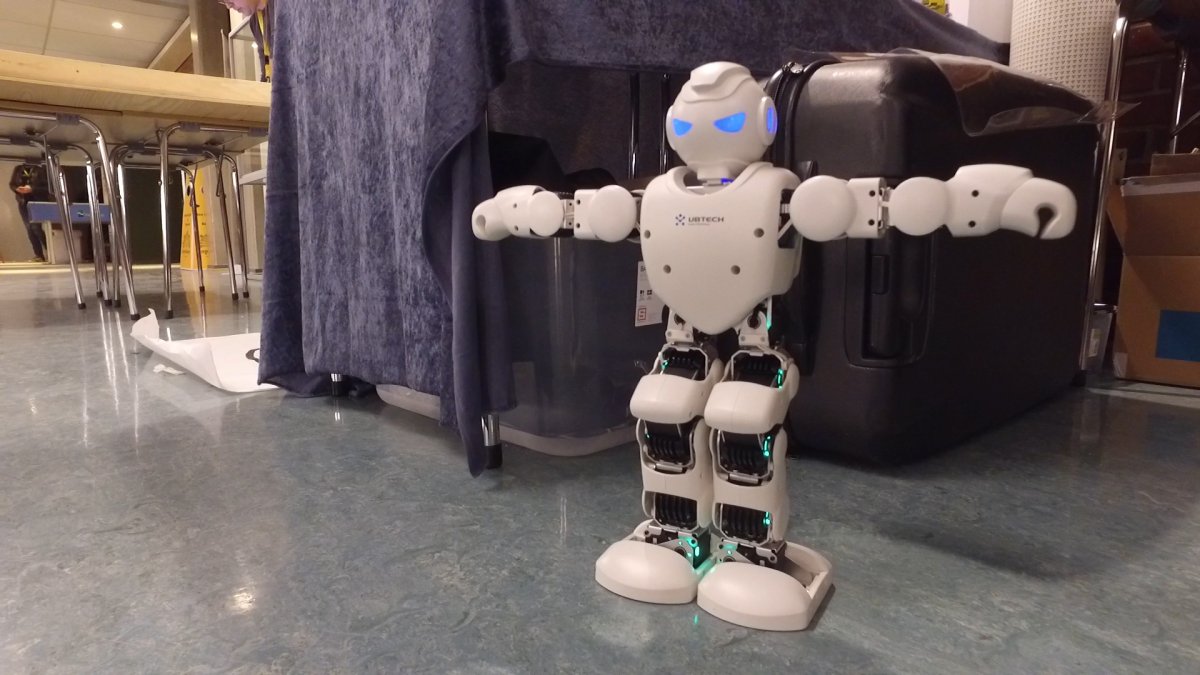
UBTECH Robotics, the Shenzhen company often described as the world's first listed pure-play humanoid robot maker, has struck a partnership designed to answer the industry's hardest question: who actually buys these machines at scale. On October 9, UBTECH and C&D Inc., a Xiamen-based Fortune Global 500 supply-chain and real-estate group, signed a strategic cooperation agreement to form a joint venture and build what the parties call the UBTECH Ecosystem Technology Center Fujian Headquarters.
The headline number is concrete: the two companies plan to jointly complete sales of no fewer than 10,000 UBTECH humanoid robots by 2030. It is one of the largest publicly stated commercial deployment targets in the sector, and it comes with a distribution model attached rather than a vague memorandum of intent.
C&D's contribution is what makes the target plausible on paper. The group brings a nationwide channel network, supply-chain services and, critically, financing lease capabilities, packaged as an integrated model of channel operations, industrial services and financial enablement. Financing leases matter in robotics for the same reason they mattered in construction equipment: a six-figure robot is easier for a logistics operator to justify as a monthly operating cost than as a capital purchase.
The initial deployment scenarios named by the companies are unglamorous by design: government showrooms, commercial complexes, industrial parks, and later supply-chain operations, warehousing and security patrol work. UBTECH contributes its full-stack humanoid technology and existing product lines, including the Walker series, while the joint venture handles regional rollout, after-sales maintenance and overseas market coordination.
The deal was signed in Xiamen by UBTECH founder, chairman and CEO Zhou Jian and C&D chairman Lin Mao, according to Chinese media reports citing the companies. Coverage by Securities Times, Sina and the Daily Economic News over the following days framed the partnership as a bid to turn embodied intelligence from exhibition demos into a recurring-revenue business.
The humanoid sector has spent 2026 proving it can walk; 2027 onward is increasingly about proving someone will pay. A state-linked distributor committing to a five-figure unit target gives UBTECH a quantifiable commercialization anchor, and gives the industry a template that depends less on lab breakthroughs than on leasing desks and service networks.
Comments (0)
Log in to join the discussion
Log InNo comments yet