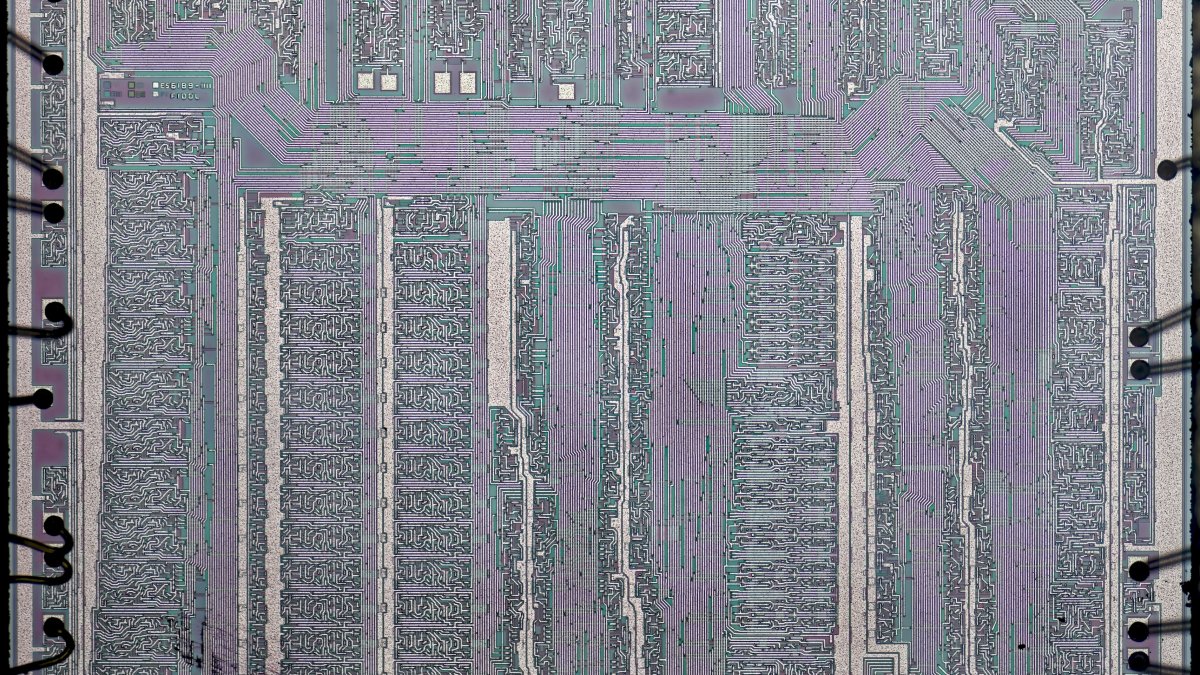
A six-month-old semiconductor startup with no product, no customers and no announced tape-out is raising hundreds of millions of dollars at a valuation of roughly $2.5 billion, Reuters reported on Friday, citing two people familiar with the round. The company, Nuvacore, is designing a central processing unit for data centers, betting that the computing infrastructure behind AI systems still needs a better general-purpose brain to coordinate it all.
Nuvacore was founded in San Jose by three well-known chip engineers: Gerard Williams, John Bruno and Ram Srinivasan. Williams spent years leading CPU development at Apple and previously founded Nuvia, the chip design startup Qualcomm bought for $1.4 billion in 2021. Sequoia Capital led the seed round earlier this year. The Information had previously reported that Nuvacore was seeking at least $200 million; the $2.5 billion valuation target is new. Reuters noted that the round has not closed and both the size and the valuation could still change.
The technical pitch is unusual. Rather than picking an instruction set first, Nuvacore designs the core first and chooses the architecture last. In a September 29 disclosure, the company said more than 95 percent of the foundational IP in its WarpCore core, including the pipeline, caches, prefetchers and branch predictors, is built before committing to x86, Arm or RISC-V, so the same core can slot into whichever instruction set the market demands. David Williamson, a former Apple CPU engineering leader, has joined as senior vice president of hardware engineering.
The timing reflects a shift in how data-center CPUs are bought. AI clusters still need processors to coordinate specialized accelerators, manage storage and networking, and increasingly to run autonomous AI agents whose workloads are CPU-bound. Nvidia, which entered the market this year with its Vera CPU, expects roughly $20 billion in sales from that product in the fiscal year ending in January, according to CEO Jensen Huang. Intel and AMD have long dominated the segment, while Amazon and Microsoft have built their own Arm-based server chips.
Investor appetite for silicon has followed. Semiconductor startups attracted about $10.7 billion in the first five months of 2026, according to Crunchbase, already surpassing the $12.2 billion raised globally across all of 2025. Intel has said it cannot manufacture enough chips to meet demand, and shares of both Intel and AMD have risen more than 180 percent this year.
The caveats are substantial. Reuters characterized the valuation as coming from two sources, and Nuvacore declined to comment. No customer, foundry partner or tape-out date appears in the reporting, and an instruction-set-agnostic design remains unproven at product scale. For now the round is priced on pedigree: a founding team that has shipped successful cores before, in a market where every AI data center needs somewhere to run its control plane.
Comments (0)
Log in to join the discussion
Log InNo comments yet