Microsoft has declared a "Code Red" drive to overhaul how it prevents and responds to major service failures, according to internal memos reviewed by Reuters, after a November 12-13 outage took down Exchange Online, Outlook, Teams and Copilot for customers in dozens of countries. The outage itself was reported at the time and chief executive Satya Nadella publicly apologized; what the memos disclose is the internal reckoning that followed.
Jason Henderson, president of M365 Core, told staff on Friday that the incident was the most customer-impacting in the history of Exchange Online. "Never before had so many customers been without email for so long," he wrote, adding that "Code Red means that this is the highest priority work for our team." He said he would meet daily with the leadership of Substrate, the group responsible for the underlying Microsoft 365 services, and hold weekly reviews to track the follow-up work.
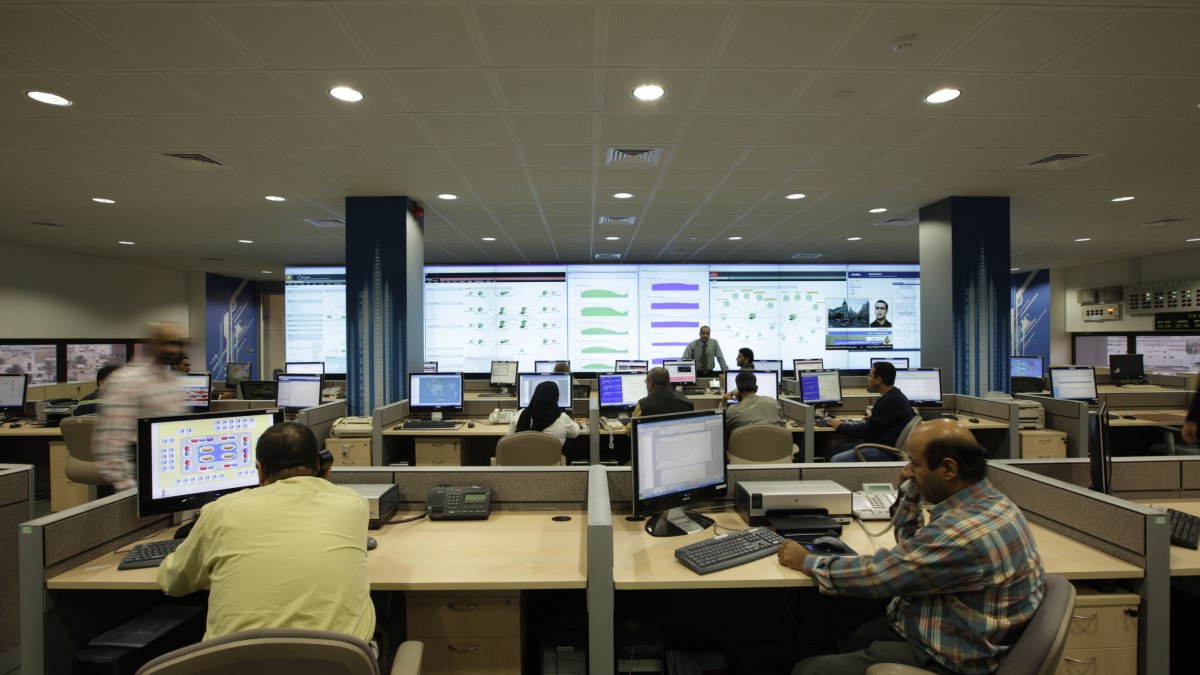
A fog of war inside the incident room. Amanda Silver, corporate vice president overseeing M365 Core and Work IQ, Microsoft's workplace intelligence platform for AI agents, described the response in a Monday memo: despite deploying top engineering personnel, responders exchanged more than 11,000 messages across 11 Teams chats and struggled to hold a coherent picture of hypotheses and decisions because diagnostic data was scattered across fragmented internal tracking systems. In a Code Red review, Charles Lamanna, executive vice president for Copilot, Agents and Platform, said the affected component had experienced "roughly ten years' worth of acceptable failures."
Silver outlined five workstreams: load shedding, geographic traffic partitioning, faster recovery mechanisms, and related resilience work. The company has set a target of resolving future incidents worldwide within one hour, and plans to deploy AI agents to help engineers read system health data faster — even though Microsoft has ruled out AI agents as a cause of this outage.
The deployment pipeline is the other bottleneck. In an earlier memo reviewed by Reuters, Henderson wrote that urgent patches to M365 Core services take too long to reach global saturation: "In a separate recent incident, an urgent production fix took five to six days to reach worldwide saturation. For our most urgent security issues, we need to get from detection to safe worldwide deployment in an hour. Needless to say, we aren't here yet."
The public post-incident report published on Nov. 23 fills in the technical picture: a latent Windows scalability defect introduced in July, missed in testing because load tests ran on older, lower-core hardware; about 14 percent of servers unavailable for scheduled updates when traffic surged; a routing fault that pushed Teams traffic onto gateways normally used by Outlook; and automated traffic redistribution that spread the failure as overloaded machines handed requests to healthy ones. More than 80 percent of North American gateway servers became unresponsive at the worst point. Microsoft ruled out a cyberattack and AI tooling as causes, said no enterprise email was permanently lost, and committed to 22 corrective actions by March 2027.
Why an internal alert is a product story. Copilot sits inside the same Microsoft 365 substrate that failed, and the remediation plan leans on AI agents to shorten diagnosis. That is a two-edged argument for a company selling agentic tools to enterprises: the same automation that Microsoft wants to deploy as a fix is the automation customers are being asked to trust with their own operations. Nadella has separately warned that applying AI-generated patches to legacy systems "creates instability," a caution that sits awkwardly beside a one-hour global deployment goal.
The measurable test is not the memo but the calendar. Five workstreams, 22 corrective actions and a March 2027 deadline give customers something to audit; the next severe incident will show whether 11,000 scattered messages became one coherent operating picture.
Compiled from Reuters (Jaspreet Singh), Microsoft's November 23 post-incident report, and coverage by The Seattle Times, The Register and Windows Central.
Comments (0)
Log in to join the discussion
Log InNo comments yet