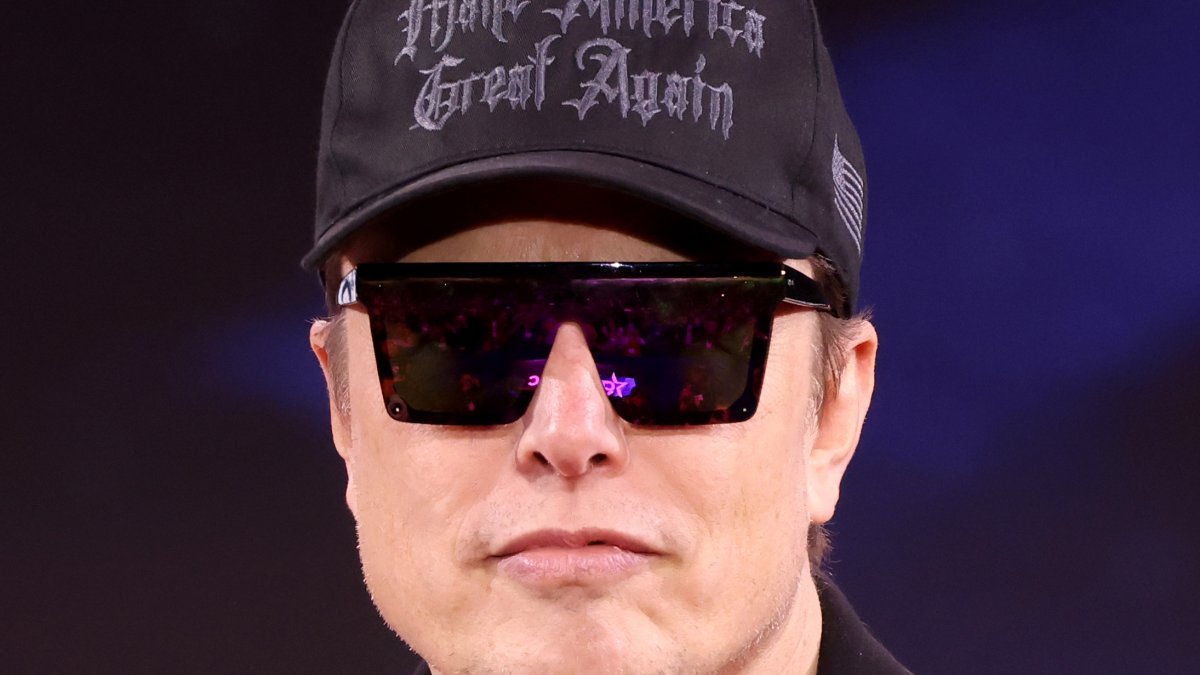
Elon Musk has admitted, in plain terms, what most AI companies only imply: serving his most ambitious agent costs more than subscribers pay for it. Responding on X Sunday to a user asking for a Grok Bot quota reset — "lots of people say their usage ran out really fast this week" — Musk wrote that "the cost of serving Grok Bot was unsustainably high relative to revenue." He offered no figures, no timeline, and no promise of relief.
Grok Bot, which xAI launched in early beta in August, is not a chatbot in the conventional sense. It runs multi-step tasks across apps and web services inside its own virtual computer — browsing, synthesizing research, executing workflows in the background — and each session consumes orders of magnitude more GPU cycles than a standard chat exchange. It is bundled into xAI's paid tiers, from the $30-per-month SuperGrok plan up to the $200 Ultra tier, with usage drawn from a shared weekly pool that also covers Grok chat and certain coding-tool allocations. The agent is estimated by third-party tracker Teslanorth to have reached roughly 800,000 paid users within two months — a figure neither xAI nor Musk has confirmed.
What makes the statement notable is what it concedes. When usage limits tighten across the industry, the standard public posture is to blame unprecedented demand or hardware scarcity. Musk instead pointed at unit economics: heavy users of the flagship agent are, under current pricing, unprofitable. Rivals manage the same problem more quietly — OpenAI has tightened token caps on its costliest plans and restricted paid-account sharing — but rarely name the reason out loud. Gartner analysts have estimated that an AI infrastructure provider would need each token to earn a margin above 100% through 2030 for the buildout to clear its cost of capital; Musk's admission suggests Grok Bot sits on the wrong side of that arithmetic at current prices.
The economics of flat-rate AI subscriptions were already under strain before agents arrived; autonomous task execution multiplies the problem, because a single complex job can burn more compute than a month of casual chatting. Musk has floated advertising inside Grok outputs to help fund "those expensive GPUs," but the new statement implies that near-term relief will come from metering rather than new revenue: stricter caps, sharper task accounting, and a subscription whose practical value increasingly depends on how much allowance a user has left.
The admission also reframes the agent race more broadly. If xAI — which runs some of the most densely optimized inference infrastructure in the industry — cannot make an always-on agent profitable at $30 to $200 a month, then every competitor shipping "autonomous coworker" products on flat pricing is making the same bet with the same arithmetic. The companies that survive the agent era may be the ones willing to say, as Musk did, that the meter has to move.
Comments (0)
Log in to join the discussion
Log InNo comments yet