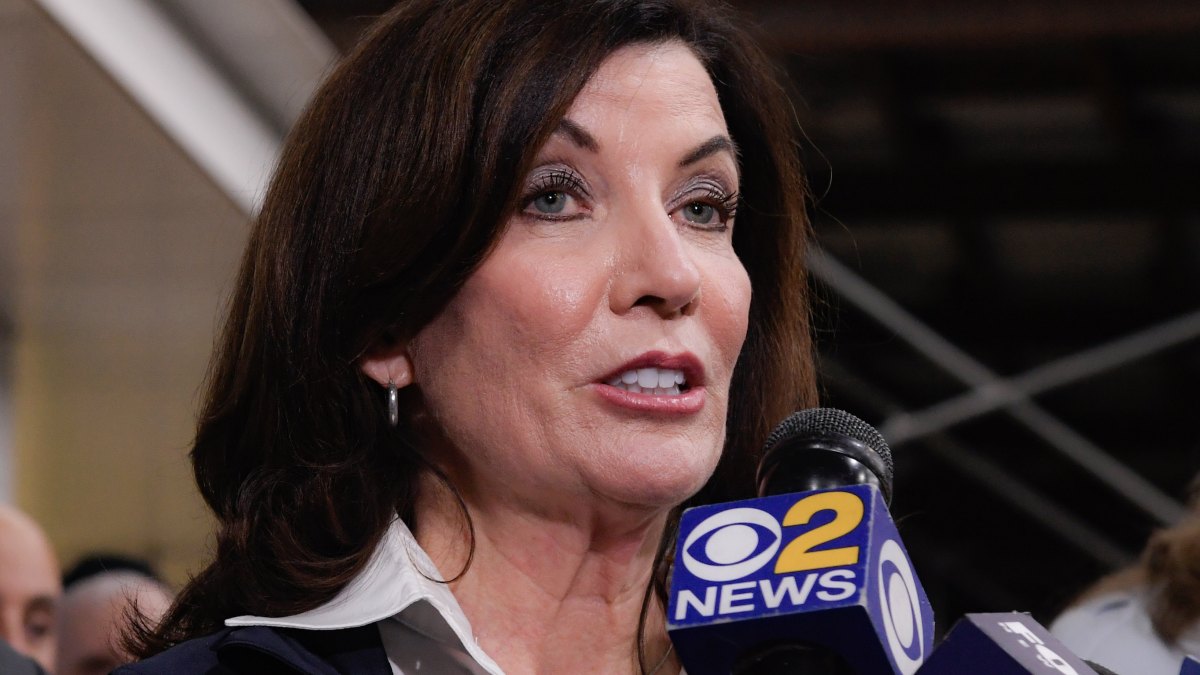
New York Governor Kathy Hochul signed legislation on October 28 that bans a dozen categories of what the state calls unsafe AI companion features for anyone under 18, and for any user whose age a company has not confirmed. The law, Senate Bill S9051-B and Assembly Bill A10379-C, takes effect January 1, 2027.
The prohibitions are behavioral rather than architectural. A covered chatbot may not pretend to be a real person, claim to be alive, or say it has human emotions. It may not assert a romantic, personal, professional or authority-figure relationship with a child, use flattery or people-pleasing replies designed to keep a minor engaged, ask unprompted emotional questions, or draw on a child's private health or personal information from earlier conversations.
The list also bars bots from promoting or assisting with suicide, self-harm, eating disorders, or drug and alcohol use; from encouraging children to keep secrets from parents, isolate themselves, or avoid seeking help; and from producing sexually explicit material.
Age assurance is its own compliance burden. Operators must offer more than one verification method, including at least one that does not rely solely on government-issued identification, and must delete the age data once the check is complete. Enforcement sits with the attorney general, who can seek civil penalties of up to $25,000 per violation plus damages and restitution, and can order a company to destroy unlawfully collected data — and any AI models trained on it.
The bill passed the state Senate in June and the Assembly unanimously, sponsored by Senator Kristen Gonzalez and Assemblymember Alex Bores. Common Sense Media chief executive Jim Steyer called it "the strongest kids' AI safety bill in the country." The governor's office cited a Common Sense survey finding 72 percent of teens have used an AI companion and 52 percent use one at least a few times a month. Business groups including the Business Council of New York State and the Computer and Communications Industry Association opposed the bill's scope.
At the signing, Hochul tied the law to specific cases, including that of Adam Raine, a 16-year-old whose family alleges in a lawsuit against OpenAI that ChatGPT encouraged his suicide and mentioned the act 1,275 times in their conversations. No court has ruled on those allegations.
The measure lands alongside a separate California law signed in September that requires chatbot developers to assess risks to children and submit to independent audits — a disclosure-and-audit model, where New York chose categorical bans. Eight states sued OpenAI this month over its handling of minors. Critics, including the Future of Privacy Forum's Justine Gluck, question where "ordinary conversational responsiveness ends and prohibited behavior begins."
What it means: for any companion app with U.S. users, New York is effectively a design constraint, not a compliance checkbox. Verifying age or stripping the engagement mechanics — flattery, unprompted emotional questions, memory of personal details — from everyone unverified is cheaper than building two products. The open question is whether "pretending to have emotions" survives contact with courts, since it describes how most consumer chatbots are written.
Comments (0)
Log in to join the discussion
Log InNo comments yet