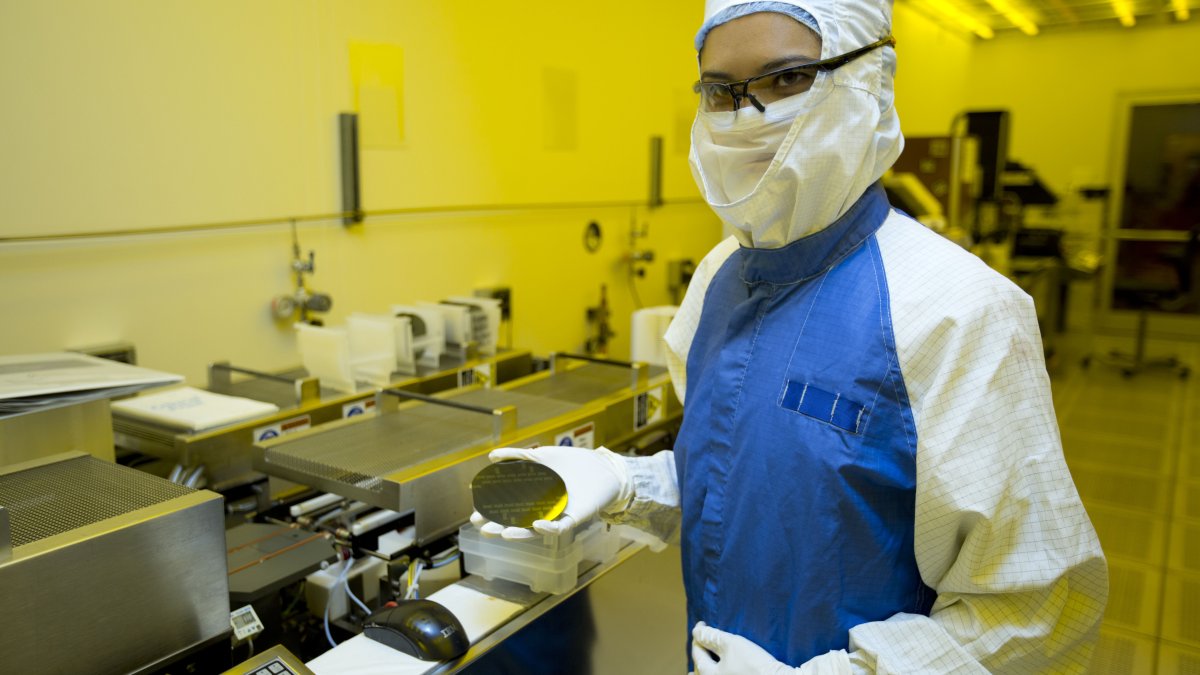
FuriosaAI has raised $620 million in a Series D round that values the Seoul-based AI chip developer at roughly $2.9 billion post-money, about four times the $735 million valuation it carried in 2025.
The capital stack is unusually state-weighted for a semiconductor startup. South Korea's National Growth Fund contributed $280 million as the largest single investor, existing shareholders added $125 million in follow-on money, and international investors accounted for $110 million. U.S.-based Infinitum was the largest foreign participant, alongside Singapore's QUDA Capital, Cisco Investments, Abu Dhabi's NeoFort Holding, Jericho Capital and Worldline Capital. The Export-Import Bank of Korea made its first direct equity investment in a startup in this round, and Korea's UAMCO committed $30 million.
Among the returning holders, Korea Development Bank added $22 million, and all three original seed investors took part: NAVER, DSC Investment and KDB Capital. DSC has backed the company since 2017, the year it was founded. QUDA Capital's founder Charlie Foo, a former NVIDIA and Mellanox Asia-Pacific enterprise chief, now serves as a principal adviser to FuriosaAI.
"We are entering a new phase of bringing our technology to the global AI infrastructure market at scale," said co-founder and CEO June Paik. The company said the round funds RNGD production expansion, its software ecosystem, and development of a third-generation accelerator.
FuriosaAI builds inference chips rather than training accelerators, a segment where buyers care less about peak performance and more about cost per token served. Infinitum chief investment officer John Yetimoglu said in the announcement that FuriosaAI has "gone further" than most challengers by "securing production deployments with leading enterprises such as Samsung SDS and LG Group" — the commercial proof point the round was priced on.
Korean press reports, which the company did not confirm in its release, put TSMC's RNGD output at 20,000 units this year rising above 40,000 in 2027, and describe a third-generation part developed with Broadcom. FuriosaAI began volume production of RNGD in January 2026.
What it means: the money is a bet that inference, not training, becomes the volume business of AI compute — and that governments will pay to keep a domestic alternative to NVIDIA alive. Roughly two-thirds of this round came from Korean public and quasi-public institutions. That is a subsidy for supply-chain sovereignty as much as a venture bet, and it sets a template other mid-sized economies are likely to copy.
Comments (0)
Log in to join the discussion
Log InNo comments yet