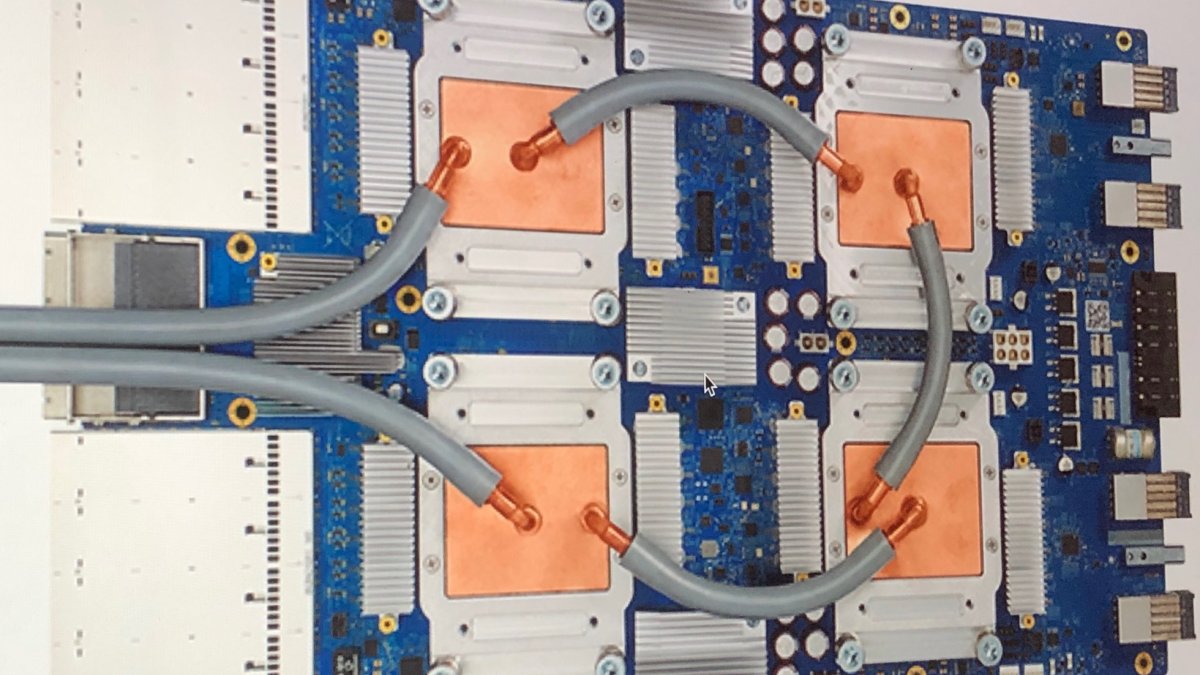
OpenAI, the single most important customer in Nvidia's AI empire, is preparing to buy chips from Nvidia's most credible challenger. The Information reported on October 27 that OpenAI plans to purchase Google's tensor processing units, citing a person familiar with the matter. Bloomberg separately reported the same intent, also through an unnamed source. Neither company has confirmed a deal, and no financial terms, chip volumes, or delivery timelines are public — both OpenAI and Google declined to comment or did not respond when Reuters and Bloomberg asked.
The clearest physical evidence does not come from either company's press office. It comes from OpenAI's own job board. On October 20, OpenAI posted a listing for a "Software Engineer, TPU Compilers" on its Inference team in San Francisco. The ad says OpenAI is looking for someone to "lead the optimization of OpenAI's state-of-the-art frontier models on TPUs," with quantization work explicitly in scope. Companies do not hire compiler engineers for hypothetical projects.
There is history here. Reuters reported in June 2025 that OpenAI had begun renting Google's TPUs to reduce its dependence on Nvidia. At the time, an OpenAI spokesperson said the company had no specific plans to use TPUs — a statement this week's reporting has now effectively retired. Last week OpenAI announced it would serve its models through Google Cloud, and the relationship between the two competing labs keeps thickening at the infrastructure layer even as they fight for the same users.
The scale of what OpenAI already owes Nvidia makes the hedge notable. In August, Nvidia agreed to provide more than $100 billion in credit support for a large OpenAI data center project in Ohio that will run entirely on Nvidia architecture, and Jensen Huang has said OpenAI has committed roughly $600 billion in spending on Nvidia servers through 2030. OpenAI is not walking away from any of that. It is building an alternative.
Google, for its part, has spent this year turning TPUs from an internal asset into a product line. It began selling TPUs directly to data center operators, starting with emerging clouds like Fluidstack. Its eighth-generation chips split into two purpose-built architectures — TPU 8t for training, with nearly three times the compute per pod of the previous generation, and TPU 8i for the iterative workloads of many specialized agents. On October 27, Oracle announced it will become the first hyperscaler outside Google to offer TPUs, with availability beginning in calendar 2027. Two days earlier, Google open-sourced TorchTPU, a native PyTorch backend for TPUs co-developed with Meta.
OpenAI has also been building its own silicon, unveiling the Jalapeño inference chip designed with Broadcom, with deployment planned before the end of 2026. Taken together, the pattern is consistent: OpenAI is assembling a supply chain in which Nvidia remains the anchor but no longer the only leg. Renting someone else's chips is hedging; buying them and hiring engineers to retune your frontier models for their architecture is commitment.
For Nvidia, the near-term financial impact is cushioned by that $600 billion procurement commitment. The strategic signal is harder to dismiss. When your largest customer posts compiler jobs for a rival's chips, the pricing power that comes from being irreplaceable starts to look negotiable — and every customer that follows OpenAI's path makes the alternative ecosystem slightly more real.
For now, the caveats matter: the purchase plan rests on unnamed sources, no volume or price has surfaced, and the job listing proves preparation rather than a signed order. But the direction of travel is no longer in doubt. The most valuable AI company in the world has decided its compute future should not have a single point of failure.
Comments (0)
Log in to join the discussion
Log InNo comments yet