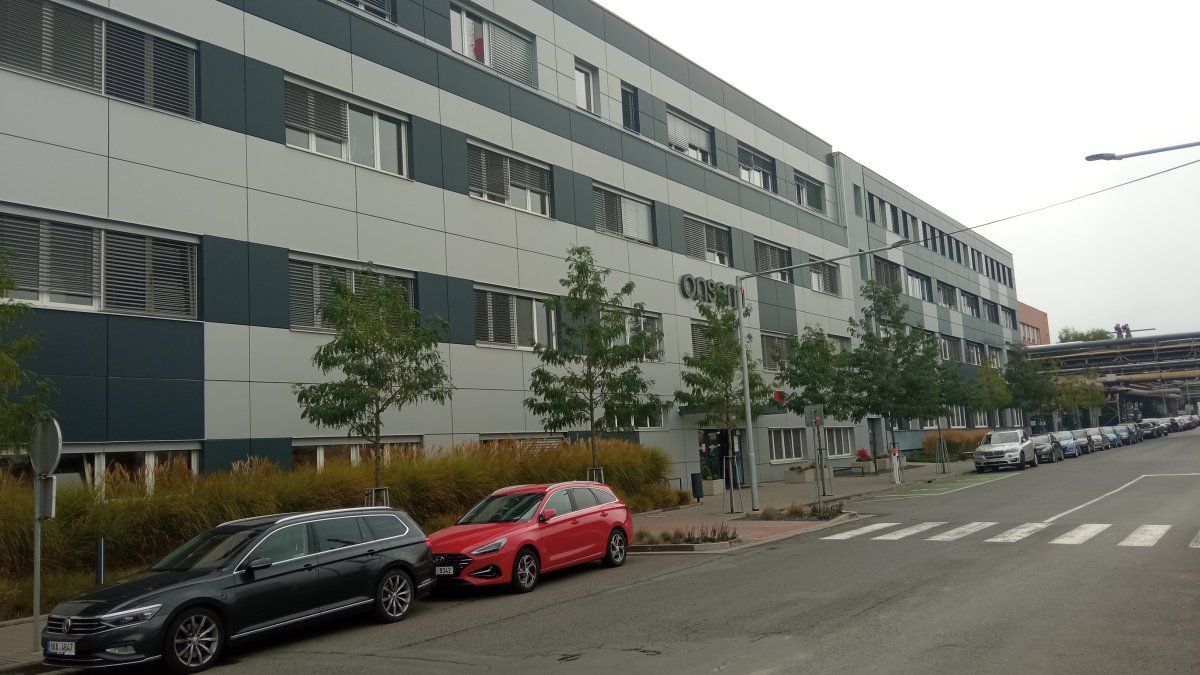
onsemi is in talks to acquire Ferric, a New York chip startup that makes integrated voltage regulators for AI processors, for close to $1 billion, The Information reported on Tuesday, citing people familiar with the matter. The structure has not been settled and the deal could include payments tied to performance targets. One source told the publication an agreement could be reached in the coming days, which is not the same as saying it will be. Neither company would discuss it: an onsemi spokesperson did not respond to a request for comment and a Ferric spokesperson declined.
The asset being priced is unglamorous and increasingly scarce. Ferric builds regulators that combine controller, inductors, transistors and capacitors into a single component and route power directly to small dies sitting beneath or inside an AI processor. Shortening that distance cuts the power lost in transmission, which matters more as accelerators draw hundreds of watts and racks move toward kilowatt-scale delivery per board.
Ferric was founded in 2010, which makes it 16 years old, and has been funded by New Science Ventures along with federal grants. Its last disclosed round was a $32.1 million Series C in December 2024. On October 12 the company launched the Fe1767, sold as Newport, which it says delivers 145 amps within 49.8 square millimetres at up to 90.5 percent efficiency. The earlier Fe1766 is a 16-phase part rated at 160 amps continuous in 35.5 square millimetres, with conversion efficiency up to 93 percent, and up to 64 devices can be combined to scale beyond 10 kilowatts.
The comparison that explains the price is Analog Devices. In May 2026 ADI agreed to buy Empower Semiconductor, a 12-year-old startup working the same problem, for $1.5 billion in cash. Announcing that deal, ADI said the quiet part out loud: "Power density, not just total watts, has become the limiting factor." Every vendor selling AI silicon now has to answer for what happens between the grid and the transistor.
onsemi needs that answer. Second-quarter 2026 revenue was about $1.604 billion, up 9 percent year on year, and the company says its AI data-center business is its fastest-growing activity and should more than double during 2026. In September it framed a $213 billion market opportunity around power and sensing, with its chief executive calling power density one of the defining engineering challenges of the decade.
There is a complication on the balance sheet. onsemi is already buying Synaptics, and on October 1 it amended that agreement to $123 per share in cash, about $5.7 billion, down from roughly $7 billion, after Synaptics received an unsolicited competing offer from a third party. That deal is expected to close by mid-2027 subject to approvals and is described as immediately accretive on a non-GAAP basis. A Ferric acquisition would sit on top of it.
Investors get a first look at how the strategy is landing when onsemi reports third-quarter results after the close on November 2. The Ferric talks remain unconfirmed and unsigned, and a reported $1 billion price for a company whose last private round was $32.1 million implies the valuation is being set by strategic scarcity rather than revenue. That is the pattern to expect across this layer of the stack: as rack power climbs, the component that delivers current to the die stops being a commodity and starts being a chokepoint, and the companies that own the IP get bought before they get big.
Comments (0)
Log in to join the discussion
Log InNo comments yet