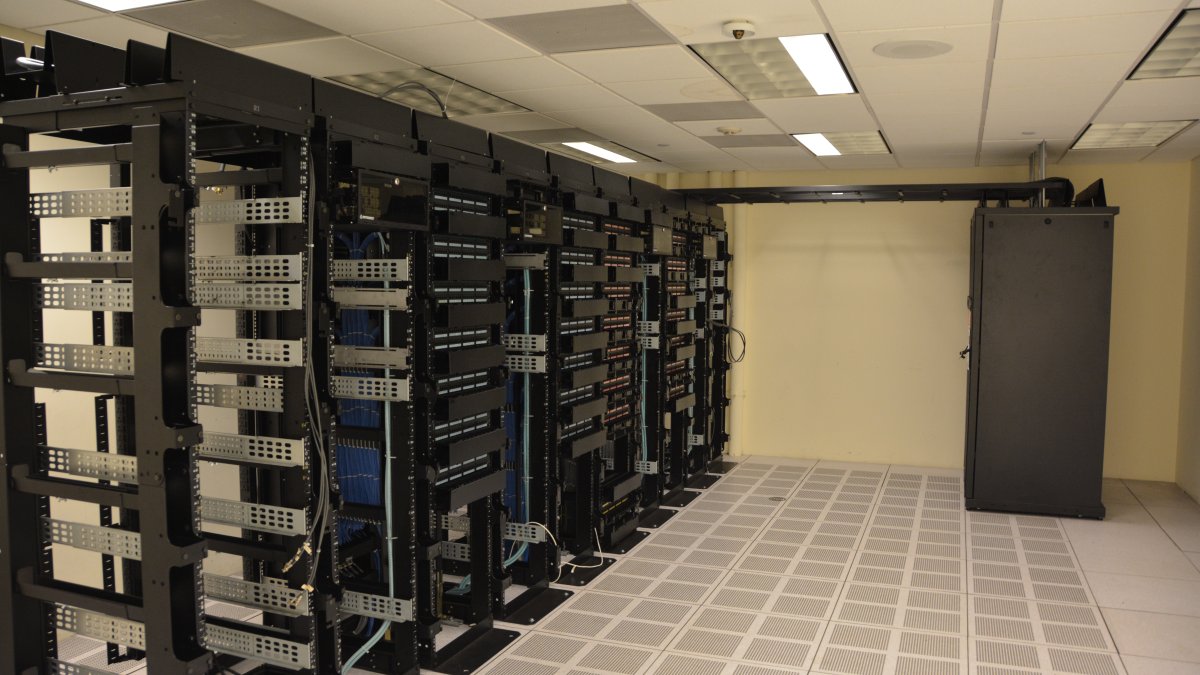
NVIDIA and Oracle used Oracle AI World in Las Vegas to announce that Oracle Cloud Infrastructure will expand its Superclusters with Vera Rubin NVL72 systems to multi-gigawatt scale, while NVIDIA's new Vera Rubin NVL72 racks and Vera CPUs became generally available on OCI on the same day. The move is aimed at a workload split that has quietly become the defining constraint of agentic AI: GPU-heavy training and inference on one side, and the CPU-intensive work agents perform between model calls on the other.
The CPU side is the less glamorous but arguably more consequential half. Agents spend much of their lives executing tools, testing code and retrieving data, and slow execution there leaves expensive GPUs idle. OCI Compute with Vera CPUs pairs high single-thread performance with high memory bandwidth, and Oracle's Kubernetes Engine lets customers scale CPU and GPU pools independently. Oracle Acceleron adds hardware-based isolation for workloads running untrusted, AI-generated code.
For customers who want a smaller on-ramp to Rubin, Oracle also plans to introduce HGX Rubin NVL8 systems: eight Rubin GPUs connected through NVLink in an x86-based server, with two 64-core Intel Xeon 6 CPUs, 4TB of DDR5 memory and 6.4 Tbps of RDMA networking. That keeps x86 application compatibility while offering next-generation GPU technology in an eight-GPU configuration for training, fine-tuning and inference.
Each NVL72 rack connects 72 GPUs through NVLink scale-up networking, and OCI's multiplanar network scales across hundreds of thousands of GPUs, combining Oracle Acceleron networking with NVIDIA Spectrum-X Ethernet built on Spectrum-6 switches and BlueField-4 DPUs. The planned expansion builds on OCI's existing GB200 and GB300 NVL72 footprint, with NVIDIA's CUDA software foundation carrying workloads across hardware generations.
OpenAI is the marquee proof point. The company said it has trained and served GPT-6 Astra on an OCI Supercluster with more than 100,000 NVIDIA Blackwell GPUs in Abilene, Texas. "As our frontier models advance, we need infrastructure that can keep pace," said Sreekanth Pothanis, engineering leader for compute infrastructure at OpenAI. OpenAI's compute CTO Uday Ruddarraju added that the company is bringing Vera CPUs into production to support "rapidly growing agentic sandbox workloads" at scale.
The announcement fits a wider pattern from Oracle AI World, where the company has been pairing frontier hardware availability with agentic application launches as it chases a backlog that already dwarfs its historical cloud business. For NVIDIA, every gigawatt of OCI Supercluster expansion is another anchor for the Vera Rubin generation before competitors' accelerators mature, and the Vera CPU push extends the platform into territory that was historically x86 server vendors' turf.
What to watch next is whether the multi-gigawatt build-out lands on schedule. Oracle's constraint has rarely been demand, and the company itself has acknowledged that power, cooling and physical capacity, not chip supply, are now the binding limits. If OCI delivers Rubin racks at the promised scale, the GPU-and-CPU split announced this week will likely become the default blueprint other hyperscalers copy for agentic workloads.
Comments (0)
Log in to join the discussion
Log InNo comments yet