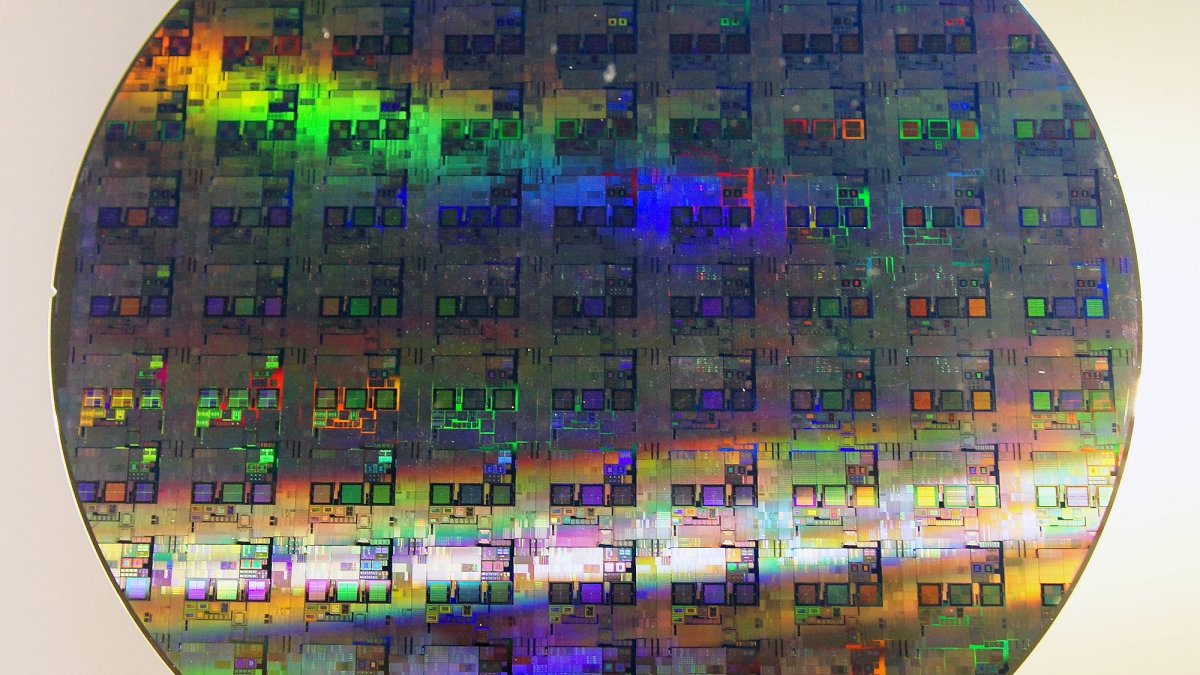
Samsung Electronics is preparing a major expansion of its Xi'an NAND complex in northwest China, Korean media reported Monday. According to BusinessKorea, citing industry sources, the company plans to lift monthly V9 NAND output at its second Xi'an fab (X2) from roughly 10,000 300mm wafers to about 50,000 — a fivefold increase — with equipment due in around February 2027 and line conversion completed by November 2027. Samsung has not officially confirmed the plan, and the figures come from supply-chain sources rather than a company announcement.
The conversion plan is surgical: new X2 capacity goes entirely to V9, and 20 to 30 percent of the existing V6 lines will be flipped to the newer process. Once complete, Samsung's total China NAND capacity — including V8 production at the first Xi'an fab — would reach roughly 100,000 wafers per month, about a third of its global NAND output, making the Xi'an campus the production base for the chips that go into its AI data center storage business.
The demand math explains the urgency. TrendForce forecasts eSSD-related NAND demand to grow 84 percent this year and 55 percent next year, while PC SSD demand falls 12 percent and mobile drops 1 percent. eSSD's share of total NAND demand is expected to climb from 45 percent this year to 57 percent next year. Meanwhile, Bank of America estimates 512Gb commodity NAND prices fell about 30 percent quarter over quarter in the third quarter as PC and mobile orders weakened. In short: the commodity market is flooding while the AI storage market is starving.
V9 is Samsung's ninth-generation V-NAND with 286 layers, up from 236 in V8. The company says TLC storage density improves about 50 percent and I/O speed rises 33 percent to 3.2Gbps, with yields reportedly reaching around 90 percent versus 80 to 85 percent for the prior generation — company-reported figures that, if accurate, make the high-stack process both the most capable and the most profitable one to scale.
The competitive backdrop matters as much as the demand one. Samsung is under pressure from SK Hynix in enterprise SSDs and from fast-rising Chinese memory makers, and Korean media reports the memory division, now under veteran Hwang Sang-joon, is expected to drive the AI storage pivot. The Xi'an campus — which Samsung built over the past decade into one of the world's largest NAND production sites — is the obvious lever: existing cleanrooms, an established local supply chain, and no greenfield construction delay.
The expansion also shows how thoroughly AI has re-sorted the memory industry's priorities. In the same quarter that commodity NAND prices fell 30 percent, hyperscalers kept signing multi-year eSSD supply commitments at rising prices. Capacity is migrating toward high-layer-count, high-yield product aimed at data center SSDs, and every major memory maker is running the same calculation — which is also how the next supply glut eventually arrives. Until then, Samsung's Xi'an bet is a wager that AI storage demand outlasts the memory cycle.
Comments (0)
Log in to join the discussion
Log InNo comments yet