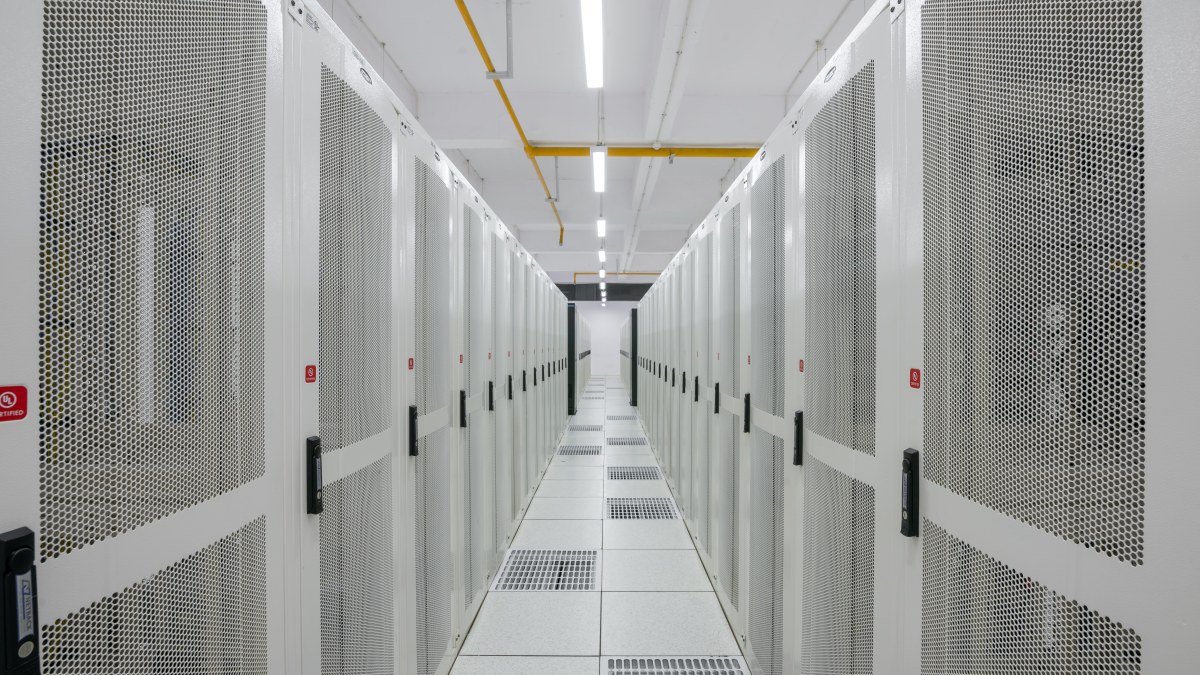
A six-month-old startup founded by two former Microsoft vice presidents has raised $277 million to build data centers that run AI inference on anything except Nvidia silicon. Marlowe, based in Bellevue, Washington and Redwood City, California, closed the seed round at a $1.15 billion valuation, led by Accel, with participation from Bessemer Venture Partners, Altimeter Capital, Atreides Management, Valor Ventures and Neo, among others, according to Bloomberg and GeekWire.
The total includes a smaller initial round led by Eclipse, whose founder Lior Susan serves as Marlowe's executive chairman. The angel list is unusually glamorous for a seed-stage infrastructure company: KKR co-founder Henry Kravis, Uber CEO Dara Khosrowshahi, Box CEO Aaron Levie and former LinkedIn CEO Ryan Roslansky all took part, and Bloomberg reported that an investing entity tied to Stripe's founders also joined.
Chief executive Dan Lewis co-founded the freight marketplace Convoy, which reached a $3.8 billion valuation before shutting down in 2023, and later ran enterprise AI product work at Microsoft. Chief technology officer Kutta Srinivasan was Microsoft's company-wide technical lead for AI infrastructure, responsible for getting scarce Nvidia GPUs to internal researchers and customers including OpenAI and Anthropic. Both left with the same observation: non-Nvidia chips kept arriving, and almost nobody was running them well. "There were literally times when a significant portion of our non-Nvidia fleet was either idle or grossly underused," Srinivasan told GeekWire.
Marlowe calls its product a "multi-silicon AI factory." The pitch is that inference is not one workload but many — a coding agent refactoring a repository, a voice assistant that must answer in under a second, and a model summarizing a 500-page filing behave differently, and each deserves hardware and software tuned for its class. The company co-designs chip selection, facility layout, networking and scheduling software per workload, and says gains of 10 to 20 percent at each layer add up to two to three times more output per watt and per dollar than conventional GPU clouds. That figure is a company projection for now — none of its sites is running yet, and it has not been independently verified.
The first site, built around chips from inference-chip startup Etched, is scheduled to go live in December and will mainly serve a large AI coding company Marlowe declined to name. A second, larger site using AMD's Helios rack-scale systems is on track for the second quarter of 2027. Both are under contract, a third is under a letter of intent, and the company says it has signed three customer agreements in total. Marlowe deliberately plans tens-of-megawatts deployments rather than gigawatt campuses, financed site by site against customer contracts, and uses Broadcom networking hardware. AMD's AI chief Vamsi Boppana said AMD is "excited to deploy our new Helios system" with Marlowe next year.
The bet lands in a crowded lane. Gimlet Labs raised $300 million in September and General Compute raised $100 million in October on similar multi-chip inference theses, and Parasail.io is building software for coordinating mixed processor fleets. The difference is the founding team's exposure to the problem at Microsoft scale — and, as Lewis put it, the difficulty itself is the moat: "You can't just take a new chip that comes out and plug it in and expect it to produce tokens. You have to go do the work."
For the industry, a $277 million seed is a signal about where investors think the bottleneck sits. Training runs make headlines, but the cost of serving trained models to millions of users is where infrastructure margins are being decided, and that market has been organized around a single vendor's silicon. If Marlowe and its peers are right, the next phase of the AI buildout will be decided not by who buys the most chips, but by who can squeeze the most tokens out of whatever chips are available.
Comments (0)
Log in to join the discussion
Log InNo comments yet