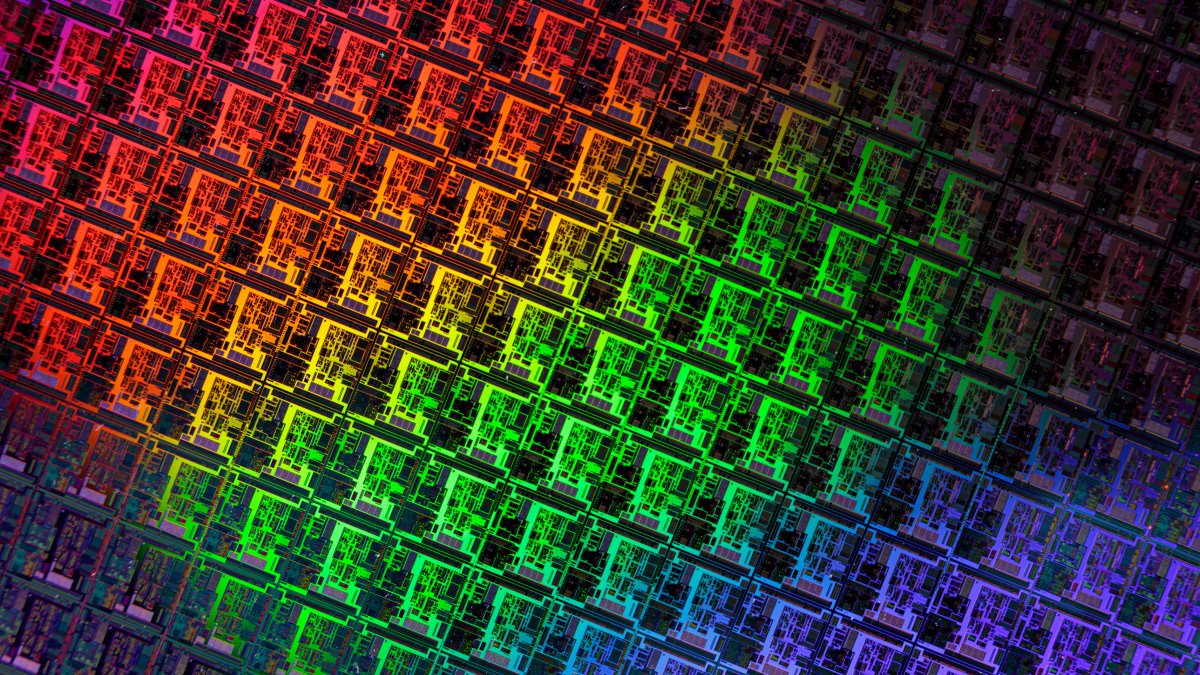
Bolt Graphics, a California startup that has been promising a GPU unlike anything on the market, has its first piece of real silicon. The company says a small test chip for its Zeus project — 6 square millimeters, fabricated by TSMC on a 12nm process — powered on and ran without issues, drawing 1.4 watts. For comparison, the FPGA Bolt has used to prototype its designs draws 35 watts.
The test die is not a GPU. Its core is dedicated hardware for accelerating electromagnetic simulation, the workload Bolt is positioning as Zeus's initial beachhead — the same math serves radar sensor design, camera lens engineering, and antenna placement. Bolt has released no performance figures for the chip, saying only that results exceeded its internal expectations. That is a company claim, not an independently verified benchmark. The silicon was tested in mid-October, and Bolt has opened an office in Taipei to stay close to its manufacturing partners ahead of production.
The shipping product remains a different beast. The Zeus GPU will be built on TSMC's N5P process — a node introduced in 2020 — with Bolt saying it deliberately picked an older, less contested process to avoid fighting the rest of the industry for scarce wafer capacity, a pointed choice in a market where leading-edge allocation is the binding constraint. Zeus is built on RISC-V processor cores paired with Bolt's custom ray-tracing hardware, and its PCIe cards will combine soldered LPDDR5X with DDR5 SO-DIMM slots, allowing memory to be expanded up to 384GB. Volume manufacturing is not expected until 2028.
The gap between announcement and evidence is still wide. When Zeus was unveiled in March 2025, Bolt claimed rendering performance up to ten times current GPUs, a 300-fold speedup in electromagnetic simulation, and path-tracing throughput up to ten times NVIDIA's RTX 5090. None of those figures has been independently tested, and the company has not named a single customer. It says more than 14,000 companies, developers and individuals have signed up for its early-access program, with a product pipeline worth over $500 million — again, its own numbers.
The money is moving anyway. Reuters, citing three people familiar with the matter, reported days after the silicon announcement that Bolt is seeking to raise about $100 million at a valuation of roughly $700 million. The company says it plans to sell Zeus first to studios, engineers and scientists, and only later extend to gaming and AI — which would eventually put it in direct competition with NVIDIA and AMD in the consumer GPU market.
Bolt's pitch lands differently in 2026 than it would have in 2024. Memory prices are the industry's loudest cost story, leading-edge wafer supply is spoken for years in advance, and AI labs are actively looking for compute that is not priced by a single vendor. A startup that can offer high memory capacity on an uncontested process node is selling into a seller's market for alternatives. But the hard part was never taping out a test die — it is the software ecosystem, where CUDA's two-decade head start has buried every hardware challenger so far. A 6 mm square of 12nm silicon is a credible first step on a very long road, and everything else about Zeus remains, for now, a slide.
Comments (0)
Log in to join the discussion
Log InNo comments yet