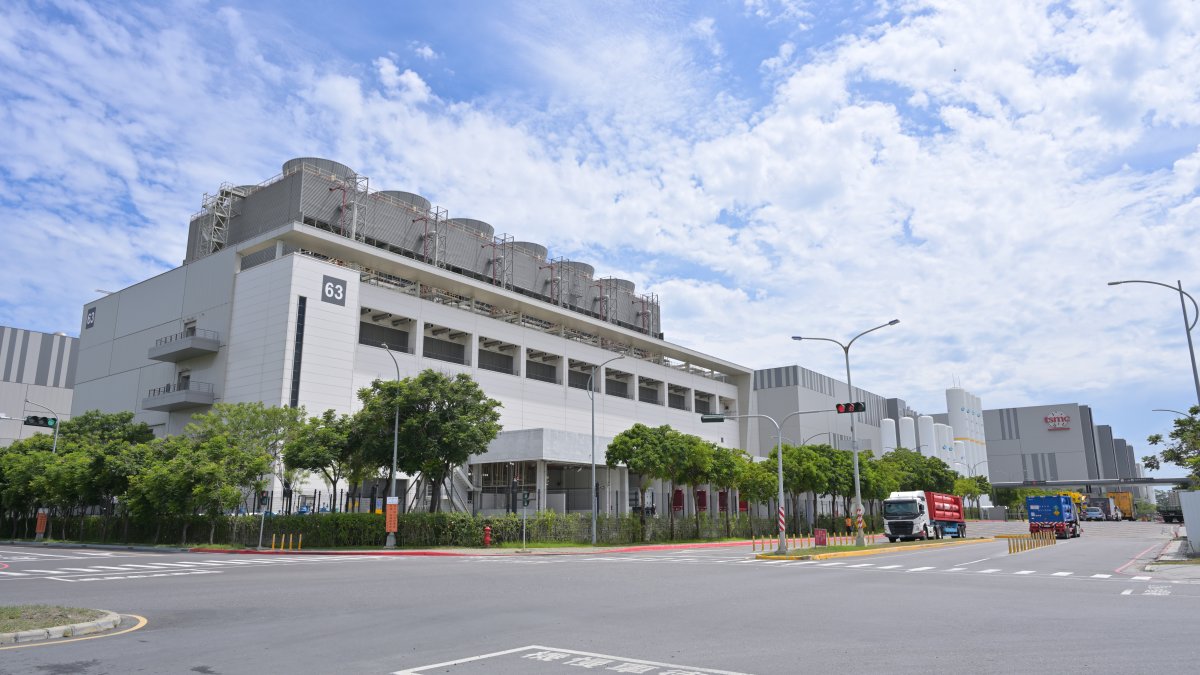
Elon Musk has confirmed that TSMC is in discussions over a role in Terafab, his bid to build one of the world's largest vertically integrated chip complexes for Tesla, SpaceX and xAI. Asked about reports of the talks on X on Saturday, Musk replied: "Just discussions, but something may come of it." TSMC has declined to comment.
The reports trace to an exclusive in Tim Culpan's Culpium newsletter, later picked up by Tom's Hardware and Chinese financial media. According to the reporting, two structures are on the table. In the scenario observers consider most likely, TSMC would own and operate a dedicated Texas fab with Terafab as its anchor customer, while Musk's companies provide capital, long-term chip-purchase commitments, or both — the model TSMC already runs in Japan (JASM) and Germany (ESMC), where local partners bring money and demand while TSMC contributes process technology and operational control. A more radical second option would invert that: SpaceX or a Terafab holding entity in majority control, with TSMC as a minority investor supplying its nodes and know-how — a structure with no precedent for the world's top contract chipmaker.
The irony is hard to miss. When Musk laid out Terafab in April, his explanation for building it was a swipe at TSMC itself: "TSMC just can't make the staggeringly large number of chips needed! If they could, we would not need to do this." The project's scale explains the shift. SpaceX announced in August that Terafab will land in Grimes County, Texas, with first-phase investment above $16.8 billion and roughly 3,000 jobs, integrating logic chips, memory and advanced packaging in a single site, with silicon output targeted around 2029. Chinese and US reporting on the long-term plan cites potential total investment of up to $119 billion across more than 100 million square feet, ambitions of up to one million wafer starts per month, and a design target of roughly one terawatt of AI compute per year — a figure Musk's camp has characterized as about fifty times current global AI compute output.
Terafab's confirmed manufacturing partner so far is Intel, which joined the project in April and is slated to supply its 1.4nm-class 14A process, with Tesla named as the first major customer at the Austin-area AI chip complex. But reporting suggests that collaboration has made limited progress, and the details — including whether Terafab would even receive a license to Intel's 14A process design kit — remain unresolved. There is also a quieter legal wrinkle: Intel and TSMC operate under a broad cross-patent license. Terafab does not, meaning chips made on Intel's node could brush against TSMC patents in ways that closer TSMC involvement would neatly resolve.
The talks dovetail with separate reporting that TSMC is weighing a multibillion-dollar Texas campus focused on AI chips — potentially up to six fabs at as much as $20 billion each — with Terafab positioned as the kind of large, steady customer that could justify a new US hub. TSMC's teams have reportedly been assigned to evaluate the state, which would give the company a dual US manufacturing footprint alongside its $265 billion Arizona commitment.
None of this is a signed deal, and Musk's own framing — "just discussions" — is doing a lot of work. But the direction of travel is clear: the man who said existing foundries could not possibly meet his demand is now courting every advanced-node supplier on Earth. Musk's actual goal was never to compete with TSMC, Intel Foundry or Samsung; it was to guarantee surplus custom silicon for his own vertical stack. If renting TSMC's process technology achieves that faster than reinventing it, the flip from rivalry to partnership is entirely in character. Watch for whether Terafab's Intel 14A plans get quietly repurposed — and for TSMC's first public comment, which so far has not come.
Comments (0)
Log in to join the discussion
Log InNo comments yet