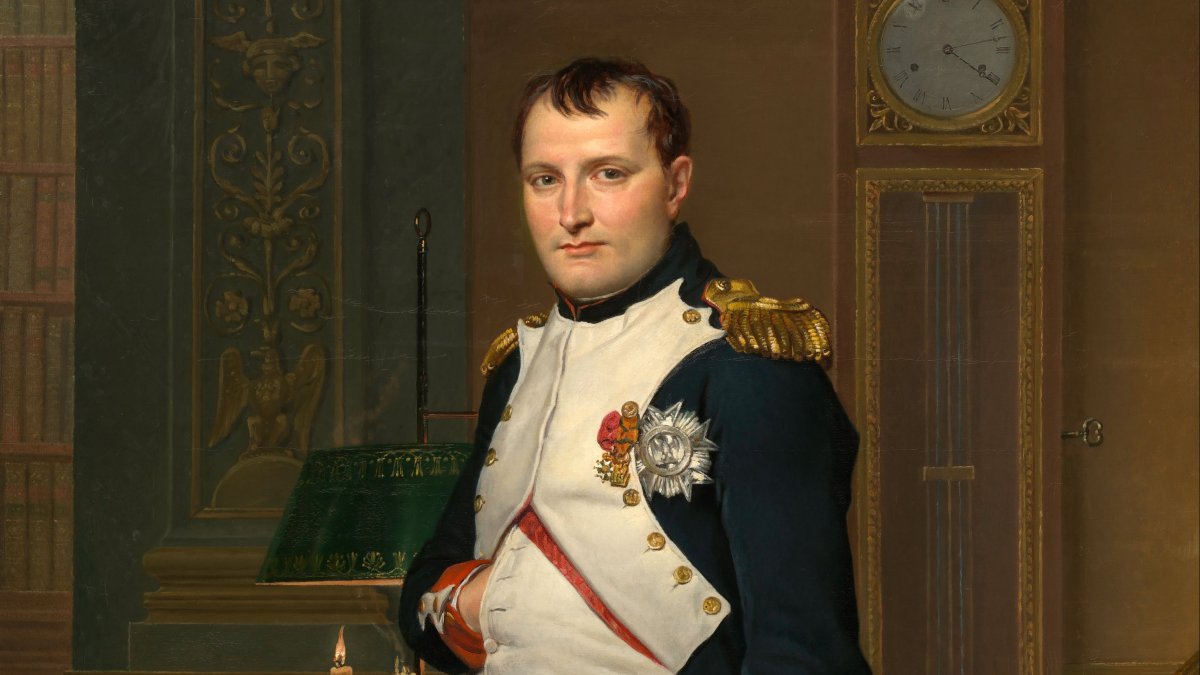
For 217 years, the contents of a coded military letter dictated in Napoleon Bonaparte's name resisted every attempt to read them. This week the cipher fell — not to a team of cryptanalysts, but to a single AI run. Carter Church, an engineer at cybersecurity firm SentinelOne, used OpenAI's GPT-6 Astra model to break the letter in roughly six hours, after feeding it one image and one goal.
The letter dates to March 16, 1809, with Austria preparing to declare war on France. Napoleon wrote to his stepson Eugène de Beauharnais, the Viceroy of Italy, instructing him to relay military information through a coded letter to General Auguste de Marmont. The surviving document opens with a line of plain French, followed by 24 rows of digits, letters and invented symbols — about 1,300 cipher units in total, drawn from 155 distinct symbols. Some stand for single letters; others encode entire French words.
What made the letter so stubborn was that its codebook was lost. Researchers had previously confirmed the meaning of only 33 of the 155 symbols, which was enough to tantalize but not to read. The message sat on Cryptiana's list of Unsolved Historical Ciphers for decades.
Church's account of the run suggests the model did much of the archaeology itself: Astra analyzed the scan, segmented the document into regions, recognized individual symbols, and then went after the structure of the cipher. Because part of the key was already known, the problem was less pure codebreaking than reconstructing the remaining 122 symbols and the grammar connecting them. Church posted the result in a thread on September 30 and published a full solution package, including a script that regenerates the reading, on his blog.
The solution has since been checked independently: Satoshi Tomokiyo, who maintains the Cryptiana database, verified the reading and marked the entry as solved.
Church's own framing is worth noting. What impressed him was not that a model can do cryptanalysis — dedicated tools have chipped away at such ciphers for years — but that the entire multimodal workflow, from reading a historical scan to producing a verified transcription, ran end to end in about six hours from a single prompt. Tasks that previously required a specialist to break into stages — OCR, symbol clustering, hypothesis testing, transcription — now fit inside one agentic loop.
For archives, the implication is concrete. Collections like Cryptiana's contain dozens of unsolved historical ciphers, and most have never been attacked with this kind of tooling. A frontier model with vision, code execution and long-horizon reasoning turns each one into an afternoon-scale problem rather than a career-scale one — provided the scan is legible and a partial key exists to anchor the search.
Comments (0)
Log in to join the discussion
Log InNo comments yet