Disney and Amazon are pulling back the curtain on what Walt Disney Imagineering thinks is the next stage of audio-animatronics: three robots with distinct personalities that react to visitors, to their set and to each other in real time, powered by AI running on AWS. The Hollywood Reporter and CNET both published interviews with the two teams on Wednesday ahead of the public debut at AWS re:Invent in Las Vegas on November 30, after which the trio moves into a Disney park retail experience.
The characters are Anzellans, the small droidsmith alien species from the Star Wars galaxy, and they are original creations built with Lucasfilm: Vilo Vele the boss, Kado Bre'a the mechanic who wants to be the center of attention, and Jibu Bre'a, Kado's shy twin. Disney has been putting scripted robotic figures in its parks since the Enchanted Tiki Room opened in 1963. What is new here is that nothing on stage is fixed: each robot carries cameras and microphones, and AWS infrastructure decides in the moment which actions and which alien phrases it performs.
Samira Panah Bakhtiar, the AWS general manager for media, entertainment and games, described the core technical constraint: each character is aware of three things happening at once, the guests in front of it, what is happening in the workshop scene around it, and what the other characters are doing. Keeping all three in view at once, she said, is what makes the robots feel alive. They also improvise off one another with nobody puppeteering from behind a wall.
The dialogue system is a large authored corpus rather than free generation. The robots draw on hundreds of thousands of prerecorded lines, mixing English with Anzellan speech the way the films do, and can react to specifics in the room: a guest wearing a birthday button, a Star Wars T-shirt, how many people are present and roughly how old they are. Imagineering's Kyle Laughlin, senior VP of R&D and technology, told The Hollywood Reporter this will be the first time Disney personalizes a character experience based on who the guest is.
The guardrails are as interesting as the capability. Imagineers wrote every script and movement, and the robots do not deviate from them; the AI chooses timing and selection inside human-authored boundaries. The team built the software in what Laughlin called mere months, using AWS's Kiro coding agent to turn creative briefs into code that humans then reviewed, and Amazon Bedrock to pick among frontier models from providers including OpenAI, Anthropic and Meta depending on the task, from voice to world models.
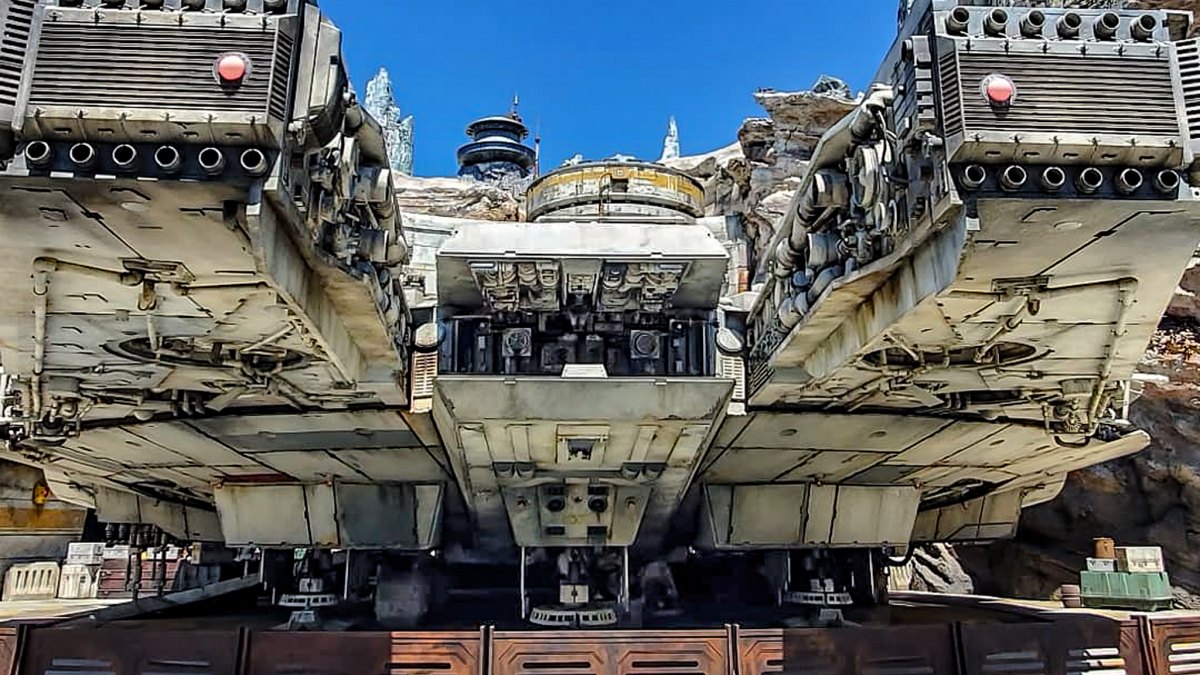
For now the Anzellans appear only at re:Invent, but the obvious destination is Star Wars: Galaxy's Edge in California and Orlando, where Imagineering already blends live performers, human-controlled droids and scripted figures. Laughlin framed the end state as a living world populated by every kind of performance, with the park's challenge being to blend them convincingly.
Theme parks are quietly becoming the most consumer-facing proving ground for physical AI: real crowds, real safety constraints, and a brand that cannot afford a robot saying something off-script. Disney's answer, tightly authored content with model-driven selection on top, is a template other venue operators will study. The hard part will not be the model layer. It is scaling authored dialogue and choreography fast enough that the personalization does not run out after the third visit.
Comments (0)
Log in to join the discussion
Log InNo comments yet