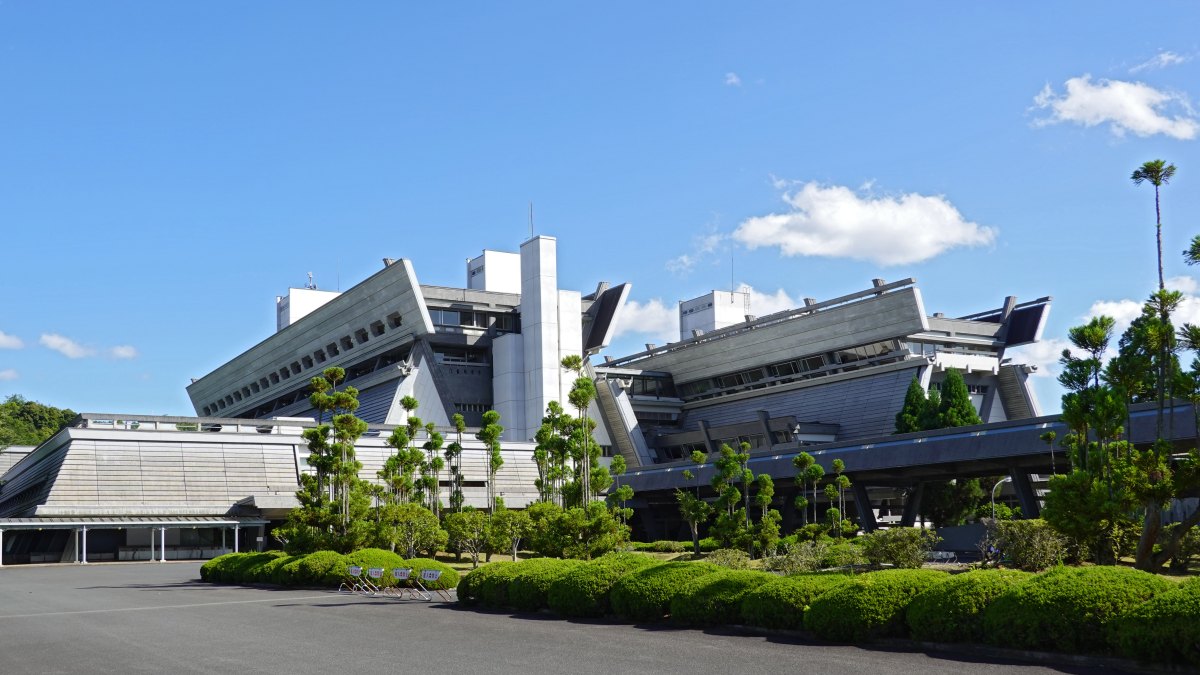
On October 4, the United States and sixteen other nations endorsed the "Kyoto Vision for a Golden Age of Science," a declaration aimed at rebuilding the machinery of scientific discovery around super intelligence. The agreement was led by Michael Kratsios, director of the White House Office of Science and Technology Policy, and signed at the 23rd annual Science and Technology in Society (STS) Forum in Kyoto. The initial endorsers: Argentina, Bulgaria, Chile, Cyprus, Germany, Greece, Indonesia, Italy, Japan, Kazakhstan, South Korea, New Zealand, Poland, Singapore, the United Arab Emirates, the United Kingdom and the United States. China was not among them, as first reported by Bloomberg.
What the document is — and is not — matters as much as the vision it sells. This is a one-page declaration of direction, not a binding treaty: it creates no global regulator, grants no country authority over another's laboratories, and, notably, contains no money figures, no deadlines and no named programs. The declaration PDF itself names no signatories at all; the list of seventeen comes from the White House release alone. What it does do is put seventeen governments on record behind a different model of how science should be run.
The text is organized around three calls. The first is reinventing the institutions of discovery: diversified funding instruments — long-duration awards, rapid grants, prizes and challenges — in place of the single slow pipeline every promising project currently navigates, plus an endorsement of "metascience," the use of empirical methods to study which funding systems and incentives actually produce useful discovery.
The second is the one that gives the declaration its name-value: harnessing super intelligence for science, by expanding researcher access to SI tools, scientific data, computing infrastructure and experimental facilities. Kratsios sketched the destination: automated cloud laboratories operating at industrial scale, in which "robotic systems will conduct hundreds of parallel experiments, generating data that feeds back for real-time analysis and hypothesis refinement." Machines, he said, can already synthesize thousands of papers, compressing years of research into "tens of hours of work by armies of digital agents assisting human researchers."
The third call addresses the research workforce itself: merit-based investment in high-potential students and early-career researchers, expanded fellowships and cross-disciplinary doctoral programs, and an unusually candid acknowledgment that modern laboratories run on technicians, machinists and software engineers as much as on the people whose names reach the byline.
The wording gap between the two official documents is where the real story sits. The White House release says ministers "pledged" (twice) and "committed" (once). The declaration's own text uses "endeavor" four times and "encourage" four times — and, as a document-level comparison first published by FourWeekMBA found, never contains the words "commit," "pledge," "will" or "shall." The declaration also carries a scientific-integrity passage the release leaves out entirely: signatories "endeavor to uphold the highest standards of scientific integrity," describing science that is reproducible and transparent, communicates error and uncertainty, is subject to unbiased peer review, and "recognizes negative and null results as valuable contributions to scientific knowledge." Translated from diplomatic: everyone agreed on the direction, and nobody signed up for anything enforceable.
Kratsios, for his part, did not hedge. "Today the U.S. led an international coalition of 17 countries to endorse the Kyoto Vision for a Golden Age of Science," he posted on X. "The way we make scientific discoveries has changed." In the White House release he went further: "Super intelligence applied to science will be the greatest force in history for democratizing research."
The Kyoto Vision is the international extension of a domestic overhaul already underway. In July, the White House published its "Science: A New Golden Age" report — described by the administration as the most extensive rethinking of the federal research enterprise in roughly 80 years — proposing faster grants, longer awards, prize competitions, expanded ARPA-style organizations and new mission-driven "X-Labs." The vocabulary is deliberate: "SI," the term the administration adopted in September when it began replacing "AI" across government usage (including a dedicated Super Intelligence Force), a rebrand whose side effects have ranged from a run on Slovenia's .si domain to confused style guides everywhere.
The same Kyoto stage carried the counterweight to all this acceleration: SoftBank's Masayoshi Son, standing beside Kratsios, warning that superintelligence in the wrong hands can become "super dangerous." Seventeen governments spent the weekend drafting how to point super intelligence at the lab bench. Whether anyone is minding the shadow side of it — as the forum's own mission statement puts it, controlling the "shadows" while strengthening the "lights" — remained, on the evidence of this declaration, an endeavor.
Comments (0)
Log in to join the discussion
Log InNo comments yet