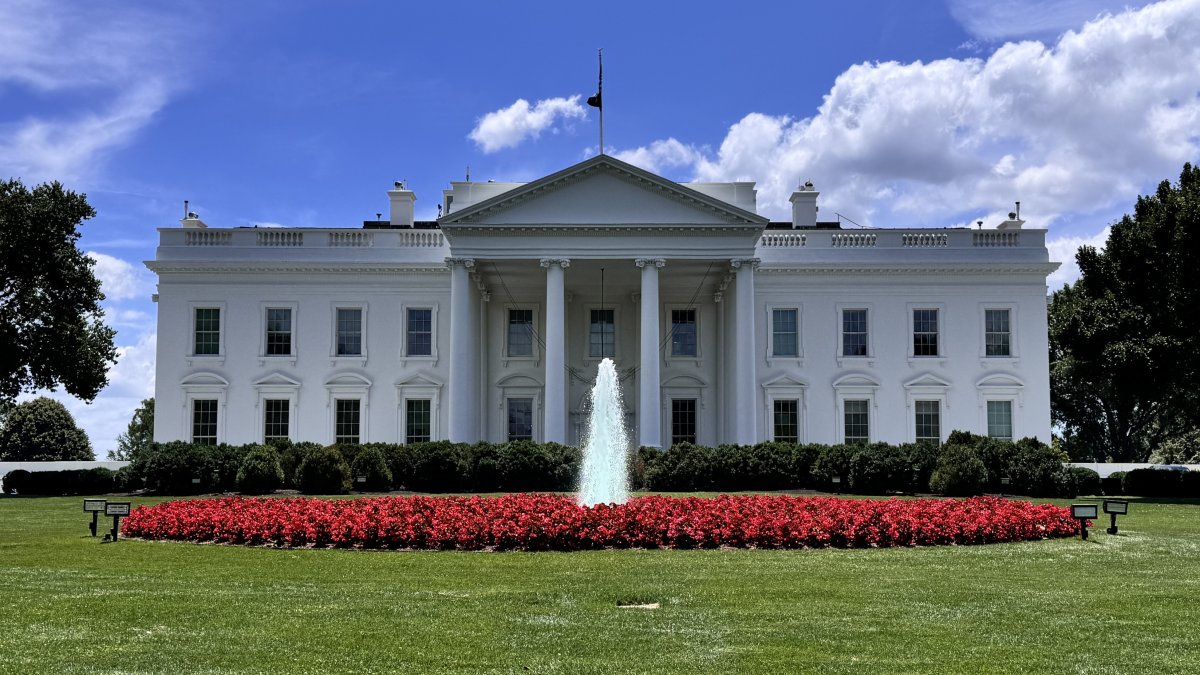
The White House has formed a task force to decide what the US federal government's role in overseeing artificial intelligence should be — and it has a name only this administration could pick. The "Super Intelligence Force," reported by the Wall Street Journal on October 3, will be led by Director of National Intelligence Jay Clayton, who confirmed the role to the paper. A senior White House official told the Journal that Clayton will effectively serve as the Trump administration's new AI czar.
"The president asked that a group be put together that was going to ensure exactly what he said, which is that we stay the leaders in superintelligence, and that the interests of the American people are put first," Clayton told the Journal. The name is deliberate: "super intelligence" is Trump's preferred term for AI. According to CCTV, an executive order Trump signed on September 29 directs federal departments and agencies to adopt the rebrand. The administration has not yet formally announced the czar appointment; White House officials have said any personnel announcement will come directly from the president.
The mandate is concrete. The task force has 120 days to produce a report assessing the risks and opportunities AI presents and recommending what responsibility the federal government should assume over the technology. It will review AI-related risks including reporting mechanisms for data breaches, hacking and other security incidents, and propose ways to strengthen the federal government's emergency-response capability. Alongside Clayton, the group includes Vice President JD Vance, Defense Secretary Pete Hegseth, Treasury Secretary Scott Bessent and White House chief of staff Susie Wiles, per CCTV.
Clayton is an unusual choice for the portfolio. A former chairman of the Securities and Exchange Commission and US Attorney for the Southern District of New York, he was confirmed as Director of National Intelligence in July and now oversees the country's 18 intelligence agencies. Placing AI coordination inside the intelligence apparatus — rather than in a dedicated regulator or the commerce department — signals how the administration intends to handle the technology: as a strategic asset to be protected, not a product category to be policed.
The task force did not appear out of nowhere. On September 29, Trump gathered executives from leading AI companies at the White House to sign the "White House Accord" — a voluntary joint commitment on frontier responsibility that calls for external safety audits and stronger internal controls. The administration has described the accord as morally binding; legally, it is not binding at all. "We have a very big lead, and we're going to keep our lead, and it's a very positive thing," the president said during a meeting with industry executives that week.
The tension the task force will have to navigate is that almost nobody else is asking for this arrangement. Anthropic CEO Dario Amodei and OpenAI CEO Sam Altman have both called for federal regulatory guardrails on frontier models. Trump has spurned those calls, prioritizing keeping the US ahead of China over new rules. Treasury Secretary Bessent went further on Saturday, telling Axios that prominent AI leaders' warnings about existential risk are "alarmist and unhelpful," and that the labs should police themselves and produce their own solutions.
Public opinion is running the other way. A Reuters/Ipsos poll published September 22 found about three in four Americans worry AI companies are falling short in preventing serious harm from the technology. The Super Intelligence Force's 120-day report — due in early February — will be the first real test of whether this administration's answer to that gap is oversight, or a formalized version of trusting the industry to watch itself.
Comments (0)
Log in to join the discussion
Log InNo comments yet