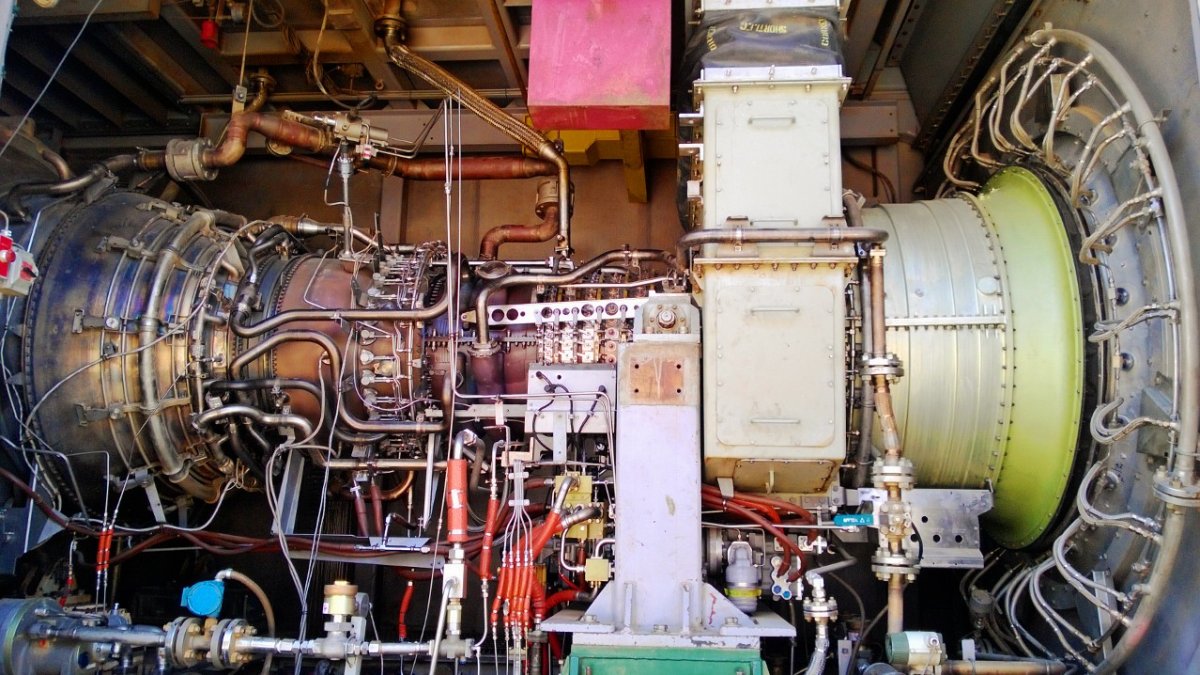
The legal fight over the gas turbines powering xAI's Colossus data center outside Memphis is going to a hearing on the merits. Judge Debra M. Brown, a federal judge in Mississippi, denied xAI's motion to dismiss the NAACP's Clean Air Act lawsuit on Friday, rejecting both of the company's core defenses. TechCrunch first reported the ruling, which was also summarized by CNBC.
The Southern Environmental Law Center, suing on behalf of the NAACP, alleges xAI "installed and operated at least 35 combustion turbines and other sources of air pollution at the Colossus site without ever obtaining the necessary preconstruction or operating air permits," in violation of the Clean Air Act. The turbines came to symbolize the build-first, permit-later approach that has defined parts of the AI data center boom.
xAI argued the turbines are exempt from permitting because they are mobile — mounted on flatbed trailers — and that the plaintiffs lack standing to sue. Judge Brown rejected the first argument on the law's own terms: "because the combustion turbines are not 'mobile sources' under Mississippi's State Implementation Plan... the plaintiffs' claims will proceed." The EPA had previously determined the turbines required federal permits, and no on-site air monitoring has been conducted; the Southern Environmental Law Center has estimated the turbines' toxic emissions cause roughly $44 million in annual health costs.
The judge also dismissed the company's more sweeping constitutional claim — that citizen suits like this one are unconstitutional because they exercise executive power. "Because citizen suit plaintiffs sue on their own behalf, in their own name, and seek penalties that redress harm to themselves, they are not exercising the federal government's executive power," Brown wrote. That argument matters well beyond this case: it is the theory industry defendants have increasingly raised against environmental citizen suits, and it now has a written rebuttal from a federal judge in the AI context.
The Department of Justice tried to kill the case on the government's behalf earlier this year — arguing the courts could not entertain a suit that constrains technology the administration considers central to national security — and a judge denied that motion earlier this month. "The courts have repeatedly rejected attempts by xAI and the DOJ to dismiss the NAACP's Clean Air Act case, affirming our right to pursue justice for communities impacted by pollution," NAACP environmental justice director Abre' Connor said in a statement after the latest ruling.
The backdrop is hardening public opinion. New York passed a moratorium on new data centers in July; Amazon and Microsoft promised in October to stop using NDAs in deals with government agencies; and data centers have become a live issue in the US midterm elections. In July, xAI agreed with Mississippi regulators to convert the temporary turbine array into a newer permanent gas-fired plant by next summer — a tacit acknowledgment that the current arrangement was transitional.
The ruling does not decide whether xAI violated the law; it decides that the question will be litigated. But for an industry that has often treated permitting as a negotiable step in a race for capacity, the sequence now reads differently: three dismissal attempts failed in one month, and the case will proceed with the turbines still running. The cheapest permitting strategy in AI infrastructure is starting to look like the expensive one.
Comments (0)
Log in to join the discussion
Log InNo comments yet