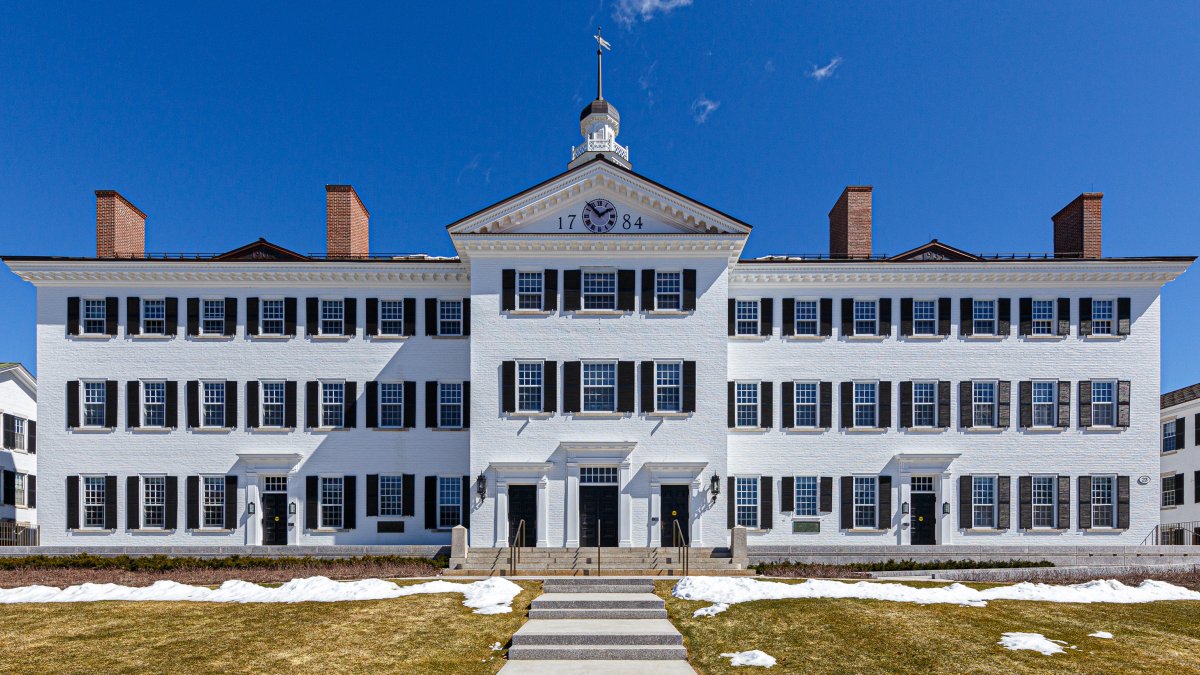
Dartmouth College provost Santiago Schnell resigned on October 28 after a faculty advisory committee concluded he used AI to meaningfully alter his writing without the disclosure at least one journal required — including in a manuscript for the chemistry journal ChemSystemsChem and in an August 9 Washington Post op-ed titled, without apparent irony, "Universities are fighting AI cheating. But there's a deeper problem."
The paper trail started with detectors. In September, Semafor reported that the detection tool Pangram had flagged Schnell's op-ed as at least 80 percent AI-generated, part of a survey finding AI-flavored text in 50 guest columns across major newspapers in a single month. The student newspaper The Dartmouth then ran Pangram over nine of his 2026 articles and reported scores around 96 percent "AI-written."
What makes the committee's eight-page report worth reading is that it did not rely on detectors, which everyone agrees are unreliable. It used publisher policies, correspondence, and records from Schnell's Dartmouth Claude enterprise account. The logs show him using the model to revise papers, fix bugs in code, and edit or generate figures — and to act as a stand-in reviewer: "Imagine that you are a reviewer for this paper with expertise in nonlinear chemical dynamics and mathematical chemical kinetics. What would be your referee report for this paper?" In one instance he asked Claude to apply corrections directly to his TeX files and repository and to generate new figures, then submitted the revised manuscript.
One logged exchange looks worse than any detector score. Schnell uploaded a forthcoming article, "Academic Freedom and Catholic Mission: The Procedural Overlap Zone in University Governance," and asked the model: "Are there many signatures of AI writing in this article?" He later submitted a revision incorporating the kinds of changes Claude suggested.
His own account was narrower. He told Semafor he had used chatbots "to refine a few arguments" and "check for grammatical errors," and told a journal editor he "used AI as an editorial tool" without realizing that kind of assistance required disclosure. The committee called his cooperation "insufficient": he surrendered his Dartmouth laptop but not logs from personal LLM accounts, and declined to meet. His lawyers dispute the process, saying he was never given a meaningful opportunity to present his side.
The fall was fast. The resignation came less than two weeks before a planned faculty no-confidence vote. President Sian Leah Beilock said leaving was his decision, named historian Matthew Delmont interim provost through June 2028, and used the moment to restate her position — from an Atlantic essay to a campus address — that Dartmouth should lean into AI while its leaders "model the transparency and human judgment" they expect of students. The school's "AI at 70" conference, marking the 1956 Dartmouth workshop that named the field, opened the next day with Mira Murati and Yann LeCun on the program and an Anthropic-sponsored hackathon.
The lesson generalizes well past one provost. Detectors lit the fuse, but discoverable logs made the case — institutional AI accounts are records now, and "I did not know editing counted" is no longer a defense any publisher is obliged to accept. As AI-assisted authorship becomes normal everywhere from journals to op-ed pages, disclosure is shifting from a courtesy footnote to an enforceable condition, and the people who set disclosure policy are, as this case demonstrates, the first ones it will be applied to.
Comments (0)
Log in to join the discussion
Log InNo comments yet