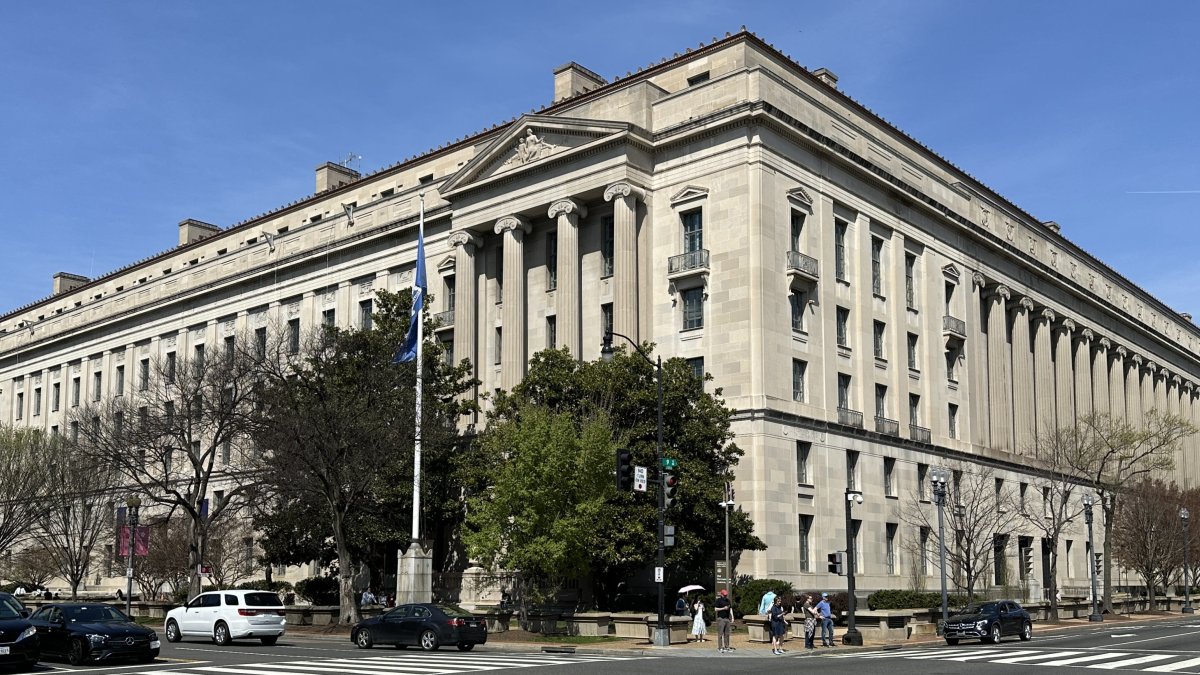
The Justice Department on Thursday announced charges against five individuals in what it calls the first broad federal crackdown on "ghost students" — fake college enrollees built on stolen identities, kept alive with artificial intelligence long enough to drain federal student aid. Assistant Attorney General Colin M. McDonald of the department's National Fraud Enforcement Division announced the case at a press conference alongside FBI and Department of Education officials.
The scheme followed a simple pipeline. Fraudsters bought personally identifiable information of Americans — most often high school graduates who never enrolled in college and went straight to work, a population whose stolen data is hard for victims to notice. They used it to file the Free Application for Federal Student Aid (FAFSA) and enroll the synthetic students in universities and community colleges. Aid is disbursed to schools first to cover tuition; anything left over landed in bank accounts the fraudsters controlled. The DOJ says dozens of Americans opened accounts to act as money mules.
AI is what made the scheme durable. Prosecutors say the ring used AI tools to fill out aid applications, complete coursework, and simulate a student attending virtual classes. "It looks like the ghost student is actually completing the class," McDonald said. "The goal is to keep the ghost student in school for as long as possible, semester after semester after semester." Every additional term a synthetic student survives is another disbursement.
The scale is the alarming part. The Department of Education has identified more than 830,000 potentially fraudulent federal student aid accounts created with stolen PII; if all of them are ghost students, total losses approach $130 million. Officials tied more than $32 million in actual losses to the charged subjects and said they believe the real total is substantially higher. About 50 referrals have gone out across 26 FBI field offices, and briefings indicate the scheme may reach back to 2021.
The case broke through data analysis: the Education Department's Office of Inspector General first flagged the patterns, and the FBI traced funds to US and overseas bank accounts and crypto wallets. The DOJ seized more than $750,000 in cryptocurrency from a network associated with Kenyan nationals — which McDonald called the first international seizure of its kind in Kenya. "Whether you are in Nebraska, New Jersey, Virginia, or Nairobi, we will pursue you," he said.
For the people whose identities were used, discovery often comes years later, when the government comes collecting on loans they never took out, with their credit already damaged. McDonald acknowledged the cleanup is painful: "The Department of Education does a great job to help unravel that mess, but it is a mess that no one should have to endure."
The enforcement action is also a marker of where AI-enabled fraud is heading. Enrollment and financial-aid systems, which historically trusted that an applicant was a person, now have to distinguish real students from synthetic ones that attend class, submit homework and stay enrolled. Expect tighter identity verification in the aid pipeline — and, inevitably, more friction for legitimate applicants, including the international students the crackdown is partly aimed at protecting.
Comments (0)
Log in to join the discussion
Log InNo comments yet