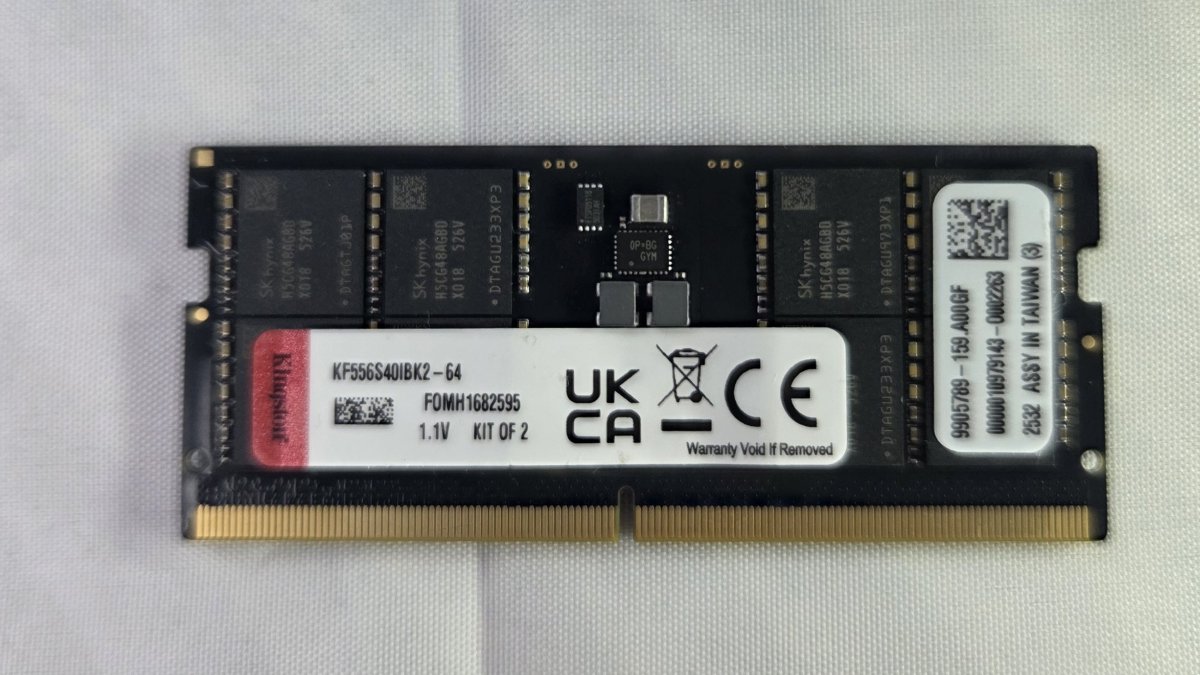
At the exact moment the memory shortage is sending PC prices upward and wiping out chipmakers' valuations, OpenAI's chief executive has picked a side. Asked about supply chain shortages on the Cheeky Pint podcast, Sam Altman said it is "terrible" to have RAM in personal PCs instead of data centers.
His argument, in full: "A lot of people want local inference. And somehow, they assume that the problem is solved now because we are going to have open-source models, we're going to be able to run them on our computers, and so we're not going to need all the stuff in the data center." Altman clearly thinks that reasoning is wrong - and that every gigabyte of DRAM sitting in a consumer laptop is a gigabyte not serving frontier models.
The comment lands in a volatile market. Memory contract prices have been climbing for months as AI data centers absorb the world's DRAM and NAND supply, with analysts forecasting further double-digit price increases into the fourth quarter. On Friday, Intel suffered its worst single trading day since the 1970s - down 28.58 percent - after weak guidance that management tied partly to rising component costs, memory chief among them, crushing PC economics. The US government's stake in the company lost roughly $12 billion in value in a day.
It should be noted whose interests are speaking. OpenAI is among the largest buyers of data center capacity on the planet, with multi-gigawatt commitments spanning custom chips, cloud contracts, and its own buildouts. When Altman says RAM belongs in data centers, he is describing the allocation that best serves OpenAI's business - a fact he did not disguise and readers should weigh accordingly.
The counterposition is real, though. AMD has spent the autumn pitching the "Agentic PC," a machine with up to 192GB of unified memory that runs hundred-billion-parameter models locally, and Apple's entire privacy pitch rests on inference happening on-device rather than in someone's cloud. A growing ecosystem of open-weight models - DeepSeek, Mistral, Qwen, Kimi - exists precisely because users want compute they control.
What makes the fight acute is that DRAM supply cannot expand quickly on demand. Every point of market share that local inference gains is capacity an AI lab cannot rent, and vice versa. As memory prices climb into 2027, expect the "your laptop versus the frontier" debate to move from podcast banter to procurement decisions - with consumers paying the difference either way.
Comments (0)
Log in to join the discussion
Log InNo comments yet