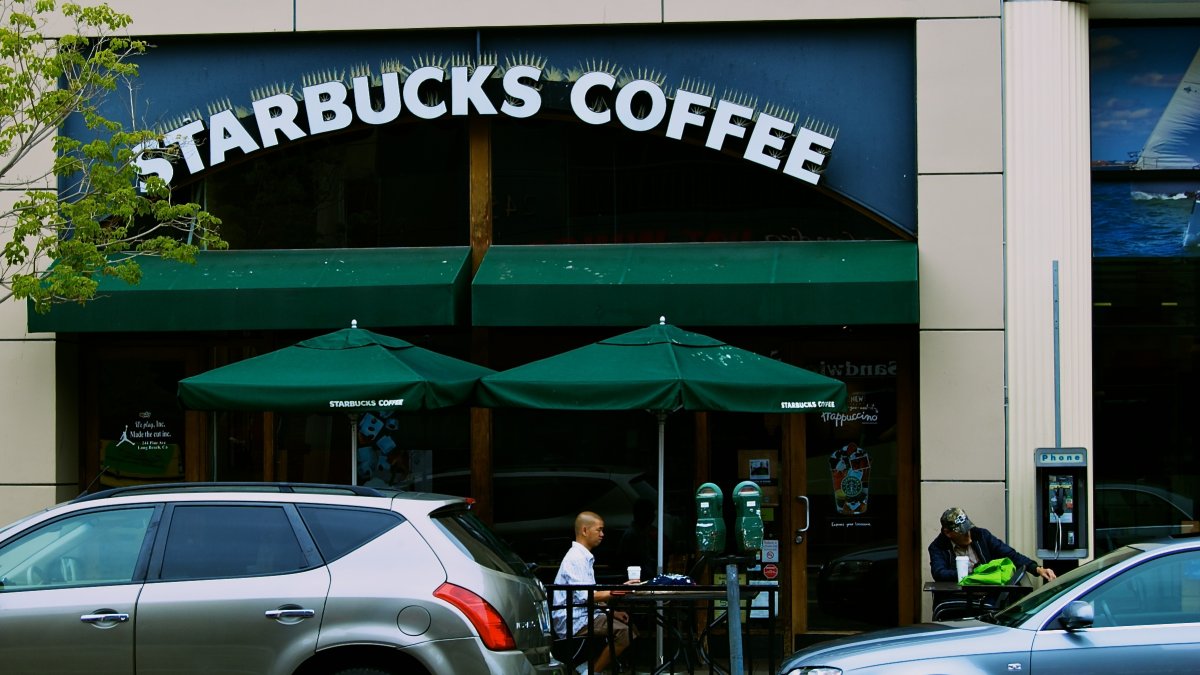
Starbucks is preparing to bring recommendation AI to the moment a car pulls up to its drive-thru speaker. On Thursday's fourth-quarter earnings call, CEO Brian Niccol said the company will explore "experiences that recognize participating customers as they arrive, present personalized digital menus, and make payment more effortless" — a plan first spotted by the labor-focused outlet More Perfect Union and detailed by The Verge.
The timeline is more concrete than the menu boards themselves. Starting in 2027, Starbucks will test background AI models at the drive-thru to help baristas "input orders more accurately and efficiently," according to Niccol. The company also plans to weave AI into the Starbucks app's search and discovery features, and says it may eventually allow "conversational and agentic" ordering — letting an AI agent assemble and place an order on a customer's behalf.
None of this is the chain's first AI deployment. Customers can already place Starbucks orders through ChatGPT, and employees have had Green Dot Assist, a generative AI assistant that answers questions about recipes and service standards, since 2025. The new work extends AI from an ordering channel and a staff tool to the point of sale itself.
The announcement landed alongside the strongest quarter of Niccol's "Back to Starbucks" turnaround. For the quarter ended September 27, global same-store sales rose 7.2 percent — a fifth consecutive quarter of growth — on a 5.2 percent increase in average ticket and 1.8 percent more transactions. US comparable sales climbed 7.7 percent, beating expectations, while international comps grew just 0.9 percent as traffic fell 2.8 percent. Net revenue came in at $9.14 billion, down about 4 percent, mostly because China retail now runs through a licensed joint venture rather than company-operated stores.
Profitability improved faster than sales: adjusted EPS jumped to $0.80 from $0.52 a year earlier, and adjusted operating margin expanded to 14 percent from 9.4 percent, helped by restructuring costs rolling off. The company closed roughly 250 underperforming North American stores in September and ended the quarter with 41,607 locations worldwide. Shares slipped about 2 percent in after-hours trading, with investors focused on a softer FY2027 outlook: revenue expected to decline about 1 percent, North America comps of around 4 percent, and adjusted EPS of $3.15 to $3.25. Niccol said Starbucks is already ahead of the FY2028 targets it set at its January investor day.
Starbucks is not inventing the category. Yum Brands' Taco Bell has been testing digital menu boards that rearrange themselves "on a car-by-car basis," and McDonald's is piloting an ArchIQ chatbot at a handful of drive-thrus that recognizes repeat customers and lets them order their "usual." The drive-thru — high volume, time-pressured, and full of repeat buyers — is quietly becoming AI's retail proving ground.
What Starbucks has not decided is nearly everything else: there is no deployment timeline, and Niccol characterized the work as "early," saying the company will "test, learn, and scale what works." The phrase "participating customers" implies recognition will be opt-in, and that is where the real constraint sits. Consent and data-retention rules — not model quality — will determine whether a personalized menu board can scale beyond US pilots, and whether the efficiency gains show up as shorter lines and higher tickets rather than a privacy backlash.
Comments (0)
Log in to join the discussion
Log InNo comments yet