When OpenAI dumped hundreds of AI-written mathematics manuscripts onto GitHub on October 6, the reaction from working mathematicians ranged from hostility to a boycott call amplified by Terence Tao. Two and a half weeks later, the constructive countermove has arrived: four mathematicians — Abhinav Nellore, Johannes Schmitt, Soledad Villar and Rachel Ward — announced oai-math-revised in a guest post on Tao's blog, a community fork built to turn the dump into something the discipline can actually use.
The scale of the problem has not changed. OpenAI's catalogue lists 719 current manuscripts in 372 families (three others were withdrawn over a sign error), with roughly 42 percent of top-line results formalized in Lean. A proof assistant can check a formal statement, but it cannot guarantee the surrounding prose is readable, complete in its citations, or an honest explanation of what was actually proved — and that prose layer is where the release drew the most criticism.
The hub works like an open-source project, because it is one. Contributors propose edits to the TeX source through pull requests, open issues against specific write-ups, or maintain per-paper NOTES.md files recording accepted changes, follow-up works and reviews. A browsable companion site organizes everything by discipline. One rule is notable: anyone making substantial use of language models, proof assistants or other mathematical software must disclose it — the project cleaning up AI-written math is not pretending the next revision will not be machine-assisted too.
Real contributions are already merged. The first pull request, merged October 18, added references on the symmetric case to the introduction of the circulant Hadamard write-up. After the announcement, merged changes attached David Harvey's constructive note on integer multiplication below n log n to the relevant manuscript, plus expository work by Kevin Shu and a talk by Mario Bonk. Each is small; each is exactly the literature-hygiene layer the original release lacked.
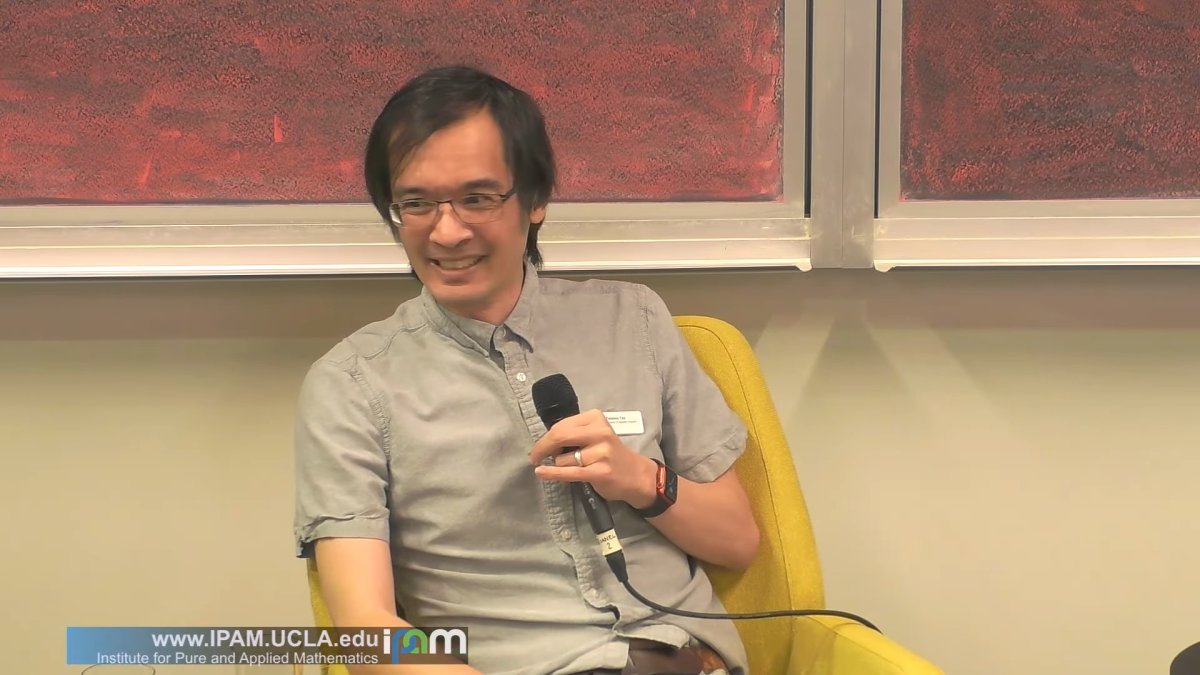
Tao did not write the announcement, but his framing two days earlier set its tone. Asked in an Observer interview about the flood of poorly polished AI output, he said: "when you generate toxic waste, you have no good options" — a metaphor about the burden of processing such releases, not a claim that every proof is false. OpenAI disputes parts of his account of the release's internal circumstances, and notes it consulted mathematicians and committed $5 million to a Simons Foundation initiative for workshops around the material. The company has said it was exploring community-hosted repositories; this is the community building one anyway.
The comment sections are not universally friendly. Some mathematicians object that volunteers are providing free editorial labor for a for-profit company; others worry the improved texts will become training data; a recurring proposal asks for a tag marking overstated contributions so readers know which claims to treat with suspicion. These are governance questions the fork has deferred, not answered.
The honest scorecard: a merged pull request is evidence that someone improved a document, not a verdict on the underlying theorem. The Lean-formalized minority carries the strongest guarantees, and the catalogue itself distinguishes verified stages from unchecked ones. What the hub adds is traceability — a durable place where a correction, a missing citation or an expert objection can live and be attributed. Whether volunteer capacity can chew through 719 papers is the open question, and the organizers are recruiting reviewers by subject area to find out.
Comments (0)
Log in to join the discussion
Log InNo comments yet