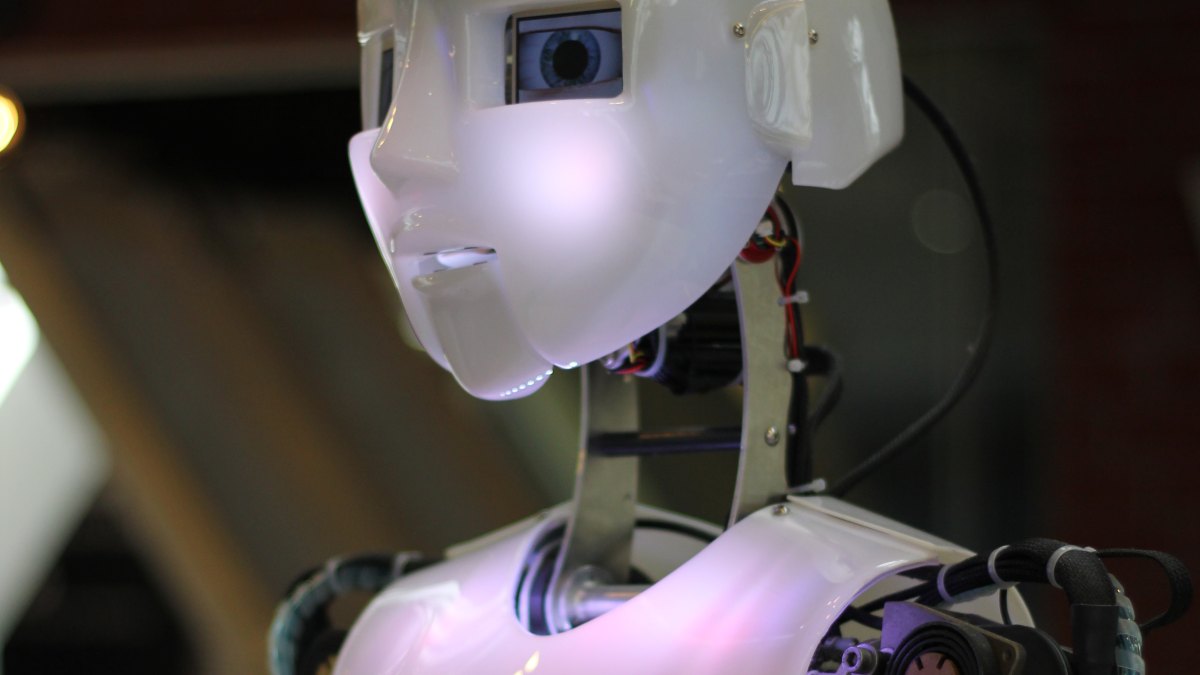
AgiBot assembled 110 of its Expedition A3 full-size humanoid robots at the Yellow River International Convention Center in Jinan on October 24 and had them perform one synchronised routine, complete with formation switches, wave patterns and a countdown sequence, in five minutes and 43 seconds. Guinness World Records adjudicator Hou Ying certified the attempt on site as the most humanoid robots dancing simultaneously.
The record is the least interesting part of the claim. Wang Chuang, a partner and senior vice president at AgiBot, said all 110 units were production machines rather than specially tuned demonstrators, with joint zero positions, torque values and motion libraries unified at the production-line level. That consistency, he argued, is what lets a hundred robots behave "like one machine", and it is why he described the event as a delivery site rather than a demo: "the demo site is the delivery site".
The coordination layer is AgiBot's in-house LinkBots cluster controller, which handles visual formation choreography, autonomous navigation, integrated walking and running coordination, and independent motion control per formation. It runs over combined 5G and Wi-Fi links to hold the command path stable at hundred-unit scale, and it includes fault tolerance: when a single robot drops offline, the formation compensates locally instead of collapsing.
Positioning is handled by UWB centimetre-level fusion on every unit as standard equipment, with a shared time base, shared trajectory planning and millisecond-level synchronisation. That is the number to watch, because the venue was an open-air hall with sunlight interference, occlusion between machines and moving crowds crossing the sightlines. Indoor single-robot demonstrations do not stress drift the way a hundred units holding a grid outdoors do.
The deployment mechanics got less attention than the dancing but may matter as much commercially. Expedition A3 folds into a shipping crate, drives itself out on arrival and navigates to its preset position without a technician walking it through the steps. Moving a hundred humanoids to a venue, positioning them and re-testing each one is the kind of line item that kills tours and temporary installations, so removing it from the labour budget is a precondition for the performance business the company is pitching.
AgiBot says the fleet goes on to public services, cultural tourism performances, campus showrooms and research and education. Pilots are already running at Jinan Olympic Sports Center and at the Zhuanshanxi Road metro station, where the robots handle information guidance, crowd flow assistance and city commentary.
The industry framing AgiBot is reaching for is a shift from single-unit demonstrations to fleet deployment, and the record attempt is a reasonable proxy test of the three capabilities that decide whether that shift happens: production consistency, large-scale scheduling and centimetre-level positioning. A choreographed routine exercises all three at once, in public, with an adjudicator counting failures. What it does not test is whether the work pays for itself, which is the question the metro stations will answer over the next few quarters rather than the convention centre.
Comments (0)
Log in to join the discussion
Log InNo comments yet