Cambricon published its third-quarter report after the close on October 23, and the headline numbers look like a company outrunning its own cost base. Revenue for the first nine months of 2026 reached 9.526 billion yuan, up 106.76 percent year on year. Net profit attributable to shareholders was 3.715 billion yuan, up 131.49 percent, and profit excluding non-recurring items was 3.523 billion, up 148.30 percent. The third quarter alone delivered 3.531 billion in revenue, up 104.47 percent, on 1.404 billion of net profit, up 147.74 percent, and 1.358 billion adjusted, up 168.13 percent.
Non-recurring items accounted for only about 190 million yuan of that, so the profit came from selling chips rather than from subsidies or treasury income. Gross margin held at roughly 56 percent, slightly better than 55 percent a year earlier, which rules out a price war as the driver. Selling expenses were 45 million yuan and administrative expenses 150 million; together they came to less than 2 percent of revenue. Research spending rose 45.35 percent to 1.225 billion yuan, but because revenue grew faster the research ratio fell from 18.3 percent to 12.86 percent.
The cash statement tells a different story. Operating cash flow for the nine months was 228 million yuan, and the third quarter on its own was negative 83.68 million. That is not a collections problem: cash received from customers was 10.67 billion yuan, more than the revenue booked. The money went out the other side, with 8.99 billion paid for goods and services, nearly double the prior-year figure.
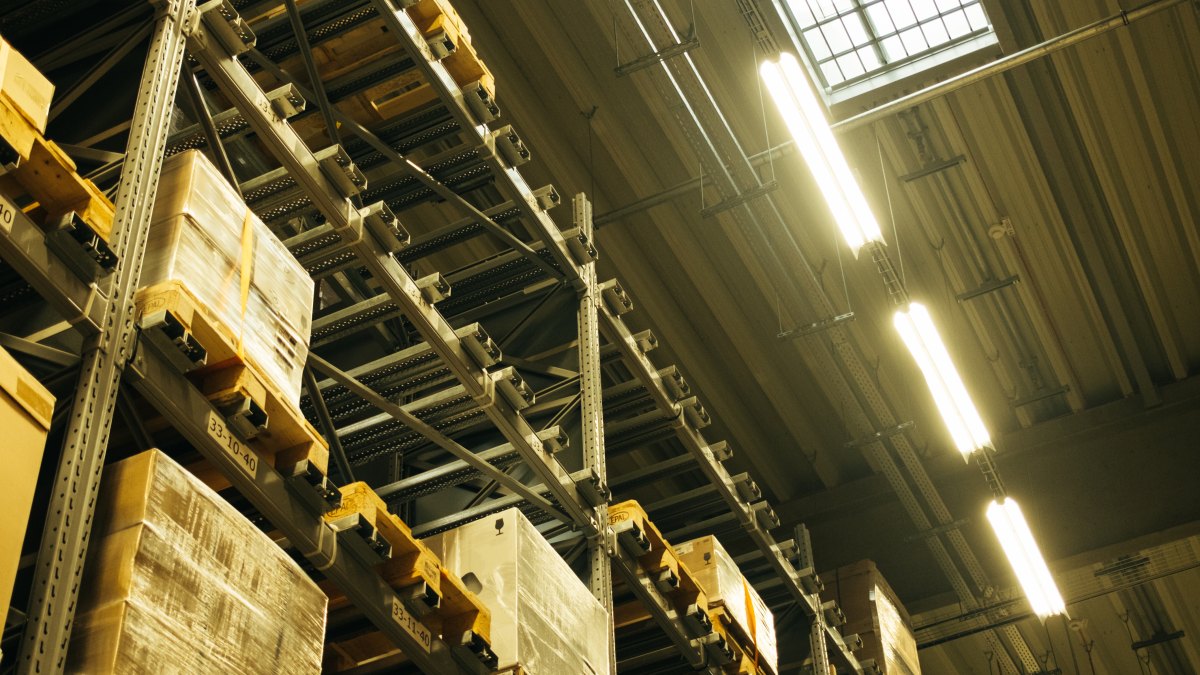
Most of it is now on shelves. Inventory climbed from 4.94 billion yuan at the start of the year to 11.665 billion at the end of September, after already sitting at 8.25 billion at the half-year mark. Prepayments rose from 745 million to 3.044 billion. The two lines together come to roughly 14.7 billion yuan, about two-thirds of total assets, and the company booked 502 million yuan of asset impairment losses in the period without breaking out the detail.
Supplier credit carried much of the build. Notes payable jumped from 351 million yuan at the end of 2025 to 4.966 billion, a fourteen-fold increase. Accounts payable rose from 765 million to 1.827 billion, total liabilities reached 7.24 billion yuan and the debt ratio 32.4 percent. Cash on hand fell from 1.3 billion to 555 million, though the company still holds 3.81 billion in trading financial assets. It also paid a 632 million yuan dividend this year, at 15 yuan per ten shares, and spent 788 million on equipment and buildings. Contract liabilities, the money customers pay in advance, rose from 610,000 yuan to 141 million, a sign that buyers are now queuing rather than being sold to.
All of that inventory is a wager on orders that have not been signed yet. Under the restricted-stock plan Cambricon drafted in July, granted at 750 yuan per share, management committed to at least 13.5 billion yuan of revenue in 2026, 40.5 billion cumulatively across 2026 and 2027, and 100 billion cumulatively across 2026 to 2028. Nine months have delivered 9.526 billion, leaving 3.974 billion for the fourth quarter against a third-quarter run rate of 3.531 billion. The harder number is the three-year pledge. Reaching 100 billion in total implies roughly 86.5 billion across 2027 and 2028, which is what the warehouse is for.
The equity is priced for that outcome. Cambricon closed at 932.20 yuan on October 23, a market value of about 586.2 billion yuan and a trailing price-to-earnings ratio near 176 times. The stock touched 1,620 yuan intraday on June 30, when it became the first STAR Market company to cross a trillion yuan, and has since given back about 40 percent of that peak. Northbound holders cut more than 2 million shares in the third quarter to 19.99 million, while the shareholder count rose 23.57 percent to 72,004. Separately, former executive Liang Jun has raised his claim against the company to 27.8 billion yuan; the case has not been heard and Cambricon says operations are unaffected.
The read across is that the profit is real, the cash became inventory, and the inventory is financed with supplier credit. Cambricon is betting that in Chinese AI silicon the scarce input is capacity rather than capital, and that locking wafers now is cheaper than scrambling for them later. If the 2027 and 2028 orders arrive, today's warehouse is tomorrow's revenue and the model holds. If they slip, the company is carrying more than 11 billion yuan of fast-depreciating silicon against a multiple that has already spent the growth.
Comments (0)
Log in to join the discussion
Log InNo comments yet