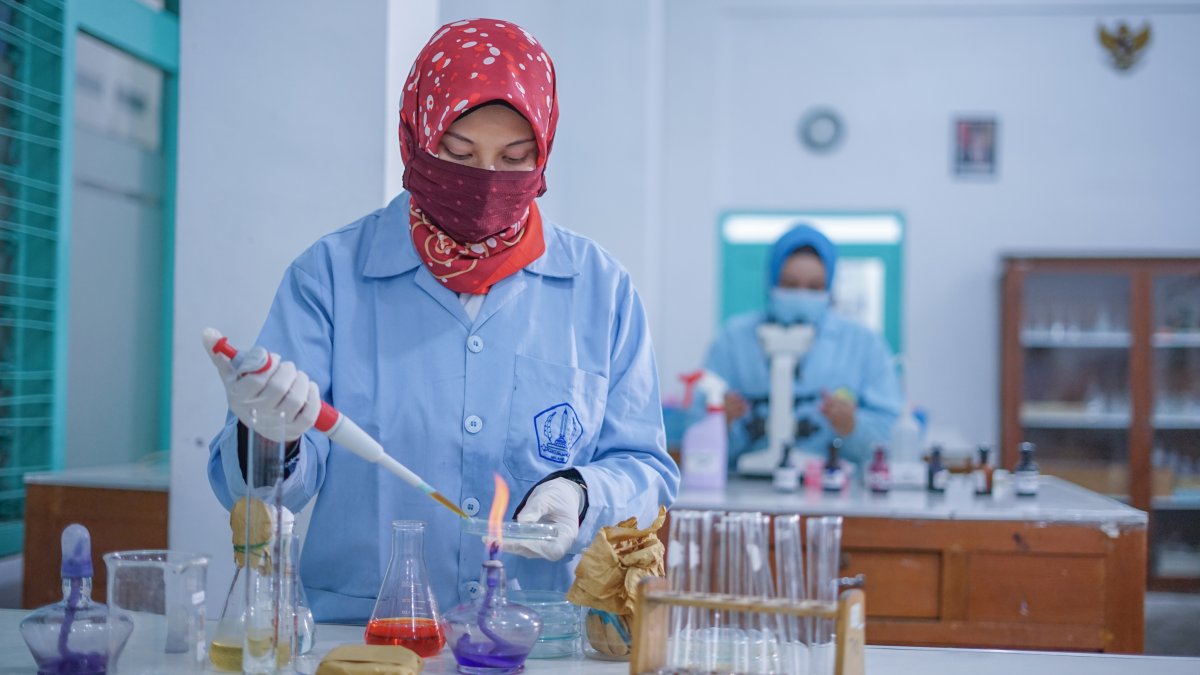
Britain will spend 100 million pounds (about 134 million dollars) to establish a national AI Biosecurity Lab, a new government-backed institute designed to use artificial intelligence to detect and monitor biological threats before they spread. The announcement, made on Saturday and reported by the BBC and Bloomberg, is the centerpiece of a funding package worth roughly 600 million pounds (around 800 million dollars) aimed at defending against health and security risks from AI.
The lab will not work alone. OpenAI and Anthropic have committed up to 200 million pounds in model credits that the biosecurity initiative can spend on their systems, while Google DeepMind and the London-based AI life sciences startup Basecamp Research will provide additional technical assistance, according to the government statement.
The 100 million pound lab sits inside a larger package with a long tail of smaller commitments: 65 million pounds for developing countermeasures against pathogens, an extra 120 million pounds for the AI Security Institute, 130 million pounds for cyber defence projects including the National Cyber Shield and a National Exposure and Real-Time Vulnerability Centre, 60 million pounds for a fund investing in British companies applying AI to robotics and manufacturing, 18 million pounds for a new chip design academy, and 30 million pounds for regional mayors to support local AI work.
AI minister Kanishka Narayan framed the lab as a new kind of global institution. "As AI becomes more powerful, Britain must be able to protect its people and master its own future," he said, adding that the lab would bring together "world-leading scientific expertise to protect people from emerging biological threats" and keep the UK at the front of AI safety work.
The structure echoes a strategy Britain has been building since 2023: separate specialist institutions outside existing departments, each looking at a different face of AI. The AI Security Institute, the best-funded of the bunch, evaluates frontier models before release and has grown into the reference point for government model testing; the new biosecurity lab applies the same institutional logic to pathogens, and a further 23 million pounds will fund research into AI's economic impact.
For the AI companies involved, the deal is another example of governments paying for access rather than building their own systems. OpenAI and Anthropic get a marquee government deployment and a defensive moat of public-sector goodwill; the UK gets frontier-grade models without funding a national lab from scratch. The same dynamic is visible in the model credits, which effectively function as a 200 million pound voucher program for two US labs.
The timing is not accidental. The package follows a year in which AI firms' biosecurity posture became a policy talking point on both sides of the Atlantic, and weeks after Britain revealed it had taken sites offline as a precaution over vulnerabilities surfaced with AI assistance in the PHP scripting language. The government clearly wants to be seen moving first on the risk side of the ledger.
What remains unspecified is how the lab's work will be validated, who can submit threat samples for analysis, and how much of the model-credit budget will flow to each provider. Those details will determine whether the AI Biosecurity Lab becomes the global institution the minister describes, or one more well-funded lab with a press release and a long runway.
Comments (0)
Log in to join the discussion
Log InNo comments yet