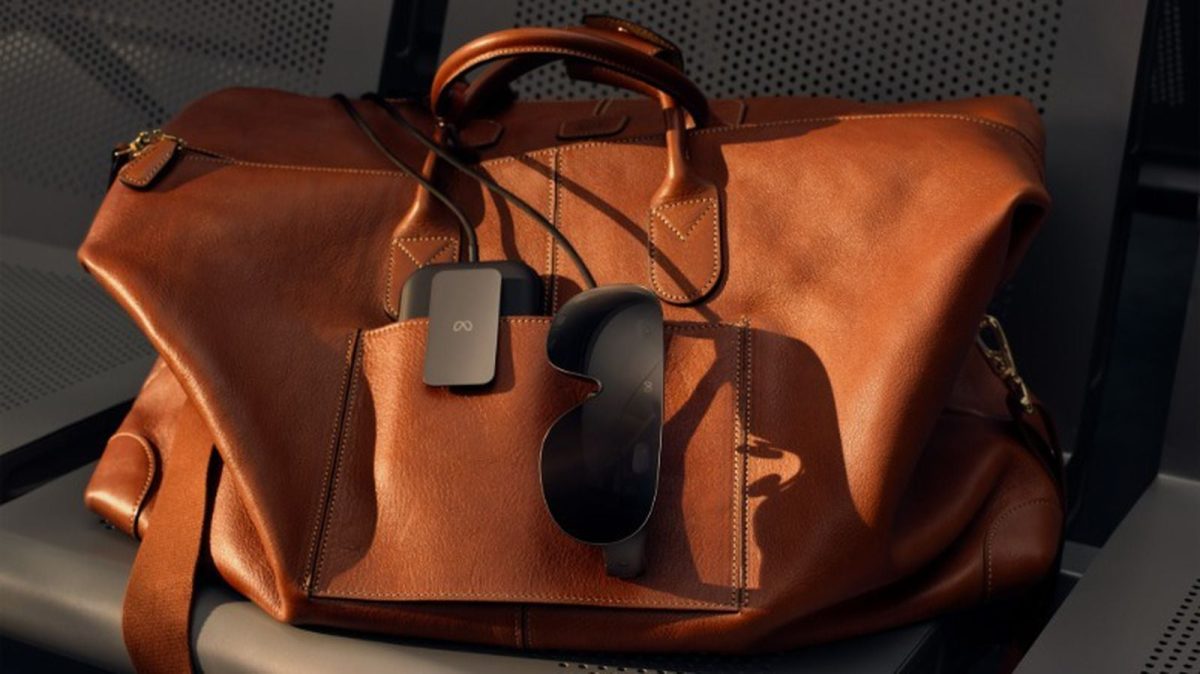
At its Connect conference on September 23, Meta laid out its most concrete vision yet for what comes after the smartphone: four hardware products, all built around the company's Muse AI agent, spanning glasses, a keychain and a headset.
The headline device is the Meta VR Glasses, priced at $1,299.99 and arriving in spring 2027. The headset weighs roughly 100 grams — about five times lighter than the Quest 3 — because the computing, battery and storage have been shifted into a separate pocketable puck. It uses 5K micro-OLED displays, supports eye navigation, hand gestures and voice commands, and is the first VR product certified for IMAX Enhanced. Meta is positioning it at barely more than a third of Apple Vision Pro's $3,499 launch price.
Next spring's headset aside, most of the lineup ships within months. Ray-Ban Meta Gen 3, available now from $449, keeps the 12-megapixel camera and adds 3K video, up to nine hours of battery and a customizable action button for one-touch Meta AI access. Ray-Ban Meta Audio, at $349 with shipping starting October 13, is the company's first camera-free smart glasses — a deliberate answer to the privacy backlash that has followed camera glasses — with 12-hour battery life and support for music, calls, live translation and hands-free Muse.
The most talked-about reveal was the Muse Charm, a pocket-sized pendant with a small touchscreen, front- and rear-facing cameras, speakers and microphones, designed to run Muse voice conversations away from a phone screen entirely. Meta has not disclosed pricing, but the device is expected to land in December at roughly the cost of a smartwatch.
On the software side, Muse gained the ability to drive apps on the Mac with user permission, a private space that isolates Muse conversations from other Meta activity, and retail connectors for Walmart, Best Buy, Sephora, Ulta, Expedia, Instacart and more. Live translation expanded to 14 additional languages. The Muse app itself has meanwhile climbed to the top of the App Store.
The strategy is easy to summarize: put an ambient AI agent on the face, in the pocket and on the desk, and let each device cover a different buyer. Audio glasses target people who want AI without a camera; the Charm gives Muse a dedicated home; the VR Glasses attack the premium end at a price Apple has never offered.
Whether the smartphone is genuinely under threat remains doubtful — the phone still does the heavy lifting for maps, browsing and photos. But with this lineup Meta has made its bet explicit: the next platform will be an AI you can wear, and it intends to own every layer of it.
Comments (0)
Log in to join the discussion
Log InNo comments yet