Shanghai-based decision-AI company Cardinal Operations (ShuShu Keji) announced on November 23 that it has closed a Series D round in the hundreds of millions of yuan, with investors including China's National Green Development Fund, the Shanghai Integrated Circuit Industry Investment Fund and Putuo Capital, according to Beijing Business Today and Tencent's finance channel.
The headline detail is who is writing the check. The Shanghai IC fund was created to finance chip manufacturing, chip design, semiconductor equipment and materials, and this is its first investment in a software company. The fund's reasoning, as laid out in a detailed Tencent-published profile: chip design delivery has matured into a purchasable commodity, and the differentiation is shifting from "can you make the chip" to "can you define the problem the chip must compute." Luo Xiaoqu, the company's co-founder, put it directly: "The most core capability now is defining the problem."
Founded in 2016 by four Stanford PhDs who returned to China, Cardinal Operations started from mathematical programming solvers — software often called "the chip of the software world" — and built COPT, a domestic commercial solver used for production scheduling, dispatching and route planning. Over a decade it has grown into a full decision-AI stack spanning high-precision computing, optimization engines and enterprise decision platforms, serving more than 2,000 institutions and 30,000 users across over 80 countries, with deployments in energy, ports, aviation, manufacturing and retail.
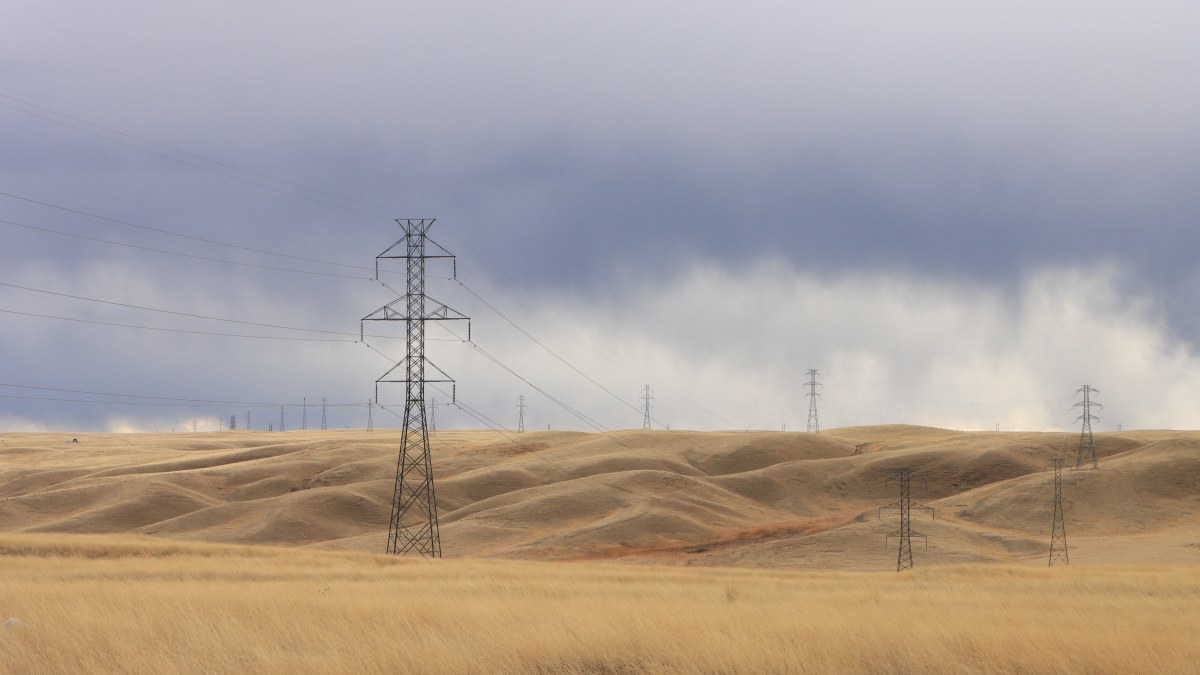
The company's flagship case shows what the technology actually does. Working with China Southern Power Grid since 2018, Cardinal Operations helped build the unified market-clearing computation for a five-province regional electricity market covering Guangdong, Guangxi, Yunnan, Guizhou and Hainan. The model spans thousands of grid nodes and clears the market in 15-minute intervals — 96 periods a day — while juggling discrete unit-commitment decisions, continuous power-flow constraints and pricing rules simultaneously. A South African energy-transition engagement runs the opposite direction in time: 30-year generation and storage plans at hourly resolution, with models containing millions of variables.
That workload is precisely what large language models cannot yet do, the company argues. "It is not that Cardinal spent ten years becoming an AI company — it is that AI has finally walked into Cardinal's lane," said co-founder Wang Xi. Solvers and neural networks are converging from both directions: optimization engines are being accelerated with GPUs, while AI-native solver interfaces are emerging on top of them, and the company's Series D will fund continued R&D and scaled deployment of that combination.
The round also marks a shift in how Chinese industrial capital prices software. A state green fund and a chip fund putting money into a solver vendor signals that the "hard tech" boundary now includes the mathematics layer above the silicon — the software that decides how thousands of generators, batteries and transmission lines get scheduled every fifteen minutes. For a market that has spent two years funding models, a nine-figure yuan bet on the layer that keeps the grid balanced is a notable vote for the unglamorous half of AI.
Comments (0)
Log in to join the discussion
Log InNo comments yet