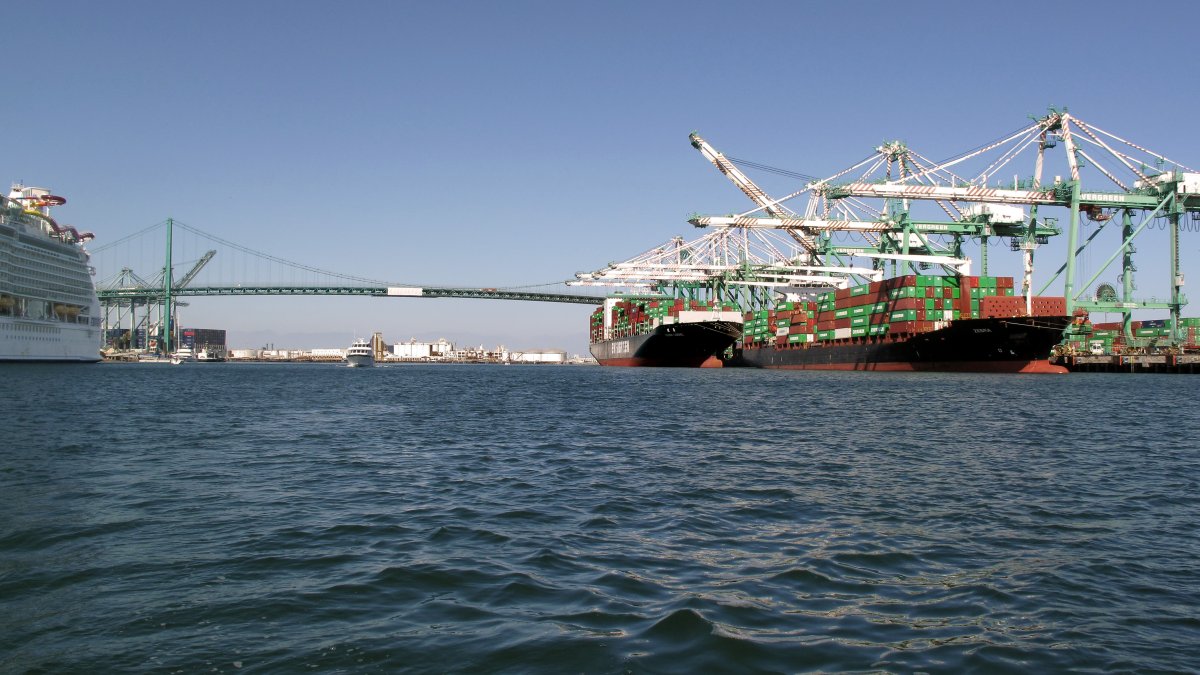
A Financial Times report published on Sunday describes an escalating campaign of cyberattacks against American port infrastructure, with the Port of Los Angeles — the busiest container port in the United States — saying it blocked approximately 120 million attempted attacks in August alone, nearly double its 2023 monthly average. The attempts ranged from automated password guessing to intrusion, credential harvesting and malware deployment.
Port of Los Angeles Executive Director Gene Seroka, who confirmed the August figure in a September television interview, framed the asymmetry bluntly: defenders have to hold the line against millions of probes, while attackers only need to succeed once. The port has since expanded dedicated cybersecurity staffing and continuous monitoring of its terminal operating systems.
On the Gulf Coast, the Port of Corpus Christi — the largest US crude oil export gateway, moving about 2.3 million barrels of crude per day, roughly 60 percent of American crude exports — is absorbing hundreds or even thousands of attempted intrusions daily, according to chief executive Kent Britton. He told the FT that attackers probe networks for vulnerabilities and impersonate senior executives in fraudulent messages designed to trick employees into granting system access. The port keeps a small cybersecurity team, is hiring a fourth specialist, and maintains contingency plans that include radios and paper records.
The threat has already disrupted operations. In August, a cyberattack on North Carolina Ports forced the state's three facilities to delay gate openings and temporarily process cargo by hand before the breach was contained. The same month, the US Coast Guard and the FBI investigated suspected intrusions aboard two oil tankers bound for Texas whose networks appeared to have been compromised near the Strait of Gibraltar; one vessel reportedly lost communications for 30 hours. Authorities have not publicly attributed the intrusions to any specific actor.
Federal data shows the trend is structural rather than episodic. The Coast Guard's 2025 maritime cyber report recorded 42 incidents, up 17 percent from 36 in 2024, with phishing used for reconnaissance or initial access in 43 percent of cases. An April 2026 Coast Guard alert specifically warned about the INC Ransom group targeting maritime networks through phishing and unpatched internet-facing systems. Separately, shipping giant Maersk disclosed a data breach this month, though it said operations were unaffected and no ransomware was involved.
Artificial intelligence appears on both sides of the ledger. The FBI warned last week that hackers are using an AI tool called Artex to automate attack workflows, compressing work that once took a team of intruders days into minutes. Port executives and security officials caution that AI also makes it easier for attackers to read technical manuals, research past incidents and find gaps in legacy systems — many port facilities still run end-of-life software, and Coast Guard assessments in 2025 found exposed admin panels and missing network segmentation in terminal operating systems. Notably, properly configured AI-based monitoring tools detected custom intrusion scripts within 30 seconds, while tools left at default settings caught nothing.
The FT's reporting rests largely on its own investigation plus port and Coast Guard statements, and none of the cited incidents caused a prolonged cargo shutdown. But the direction is clear: American ports handle roughly 40 percent of US international trade value, and the combination of aging operational systems, a small defensive workforce and AI-accelerated attackers is pushing maritime infrastructure to harden faster than it ever has.
Comments (0)
Log in to join the discussion
Log InNo comments yet