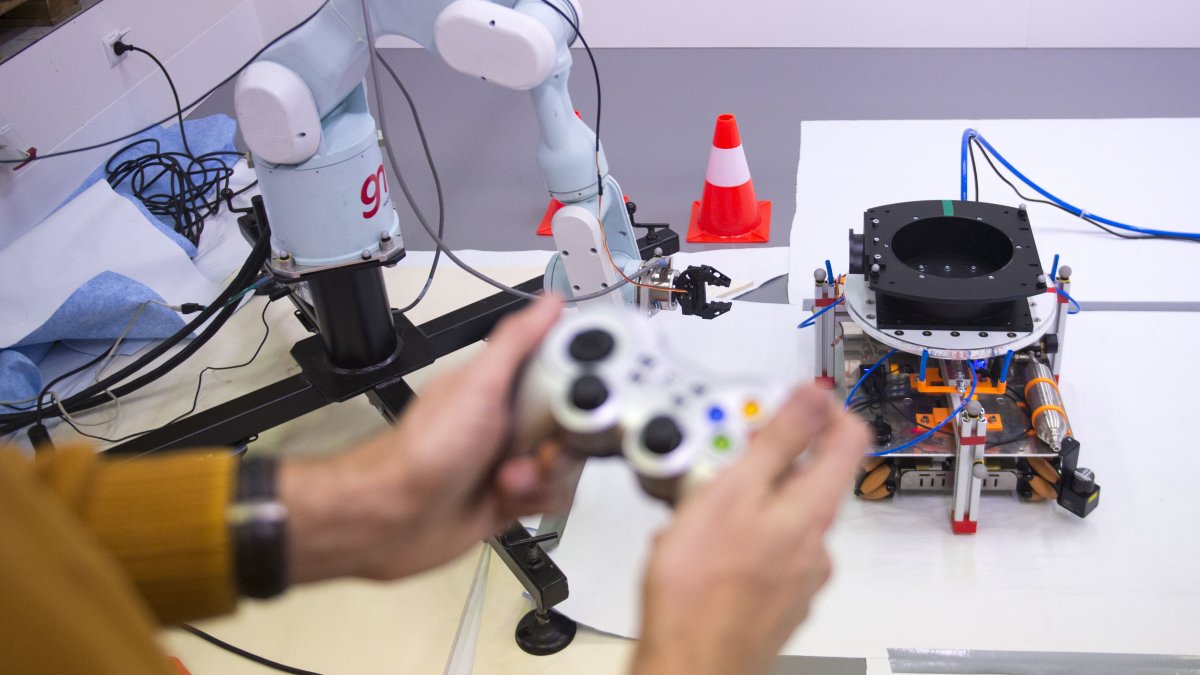
A robot has tied a knot for the first time. Robot-infrastructure company XDOF on November 20 published results from Ember-0, its dual-arm manipulation benchmark, showing that OpenAI's GPT-6.2 Astra pushed the average success rate across 16 manipulation tasks from 19.6% — the score GPT-6 Astra posted on the same eval two months earlier — to 41.2%. The jump also broke two zero-score barriers: tying a rope and unfolding a T-shirt, a task that had failed in every one of the benchmark's 143 prior valid attempts.
The protocol is unforgiving. Six YAM workstations ran in parallel, each task was repeated 30 times, the rig can push through up to 480 physical episodes a day, and human annotators label sub-steps, grasp failures and collisions to filter out hardware drift and random perturbation. The 41.2% figure is the equal-weighted average over all 16 tasks, which span spatial reasoning, picking, bimanual coordination, tool use, fine manipulation and deformable objects.
The gains on deformable objects are the sharpest signal. Rigid objects — cups, boxes, screws — hold their shape, so a planner can commit to a grasp. Rope and fabric deform with every pull, forcing the model to keep re-reading wrinkles from wrist and head-mounted cameras and re-deciding its next move. On the clip-a-slice-of-bread task, success went from 10% to 90% without crushing the bread, and average prediction latency fell from 15 seconds to 10.1.
GPT-6.2 Astra also led the other boards XDOF runs: 79 out of 100 on AA-Robotics v0.1, ahead of Claude Fable 5.2 at 75 and GPT-6 Astra at 69, while issuing just 668 arm commands across six tasks — the fewest among the 11 models tested. On the RoboColosseum SO-ARM101 leaderboard it scored 1984 plus or minus 96 over 122 blind episodes, ahead of Fable 5.2's 1803 plus or minus 91, a gap the leaderboard itself notes sits within the error bars.
Keep the caveats next to the numbers. Every figure is reported by the benchmark operator and has not been independently replicated. A 41.2% success rate still means nearly six in ten attempts fail, a 10-second think time is far too slow for real-time control, and the benchmark runs staged scenes in a lab rather than cluttered kitchens. XDOF itself warns the benchmark may saturate soon — the models are improving faster than the test.
The significance is less the score than the trend. General-purpose frontier models are closing on the specialized manipulation policies that embodied-AI startups treat as their moat, in two months rather than two years. OpenAI co-founder Greg Brockman amplified the results, and analysts read the trajectory as evidence that the labs will eventually want robot bodies of their own — which makes benchmarks like Ember-0 the arena where that argument gets settled, at least until the test itself has to get harder.
Comments (0)
Log in to join the discussion
Log InNo comments yet