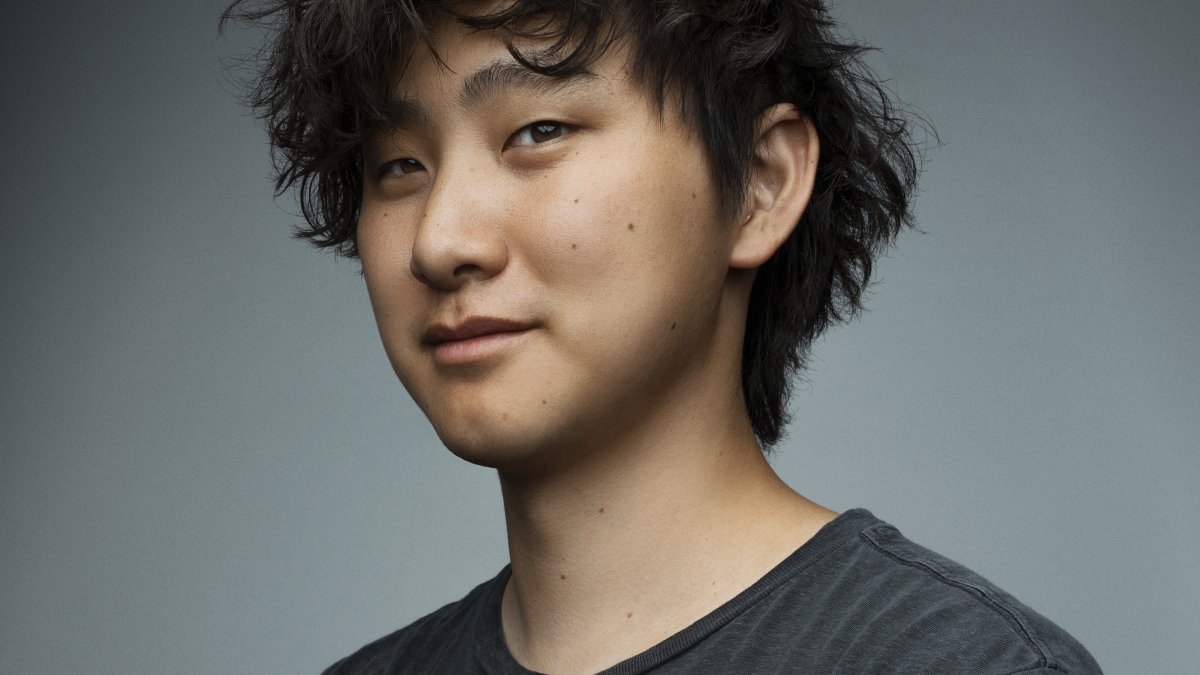
Alexandr Wang, who leads Meta Superintelligence Labs, published an essay titled "Superintelligence is Arriving" on X on Sunday. His argument: the scientific and technical problems of capability progress are "likely solved," the hardest part of building systems smarter than humans may already be behind us, and how humanity acts over the next year "will have great consequence on what future world we live in." The line that drew the most attention: "It is hard to imagine a world where humanity can maintain control over fully unconstrained recursive self-improvement." Forbes counted more than 18 million views by Monday evening.
What changed Wang's mind, he wrote, was a single result. Anthropic mathematician Levent Alpoge announced on November 20 that Claude had helped him construct a proof of the Riemann Hypothesis, a problem posed in 1859, with the Lean and Mathlib communities certifying the result on November 21. Wang called it "the absolute pinnacle of intellectual accomplishment" and the model behind it "an alien mind that we don't understand," adding that physicists would call the atomic bomb a "homework problem" by comparison. Caution is warranted: the claim awaits independent human verification, and Queen Mary University of London mathematician Abhishek Saha argued the credit belongs to Alpoge's own expertise as much as to the model — others with similar access to frontier models and compute could not produce the proof.
Washington did not wait long. Within hours, Representative Yassamin Ansari of Arizona shared the essay and called on Congress to "pause advanced AI development with urgency, and ban artificial superintelligence." Senator Cory Booker urged Congress the same day to rein in the race to recursive self-improvement. Ansari is an original co-sponsor of the Ban Artificial Superintelligence Act of 2026, introduced in September by Senator Bernie Sanders and Representative Greg Casar, which would freeze training of models above 10^25 operations until a newly staffed federal AI department writes safety rules — and ban superintelligence outright, with up to 20 years in prison for reckless violations. Neither version has cleared committee, and the next Congress is not seated until January 2027.
Wang followed up on Monday with a defense aimed at his own industry. He said Meta had delayed the launch of its Muse models by months over safety concerns, and that Mark Zuckerberg has called on all labs — Meta's included — to deploy the vast majority of compute toward serving people and customers rather than toward recursive self-improvement. Meta expects to spend $135 billion to $145 billion in capital expenditures this year, most of it on AI infrastructure, so the pledge is a statement about what the money does next, not whether it flows.
The reaction split along predictable lines. Reddit co-founder Alexis Ohanian replied "Don't leave us hanging," pressing Wang for specifics the essay does not contain; others noted the irony of the people building these systems warning about what the systems will do. Notably, Wang's essay is not a call for a halt — he argues the trajectory can still change if the whole industry "takes meaningfully different actions from the default path." But it is the first time the head of Meta's superintelligence effort has said publicly that human control may not be maintainable, a marked shift for a company whose chief executive published an optimistic essay on AI's benefits in August.
The essay lands in the middle of a crowded safety-governance stretch: Anthropic's math paper credited only to Claude, GAO covert tests that coaxed viable attack plans out of the top chatbots, a bipartisan governors' proposal to split AI regulation between Washington and the states — and now a Meta executive handing lawmakers their soundbite. Whether the warning moves any votes before 2027 is doubtful. What it does change is the optics: the industry's loudest acceleration now comes with warnings attached from the people building it.
Comments (0)
Log in to join the discussion
Log InNo comments yet