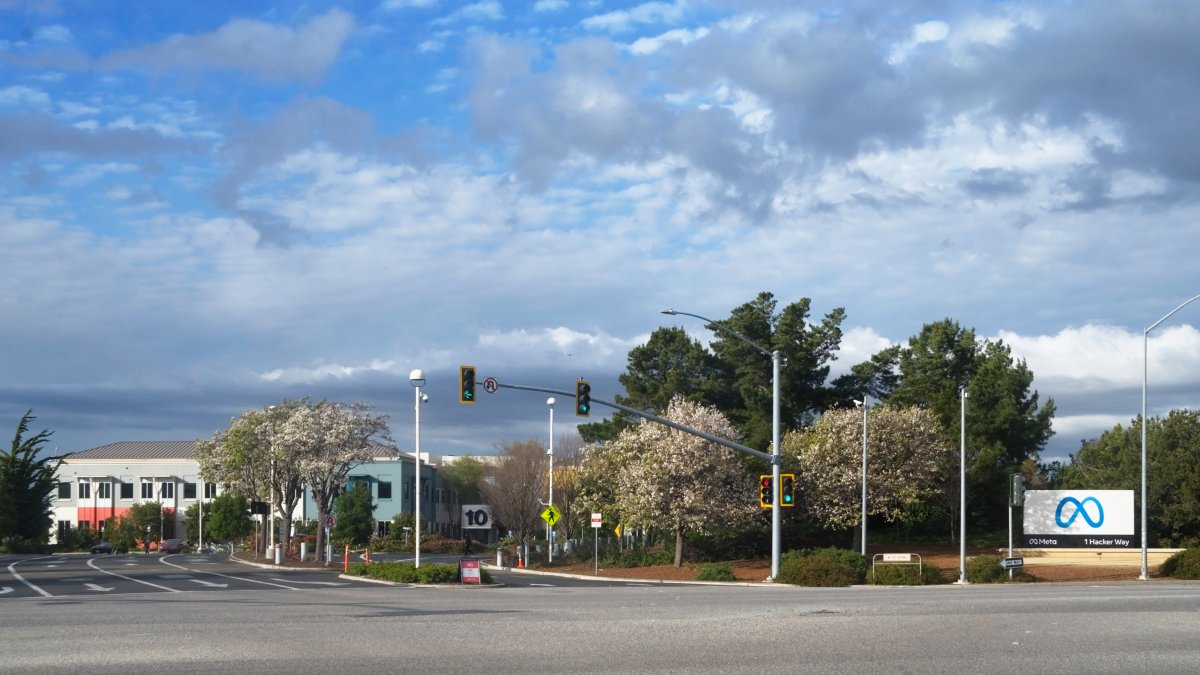
Meta has become the first of the four US tech giants to formally reopen its 2030 net-zero commitment, telling readers of its annual sustainability report that it is reworking "our timelines, sequencing, and interim milestones, including the 2030 timeframe for our net zero emissions goal and our near-term intensity targets." The report was signed by Rachel Peterson, Meta's vice president of data centers, and Blair Swedeen, its global head of net zero and sustainability. The stated reason is blunt: demand for AI infrastructure, they wrote, "has grown faster than almost anyone projected."
The numbers behind the admission are the sharpest the company has published. Meta's net emissions rose 45 percent in 2025 to 11.8 million tonnes of carbon dioxide equivalent, an increase concentrated in Scope 3, the category that covers electricity drawn by data centers and the embodied carbon of servers and construction. Gross emissions climbed from 15.6 million to over 21.7 million tonnes, roughly 40 percent in a single year — the largest jump among the four hyperscalers that have reported, ahead of Microsoft at 25 percent, Google at 18 percent and Amazon at 16 percent. Meta's electricity use rose 35 percent over the year as new AI campuses came online.
The arithmetic is structural rather than accidental. Meta reached net zero in its own operations back in 2020 by buying renewable power and cutting direct emissions 94 percent from a 2017 baseline, but the value-chain target it set that same year covers steel, concrete, chips and the grid power for an expansion that is now accelerating rather than shrinking. The report notes Meta has contracted more than 30 gigawatts of clean and renewable power across seven countries and 28 states, yet only about 12 gigawatts is actually generating electricity — a gap the company concedes utilities may not close fast enough, which is why it may lean on natural gas in the interim.
That concession is already physical. At its data-center complex in rural Louisiana, a project valued at roughly 250 billion dollars, Meta plans to build ten new gas-burning plants to power the campus. The company's 2026 capital spending is climbing toward 135 billion dollars as part of a 600 billion dollar buildout planned through 2028, and the report's own water ledger shows the same curve: facility water use fell to 790 million gallons, but consumption in water-stressed regions rose from 198 million to 246 million gallons, and power-plant water use for Meta's load climbed past 26 billion gallons — a figure Meta remains the only hyperscaler to disclose.
Meta is early but not alone. Reporting on the same disclosure cycle put Oracle's 2025 emissions growth at 157 percent, and peer pressure is spreading: General Motors, Walmart, Google, Coca-Cola and PepsiCo have all adjusted or weakened climate commitments in recent years. The International Energy Agency expects global data-center electricity demand to roughly double by 2030, with AI supplying close to three-quarters of the increase — a warning Meta's own trajectory now illustrates from the inside.
What Meta has not provided is a revised date or a new set of interim targets, leaving open whether "re-evaluating" means a short delay or a quiet retreat from the 2030 pledge altogether. Updates will appear on its sustainability website, the report says. The number to watch is next year's: if 2026 emissions rise again as the spending plans suggest they will, a rewritten target becomes the only thing standing between Meta and a deadline it set for itself in a pre-AI era.
Comments (0)
Log in to join the discussion
Log InNo comments yet