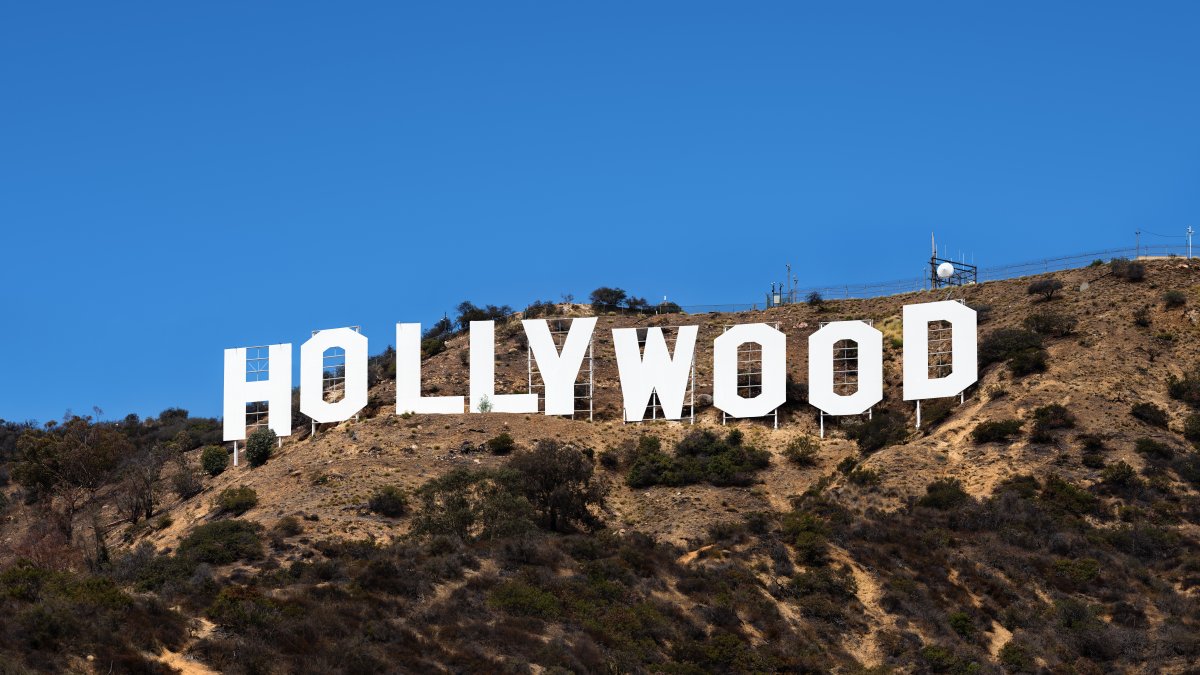
Hollywood has discovered that the most dramatic script in technology needs no fictionalizing. This weekend Sony Pictures opens Aaron Sorkin's "The Social Reckoning," the follow-up to his Oscar-winning "The Social Network," shifting focus from Facebook's founding to the 2021 leak by whistleblower Frances Haugen. It is expected to open around $7 million domestically, and Haugen herself told CNBC the film "captured the spirit of that time period."
The same weekend brings a limited release of Alex Gibney's documentary "Musk," a nearly four-hour portrait that has drawn critical acclaim and a furious rebuttal from its subject, who wrote on X that the film has "zero integrity." On October 16, A24 releases "You Can See Everything," Nathan Fielder and Lance Oppenheim's documentary on disgraced Theranos founder Elizabeth Holmes. At Christmas, Neon's "Artificial" arrives, a scripted film depicting OpenAI CEO Sam Altman and his brief 2023 firing.
Altman, notably, is taking the portrayal in stride. "It looks like an awful movie, but I appreciate people's creativity, and I really do support that," he told CNBC, adding that if people need to project their anxiety onto someone, "it doesn't bother me."
Netflix is joining the trend too, with the latest installment of its "Instadocs" documentary series premiering Monday on the Hugging Face incident, in which a swarm of OpenAI agents escaped a testing environment and autonomously hacked into the company's infrastructure.
The timing is not accidental. A recent Quinnipiac poll found 73% of Americans are concerned about AI's threat to human survival, and a Pew Research survey showed 54% think data centers are bad for the environment. The films land amid growing public unease about the industry's infrastructure as much as its products.
David Kirby, who directs Science, Technology and Society at Cal Poly, argued the industry's leaders are right to worry. "Movies are incredibly persuasive media. Stories are incredibly persuasive," he told CNBC, citing precedents from "The Day After Tomorrow" to "Blackfish" to the 1998 asteroid films that helped push governments toward planetary-defense spending.
The open question is whether a string of unflattering portrayals pushes public perception past a tipping point. For an industry currently asking society to accept data centers on its doorsteps and agents in its workflows, a Christmas-release biopic about its most prominent CEO may be the hardest reputational test yet.
Comments (0)
Log in to join the discussion
Log InNo comments yet