A federal antitrust lawsuit filed against McDonald's this week alleges the fast-food giant relies on an AI-powered "pricing engine" to set menu prices across its US locations, and that the system has been used to overcharge customers for Big Macs and fries. McDonald's has denied the allegation, saying it does not use AI to determine what individual customers are willing to pay and that it merely provides franchisees with "tools, resources, research and recommendations to help them make informed decisions."
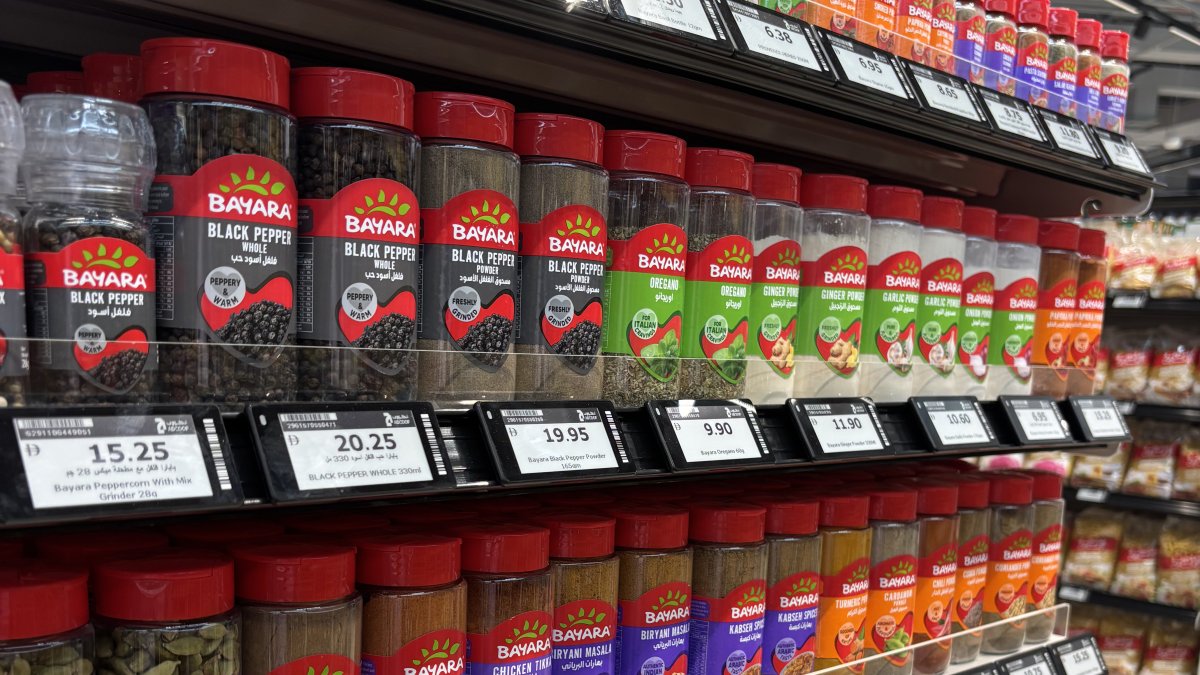
Whatever the court decides, the case lands in the middle of a much larger buildout. Supermarkets and fast-food chains are digitizing pricing and merchandising at a pace that regulators on both sides of the Atlantic are only beginning to catch up with. Kroger, one of America's largest grocery chains, said earlier this year that it uses an AI platform called FlashFood to automatically mark down perishables approaching their shelf-life limit and market them to app users. Electronic shelf labels, or ESLs, digital screens that can be repriced remotely, are now spreading through Kroger, Amazon Fresh, Walmart and Whole Foods in the US, and through Tesco, Morrisons and Asda in the UK.
The data plumbing goes beyond price tags. UK supermarket Sainsbury's launched "SmartLists" on Wednesday, an AI feature that builds shopping lists from a photo of a fridge or a typed meal idea. Revolut, the global financial platform, has trialed facial-recognition checkout in selected coffee shops, letting customers pay with a glance.
Economists at the Bank of England flagged the trend in April: more sophisticated technology is leading prices to change more frequently and become more individualized, with firms increasingly able to charge "as close to the maximum price a consumer is willing to pay," a scenario they described as "perfect price discrimination." They also warned it could distort inflation statistics, because the consumer price index assumes a representative basket of prices. "When prices shift continually, and differently for each shopper, the idea of a representative price becomes strained," the economists wrote.
Miroslava Marinova, a senior lecturer in commercial law at the University of East London, told CNBC that the traditional boundary between dynamic pricing, which reacts to market conditions, and personalized pricing, which uses consumer data to estimate willingness to pay, is dissolving in practice. As retailers combine market-level information with transaction histories, browsing behavior and location data, shoppers may no longer be able to tell whether a price reflects the market or their own profile. That, she argued, weakens the normal disciplining effect of consumer choice.
US states are already moving. New York requires most businesses that use personal data to set prices to disclose it clearly. Maryland has restricted food retailers and delivery services from using personalized, data-driven pricing to charge higher prices for certain foods, while New Jersey and Connecticut have enacted measures targeting "surveillance pricing." Walmart and Kroger have both publicly insisted they do not use surge or individualized pricing.
For now, the McDonald's lawsuit will test whether a fast-food pricing system built on AI crosses the line from efficiency into algorithmic collusion or overcharging. The broader question, though, extends well beyond one chain: as every shelf label becomes software, the price you see may increasingly be a prediction about you.
Comments (0)
Log in to join the discussion
Log InNo comments yet