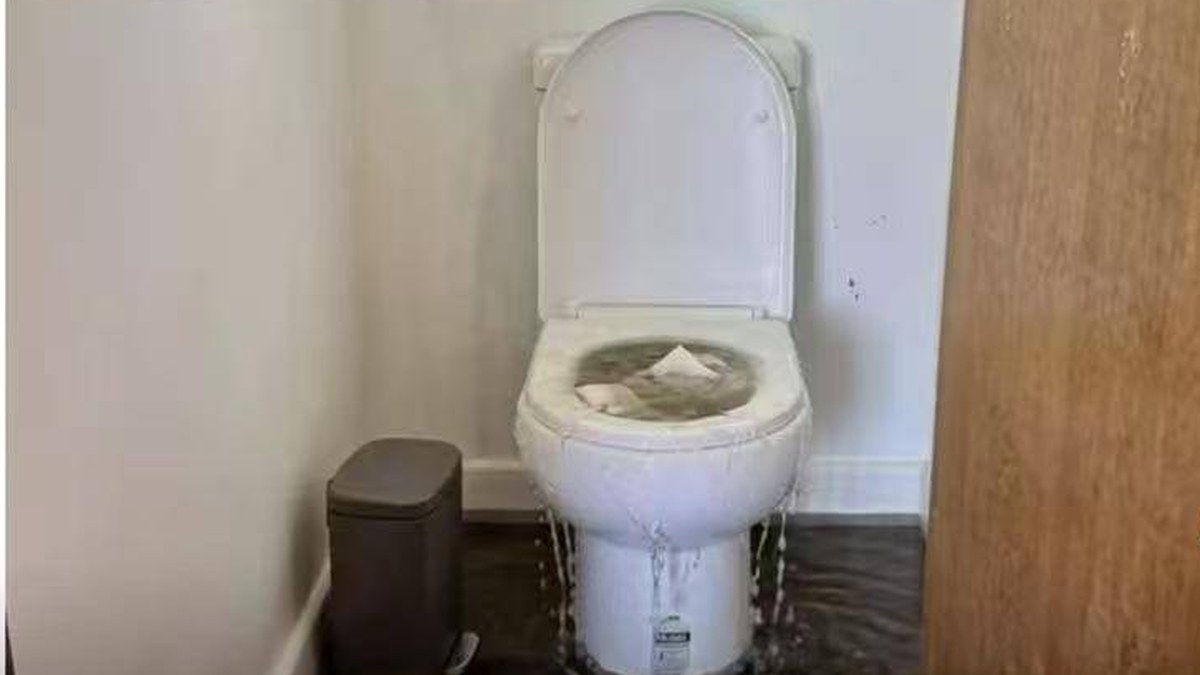
An Airbnb dispute in Australia has become one of the clearest examples yet of AI-generated images being used as alleged evidence in a real financial claim — and of an invisible watermark undoing the scheme. A guest posting on Reddit under the username FurinaDeFontaine says that after checking out of a rental, the host sent a photo purporting to show a toilet blocked and overflowing, with the bathroom floor submerged under inches of water, and demanded about A$1,700 (roughly US$1,183–1,200) in damages. Some Chinese-language outlets reported the figure as US$1,700; the original post and most English coverage put it at A$1,700.
According to the guest's account — posted to the subreddit r/isthisAI on September 29 — the host reportedly belongs to one of the largest short-term rental management companies in their Australian state. The guest, who said they did not even use toilet paper during the stay, grew suspicious of the photo itself. Reddit users flagged details real photographs rarely get wrong: streams of water falling without splashes, and the physics of the scene — the bathroom was on an upper floor, so several inches of standing water should have soaked through into the level below. As the guest put it after the case closed, "if there are a few inches of water on the ground, the entire first floor should be an aquarium!"
The decisive check came from Google's own tooling. The guest ran the image through Gemini, which detected a SynthID watermark — the imperceptible token-level signature Google embeds in content generated or edited by its AI models, including Gemini and Imagen. In other words, the "damage evidence" was most likely generated by the very family of tools whose detector exposed it. Community members in the thread replicated the finding.
The outcome was swift. "Good news, everyone! I had this case resolved and deemed ineligible for the reimbursement they asked for," the guest wrote the next day. Coverage of the follow-up says Airbnb also took action against the host's account, though the platform has not issued any public statement, and the host's identity and response remain unknown. The account rests on one Reddit post and secondary reporting — Kotaku and PC Gamer among the outlets that picked it up — so the details should be read as allegations.
Airbnb's own dispute rules frame why the scheme was unlikely to survive scrutiny. Hosts must submit damage requests within 14 days of checkout, supported by photos or videos, repair estimates and receipts; guests have 24 hours to respond, and Airbnb's Community Support can review evidence from both sides. A single unsourced image — one that contradicts the building's own floor plan — fits poorly into that evidentiary bar.
SynthID's fine print matters too. A detected watermark indicates that all or part of an image was created or edited with Google AI, but it does not identify who made it or when, and it cannot by itself prove the depicted event never happened. Conversely, a clean result proves nothing: images from other AI systems carry no SynthID at all, and watermarks can degrade or vanish through re-encoding and editing. It is a clue, not a verdict.
The broader lesson is already circulating among travelers: photograph and video-record the property at check-in and check-out, keep original files with their timestamps, and keep communications on-platform. What used to be obsessive behavior is becoming baseline self-defense now that a convincing "smoking gun" photo can be generated in seconds.
For platforms, the case lands at an awkward moment. Airbnb, like other marketplaces, built its dispute flow around the assumption that photos are grounded in reality. Provenance detection like SynthID is not built into most claim workflows, which left the burden of detection on a guest who happened to know what to look for. Expect platforms to face pressure to run watermark and provenance checks on damage evidence by default — because the next host to try this may pick a model that leaves no watermark at all.
Comments (0)
Log in to join the discussion
Log InNo comments yet