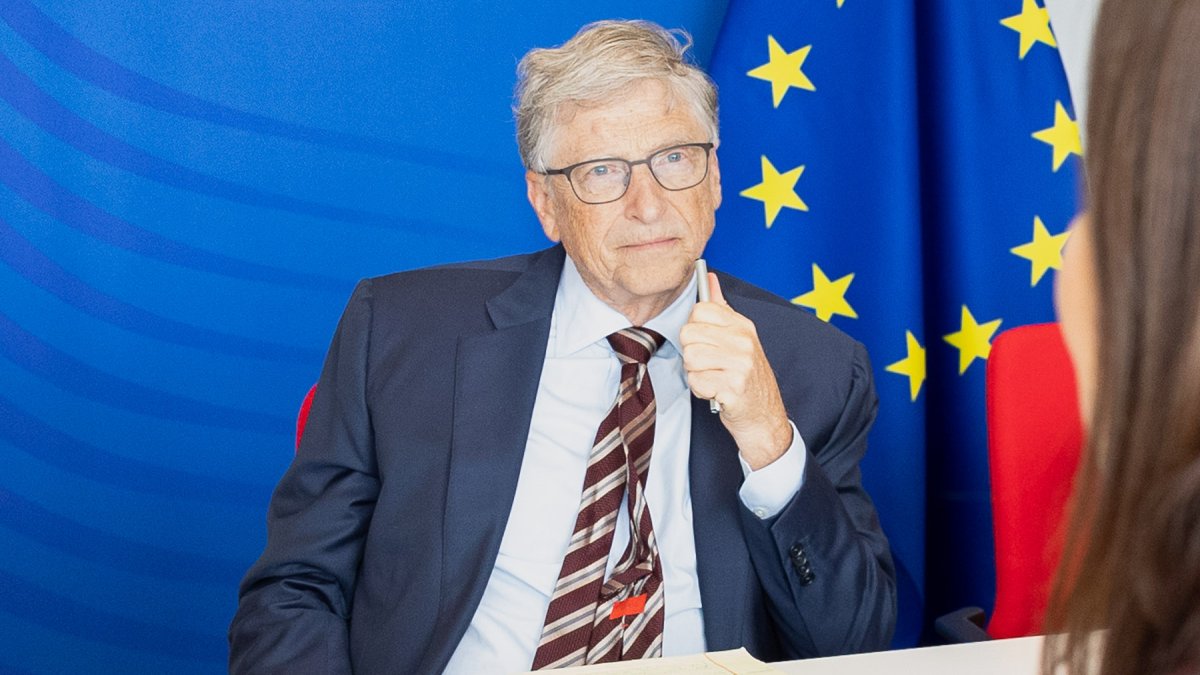
Bill Gates has a blunt answer for anyone asking when AI risk stops being theoretical: sooner than the labs suggest, and in a very specific place. In a Sunday interview reported by AFP, the Microsoft co-founder said "the front that we'll probably see most dramatically in the next year is cyberattacks," and argued that the immediate danger is not AI escaping human control but people using it deliberately.
"The real danger right now is not the AI's getting out of control," he said. "We need to work on that, but that's years away in terms of the big impact that might have." What worries him instead is the combination of capable models, malicious users and the fact that the safeguards can simply be switched off. "Right now, you're allowed to take all those safeguards out. So when you have bad people, no safeguards, and then the latest models, that's where, over the next year, primarily in the cyber area, we are going to have a lot of negative surprises."
Gates called for tighter restrictions to prevent bad actors from using AI for cyberattacks and bioterrorism. That puts him at odds with the current US position. President Donald Trump has argued that AI companies regulating themselves is enough; Gates dismissed the idea in words that were notably unguarded for a founder whose company sits inside that ecosystem. "The idea that for the most dangerous technology humans ever invented, that that's the final word, that just the companies themselves are the only check that society has... it's clear we're not doing enough," he said.
The warning follows an August essay in which Gates argued the world is dangerously unprepared for the disruption AI will cause, particularly to employment. The two interventions aim at different horizons: the essay was about structural change that arrives over years, while Sunday's remarks concern misuse of systems that already exist. In that sense it is the more concrete of the two - no new capability is required, only the removal of guardrails the labs themselves built.
It also lands in the same week that Microsoft's own leadership made a parallel argument from the operational side. Satya Nadella has called for organizations to separate the supply of intelligence from authority over it, and to build systems that can monitor, restrict and contain AI actions independently of the model. Gates is describing the threat; Nadella is describing the architecture that assumes the threat has already arrived.
The gap between those positions is the interesting part. The industry's public posture remains that frontier models are safe by default and that misuse is an edge case. A founder and a chief executive of the same company, in the same week, describing safeguards that can be removed at will and controls that must live outside the model, sketch a different picture - one in which the safety case rests not on what models refuse to do, but on what nobody can switch off.
Comments (0)
Log in to join the discussion
Log InNo comments yet