SWI Group, a Singapore-incorporated, Amsterdam-listed digital infrastructure company, has raised 800 million euros (about $900 million) to expand its data centre and AI compute capacity, valuing the group at 6.1 billion euros. The capital increase, from unnamed institutional investors, pushes the equity SWI has raised since March past 1 billion euros.
The money is earmarked for power infrastructure, compute deployments and SWI's development pipeline in Europe and the United States. Founder and CEO Max-Hervé George told the Wall Street Journal the company plans to market the sites of Genesis Digital Assets - the former bitcoin miner SWI took control of this year - in Texas, North Carolina, South Carolina and Sweden to hyperscale cloud providers. He said he has "zero interest" in bitcoin mining, and the group is selling Genesis Digital's last three small mining sites in Kazakhstan.
Genesis Digital carries one of the more awkward histories in crypto. Alameda Research, the trading firm tied to Sam Bankman-Fried, put about $1.15 billion into the company from 2021 and ended up with a 20 percent stake. After FTX collapsed, the estate's administrators sued to recover the money, calling it one of Bankman-Fried's most reckless investments and describing the Kazakh assets as virtually worthless. That suit was dropped on June 15, and SWI closed a $500 million purchase of roughly 38.3 percent of the shares the same day, including about 77.2 percent of the $1.124 billion liquidation preference on the preferred stock. It has since moved to majority ownership.
What SWI actually bought was power. Genesis Digital holds more than 1.3 GW of energised and approved grid connections across 15 facilities, most of them in Texas with a smaller cluster in Sweden. Combined with SWI's 2.3 GW European platform AiOnX, the group controls more than 3.6 GW. "Power connectivity is the most valuable commodity in digital infrastructure today," George said when the stake closed.
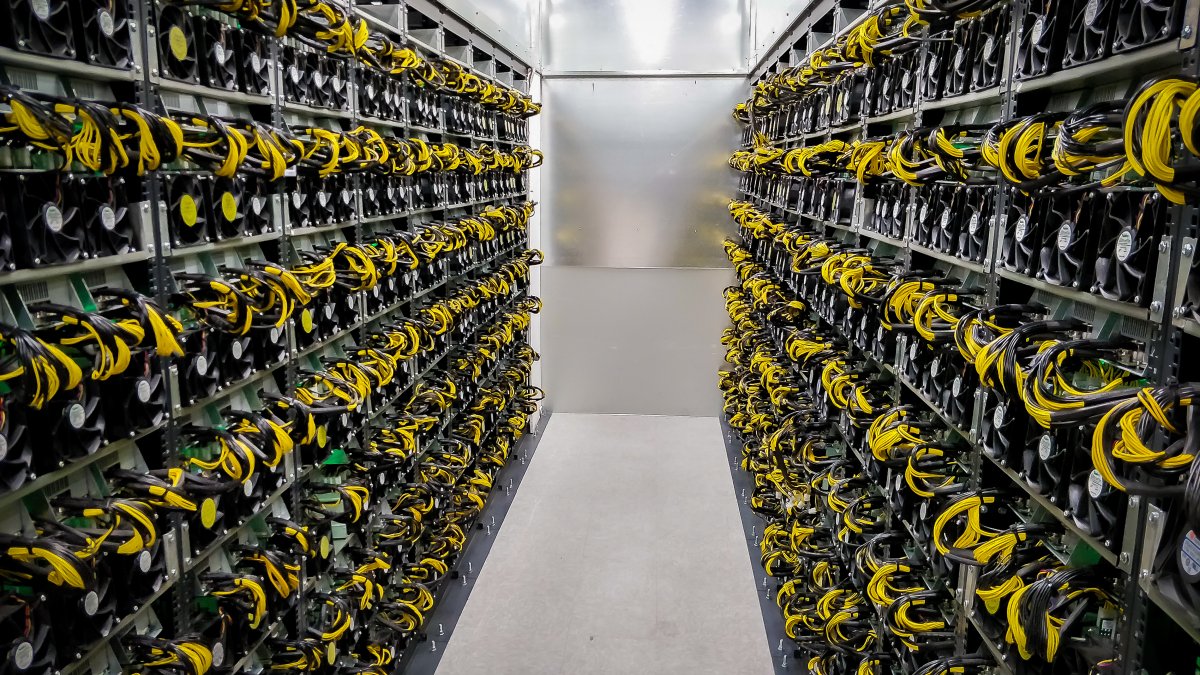
The arithmetic explains why a distressed mining estate has become an AI asset. Listed bitcoin miners have spent two years making the same argument: a site with a grid connection, cooling and high-density power contracts is one step away from hosting GPU clusters, and AI tenants pay for every watt regardless of where the bitcoin price trades. Converting mining halls into AI-grade data centres is not a straight swap - AI clusters demand more robust cooling, networking and uptime guarantees than rigs tolerate - so the 1.3 GW represents potential rather than finished capacity.
The deal also adds a strange footnote to the FTX estate's record. The estate sold its 7.8 percent stake in Anthropic for $1.3 billion in 2024; the Wall Street Journal estimates that holding would now be worth about $75 billion. Bankman-Fried's infrastructure bets are aging better than his balance sheet did.
Comments (0)
Log in to join the discussion
Log InNo comments yet