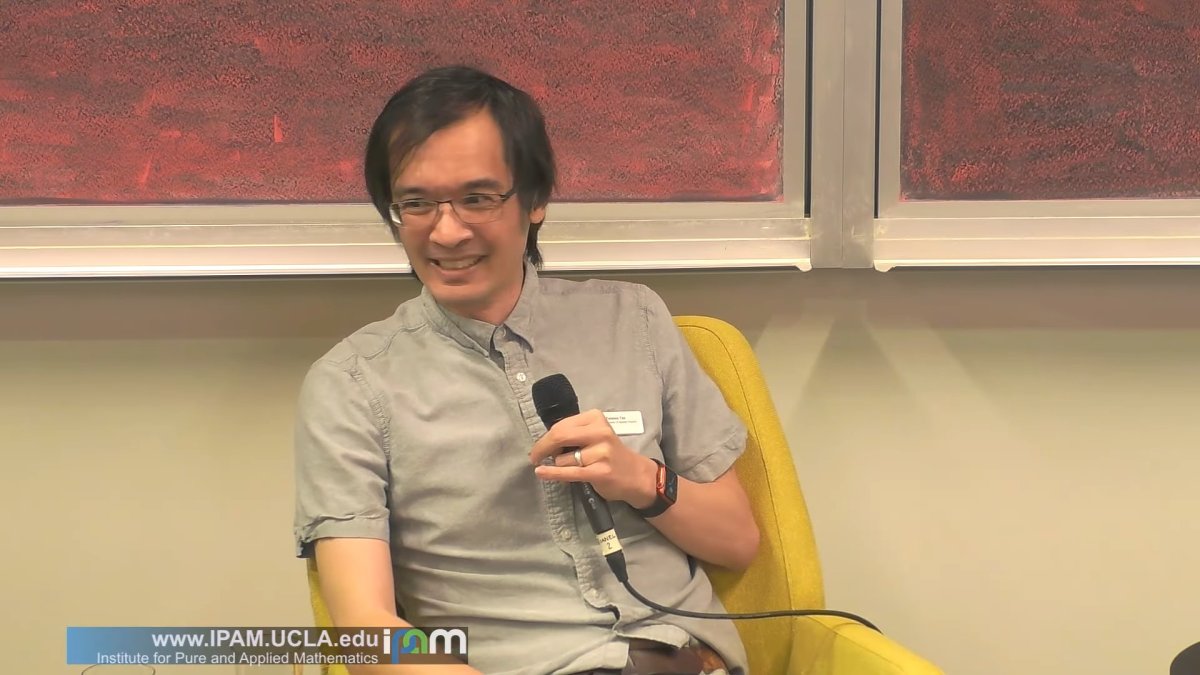
OpenAI published 722 AI-generated mathematical manuscripts on GitHub on October 6 - 372 result groups spanning number theory, geometry, algebra and theoretical computer science, including claimed attacks on problems that have resisted mathematicians for years. The company says the work came from an unnamed internal frontier model that has already maxed out conventional benchmarks, so it pointed the system at genuinely open problems, filtering thousands of attempted proofs into the curated set, with an average compute cost of roughly three hours of ChatGPT Pro "thinking time" per published result. By October 7, Terence Tao - Fields Medalist, UCLA professor and chair of the Association for Human Mathematics - had reposted his group's blistering response as a guest post on his blog, and the dispute became the math world's most visible confrontation with an AI lab yet.
The AHM statement is unusually blunt. It opens by noting OpenAI is a company "currently facing lawsuits over unauthorized copying, copyright infringement and trademark dilution," implying the results rest on training that may itself be contested. It then dismisses the release outright: "Mathematicians did not ask for this work to be done," and publishing more than 700 files at once is "not a demonstration of scholarship, but a demonstration of power." The group's core demand is a boycott - it urges mathematicians to stop collaborating with OpenAI and return to a research vision centered on human understanding.
The accusation that stings most is procedural. After an earlier dispute over OpenAI's claim that an internal model had solved more than 100 open problems in a month - including an approach to the Navier-Stokes Millennium Problem, announced shortly before two mathematicians were due to present their own AI-assisted attack on it - the company set up an advisory group, AGMAI, at the Institute for Advanced Study. AGMAI's first report drew a clear red line: frontier AI companies should not test advanced open math problems on internal models without the community's involvement. AHM argues the October 6 release ignored that premise entirely - though the advisory group, notably, has no formal say over the pace of OpenAI's internal research.
Working mathematicians are confronting an added indignity: the proofs are barely readable. Dana Moshkovitz, a complexity theorist who has spent her career on the Unique Games Conjecture, found a claimed proof of it in the release. "Basically the paper is so horribly written that it's impossible to read it without AI help," she said, describing its central construction as "some alien craziness." That inverts the traditional economics of credit: OpenAI publishes raw machine drafts, and the community donates the painstaking work of making them legible. Complexity theorist Scott Aaronson, chronicling the fallout on his blog, coined a word for the mood - a "Mathocalypse" - and relayed unofficial figures suggesting thousands of problems were attempted with a hit rate of only about five percent (his sources are unnamed, and reports differ on whether the attempt count was closer to 4,000 or 8,000).
Aaronson also sketched the contrast now framing the debate: the "Anthropic model." When Anthropic's model supplied the key idea for disproving two decades-old conjectures, the lab partnered with the two algorithm researchers involved - they were compensated and wrote a version humans could actually follow. OpenAI's batch dump and Anthropic's managed partnership each have critics: the first leaves the community doing unpaid interpretive labor, the second lets a private company choose which mathematicians get to serve as emissaries for a result.
Tao's own contribution went beyond reposting. On Mastodon he sketched what he calls the "Math 2.0" problem: proofs of long-open problems used to seed talks, workshops, collaborations and textbook chapters that drew young researchers into a field. Now problems are solved autonomously by AI users with no interest in mathematics, who cannot answer questions about their own results, while other researchers quietly shelve promising directions for fear of being scooped. The damage, he argues, is irreversible: once a problem is considered solved, it cannot be unsolved, and merely knowing a solution exists "contaminates" the search for other approaches that might have been more fertile. Problems are being "harvested" at scale, leaving entire branches of mathematics less rich than before. In September he had already joined 24 other Fields Medalists - including Peter Scholze, Maryna Viazovska and Martin Hairer - in warning of a "severe misalignment" between the AI industry's goals and mathematics'; the boycott call is an escalation.
The community has not fully closed ranks. Commenters on Tao's blog back the boycott and want better protection for arXiv against bulk scraping for training data; others argue OpenAI will pursue mathematics regardless, and that public results beat private ones. AGMAI itself takes the diplomatic line, calling the release a first step while warning that mathematicians must be able to formulate their own questions rather than merely digest what AI labs produce. What is no longer in dispute is the fracture: the field that spent two years celebrating AI as a proof assistant has started organizing, formally, against the company that scaled it fastest.
Comments (0)
Log in to join the discussion
Log InNo comments yet