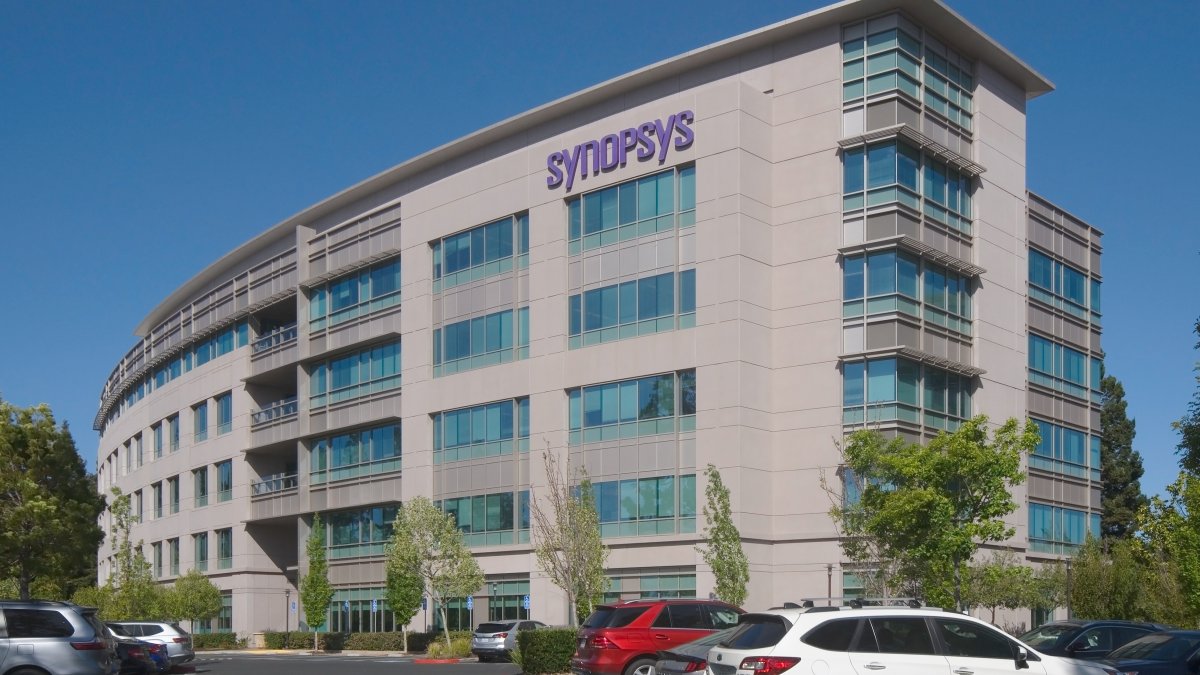
Synopsys and OpenAI announced a strategic partnership on Wednesday to jointly develop GPT-Synopsys, a specialized AI model for semiconductor design — sealed with an expansive, multi-year, legally binding agreement that makes the two companies preferred partners and includes a shared revenue framework and joint go-to-market plan.
Today's agentic AI setups mostly connect general-purpose models to EDA (electronic design automation) tools so they can run chip-design workflows. The stated ambition here goes a step further: make a frontier model a native expert user of the tools themselves. GPT-Synopsys is being trained and tuned to run Synopsys software the way an expert engineer would — launching tools, interpreting their outputs and iteratively optimizing designs. Engineers will delegate objectives from PPA (power, performance, area) optimization to timing and verification closure, while agents run the tools, implement changes and iterate toward verified results that humans review.
The commercial plumbing is unusually explicit for an AI partnership. OpenAI will license Synopsys' EDA tools and pay a training subscription fee to learn them, Synopsys CEO Sassine Ghazi told Reuters. When customers use the product, the two companies split revenue based on how well the model improves the design of a chip. The joint offering bundles compute, model and licenses, with GPT-Synopsys running on OpenAI-hosted infrastructure and integrating deeply with Synopsys.ai and the Synopsys Autopilot agentic platform.
Ghazi pitched the deal as acceleration without compromise: "The future of semiconductor engineering requires dramatic acceleration of the chip design process without compromising PPA or first-time-right silicon." He was blunt about incentives, too — the structure "will not be cannibalizing our business," he said, calling it "an upside" that delivers more value to customers. Critically, outputs stay guarded: traditional Synopsys verification tools using conventional computing double-check the model's work. "The model needs these guardrails in order to check the physics," Ghazi said, calling sign-off-grade validation "essential."
OpenAI president Greg Brockman framed the partnership as circular economics for compute: "We're using our most advanced technology to improve the systems that power AI... By helping them build better chips, we can build better AI and bring it to more people." On data protection, the companies say customer-specific design data is not used to train the model, is encrypted at rest and in transit, and is governed by configurable retention, audit and permission controls.
Investors liked the math. Synopsys shares rose as much as 7% after the partnership and guidance announcement, with the company telling its investor summit it now expects 15% revenue growth for fiscal 2027 — above the 11.19% analyst consensus compiled by LSEG.
The deal builds on Synopsys' own agent push: two days earlier it unveiled the Autopilot platform and AgentEngineer solutions, with more than 50 engagements underway and company-claimed results including up to 50x faster verification closure, 20% higher coverage and a 30% productivity boost — figures that remain vendor self-reported and independently unverified. For OpenAI, chip design is familiar territory: its Jalapeño inference accelerator, developed with Broadcom, went from initial design to tape-out in nine months.
GPT-Synopsys is the clearest sign yet that frontier models are moving from assisting professionals to operating professional tools outright — and that EDA, the software layer every chip on earth passes through, is now a strategic prize for AI labs. Early technology engagements with leading semiconductor customers are underway, though neither company named them.
Comments (0)
Log in to join the discussion
Log InNo comments yet