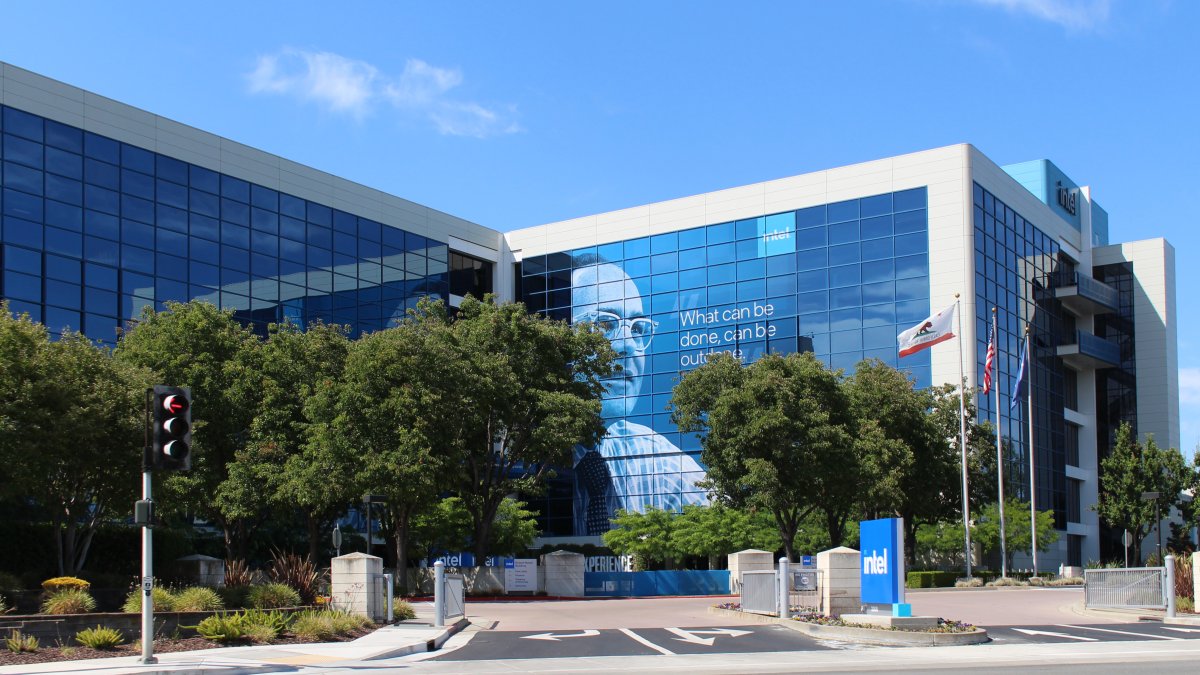
Intel has spent five years and tens of billions of dollars trying to become a chip foundry for other companies, and on November 18 it finally had a customer signing to show for it. Speaking at the TomorrowX Summit in Austin, CEO Lip-Bu Tan announced that Intel signed its first outside customer for its 18A manufacturing technology. "Resilient supply on the foundry is very important," Tan said. "And then 18A, I'm involved in production and we just signed the first customer."
The customer's name was not disclosed, but Intel chief technology officer Pushkar Ranade clarified on X that the deal is for 18A-P, the performance-tuned variant of Intel's leading-edge node. That node entered risk production on June 16, 2026, and Intel says it offers 9 percent higher performance at the same power, or 18 percent lower power at the same performance, compared with base 18A — company figures without published test conditions. Intel also states 18A-P is fully design-rule compatible with 18A, so existing designs can carry over, and base 18A is already in high-volume manufacturing in Arizona and Oregon behind Panther Lake processors.
The timing matters because the competition is ahead. TSMC's rival 2nm N2 node began high-volume manufacturing in the fourth quarter of 2025, meaning Intel's first external customer signed for a node that has not yet reached volume production. Intel shares have lost more than half their value since the end of September, largely after the company warned that quarterly revenue would fall at least 1 billion dollars short of analyst estimates amid a PC slump. The signing is a credential, not yet a business: no volume, price, product or start date was disclosed.
Separately, Tan named Microsoft as the first publicly acknowledged customer for Intel's EMIB advanced packaging technology, which will be used for Azure's first-party chips. The two deals are distinct: EMIB connects chips inside a package, while the 18A-P agreement covers the wafers themselves. Analyst Ben Bajarin of Creative Strategies called the customer signing "a huge win for foundry," speculating that Nvidia, Apple or the large cloud companies designing their own processors are plausible candidates — his analysis, not any statement from Intel. He pointed to capacity math: Amazon, Microsoft and Google are all struggling to secure enough CPU capacity at TSMC, so a second source for at least part of their designs makes sense.
That framing — AI compute supply chain, not consumer chips — is where the deal has real weight. Hyperscalers do not need to move flagship AI accelerators off TSMC to justify dual-sourcing; routing custom CPUs and multi-die packaging to Intel eases the bottleneck at lower risk. May reports suggested Apple and Intel were closing in on a foundry deal for some Apple chips, though neither company has confirmed. The US government took a 10 percent stake in Intel in August 2025, followed by a 5 billion dollar investment from Nvidia, both betting on a second American source of leading-edge wafers.
The open question is execution. Risk production plus one unnamed signature is the front door, not the finish line — Intel still cannot meet demand for its own server processors, and its foundry credibility rests on converting this signing into volume yields that outside customers can build products on. But after five years of roadmap-only announcements, Intel can finally say the words every foundry pitch needs: someone signed.
Comments (0)
Log in to join the discussion
Log InNo comments yet