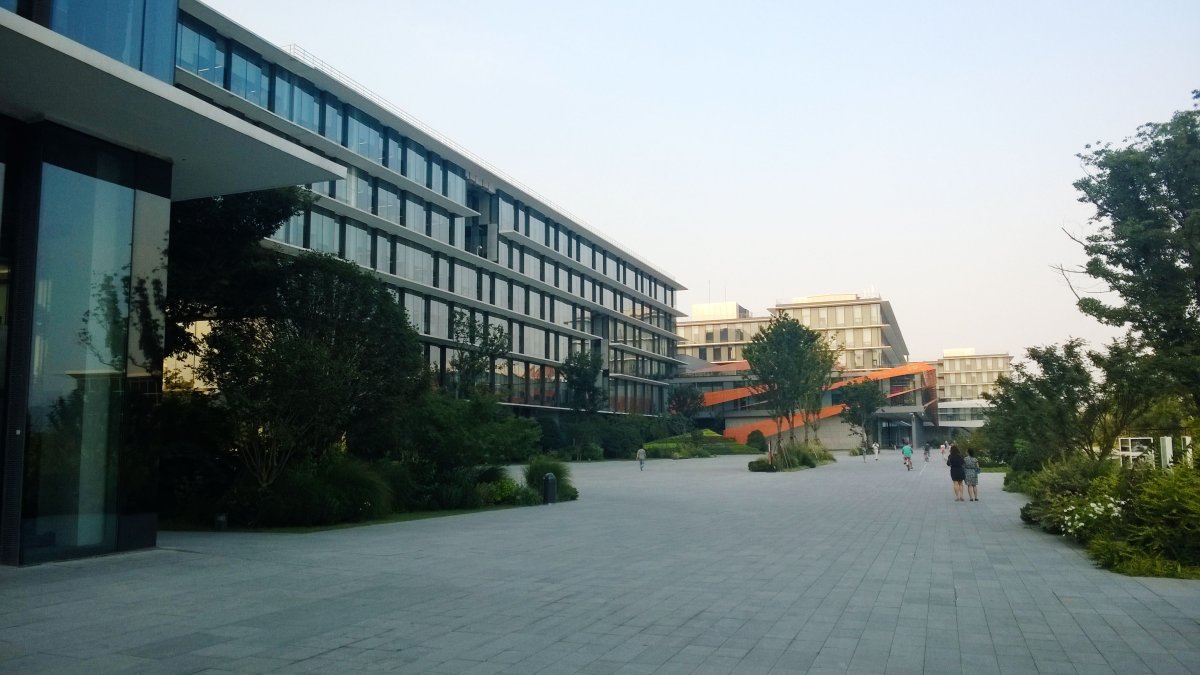
Qincheng, the workspace operations brand inside Alibaba, has put an AI agent in charge of running its office campuses: lighting, air conditioning, safety inspections and meeting-room logistics. The system was unveiled on October 24 and has been deployed gradually since August, built from Qwen Office, the Qwen large language model and the embodied intelligence stack of Alibaba map unit Amap.
The lighting part is the most concrete. An agent called the Lighting Expert runs in several buildings of Zone C at the Xixi campus in Hangzhou. It detects when employees enter the office, adjusts workstation lighting against weather, natural light and ambient brightness, and learns from manual overrides when people change settings themselves. During the trial, one building in the zone recorded a 16 percent reduction in lighting energy consumption without a measurable hit to employee experience, according to Qincheng.
The air-conditioning agent works differently. It learns how quickly each space cools from historical data, then monitors weather, occupancy and indoor and outdoor temperatures to decide when to switch on and how to adjust, recalculating every ten minutes. Across the nine Alibaba campuses where it is deployed, the company says air-conditioning energy consumption has fallen by an average of 15 percent. Both savings numbers are company-reported and have not been independently verified.
Safety inspection is where the model capabilities show. The system analyzes drone footage with Qwen vision to spot hazards, including hairline cracks in glass facades that are easy for human inspectors at height to miss, which reduces how often workers need to climb. Amap robotic dog Tutu joins campus patrols, using spatial intelligence to judge which ground is passable and plan routes on its own.
The office-services layer is smaller but telling. An assistant called Xing Xiaozheng books meeting rooms for employees, and when rooms are scarce it keeps watching availability and automatically grabs cancellations. Qincheng says it plans to extend the smart-space agent to all of its office campuses.
The economics here are unglamorous but add up. AI campus operations do not make demo footage, yet a 15 percent cut in air-conditioning load across a company with Alibaba footprint is a large absolute number, achieved with the same cameras, sensors and buildings the company already owned. It is the same pattern showing up in industrial vision AI worldwide: the fastest ROI is not a new model, it is an agent bolted onto infrastructure that already exists.
Comments (0)
Log in to join the discussion
Log InNo comments yet