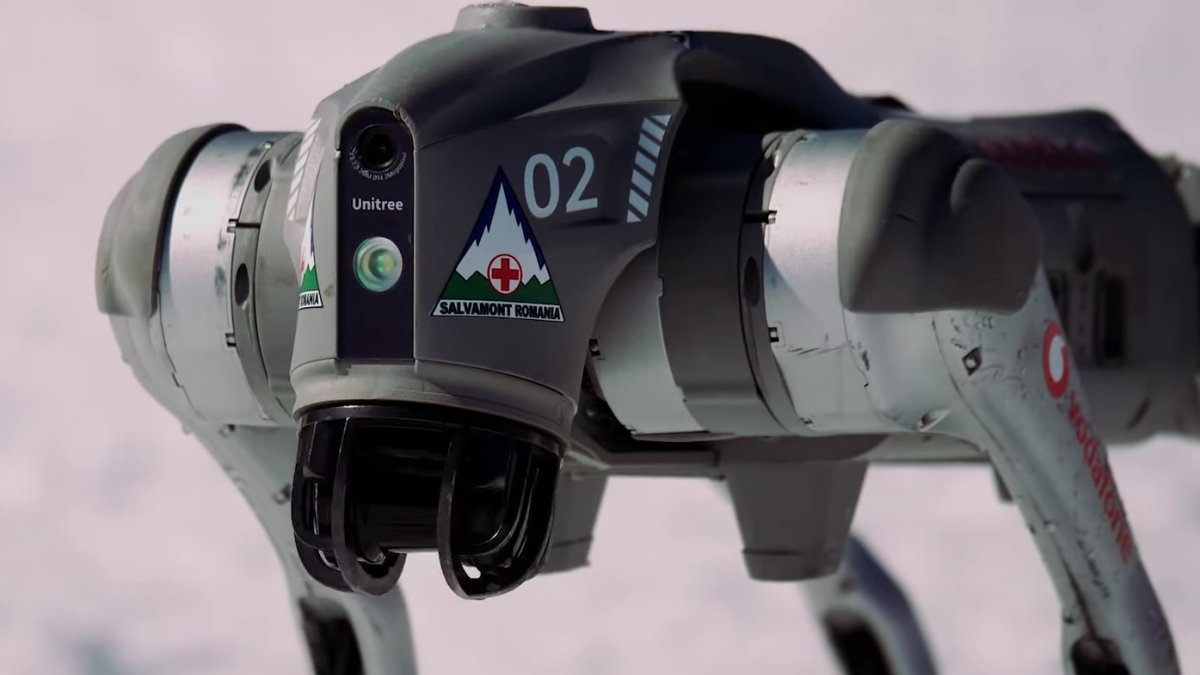
Unitree's Go2 — the quadruped robot that has become the default choice for hobbyists, educators, and rescue services — carried a critical command injection flaw in the AI chat module that lets it take voice commands, and the fix is already out. The vulnerability, tracked as CVE-2026-115995, was published in the NVD on October 24 and carries a CVSS 3.1 base score of 9.6 out of 10.
The weak point is precise: the set_volume function in gpt_thread.py, part of the chat_go component that powers the robot's LLM-driven chat features. According to the vulnerability description, manipulating the Value argument to that function leads to operating system command injection, and the attack can be launched remotely. The weakness is classified as CWE-78, the same improper-neutralization class that has plagued web software for two decades.
All Go2 firmware versions up to and including 1.1.11.4 are affected. Unitree shipped version 1.1.11.5 to fix the issue, and the patched firmware package is available on the company's own firmware distribution server. Notably, the vendor confirmed the report early: Unitree told VulDB that "submission 990502 corresponds to our internal ticket #474," acknowledging the Go2 chat_go set_volume OS command injection and its CWE-78 classification.
The threat picture, for now, is calm. Security trackers report no public proof of concept and no confirmed exploitation in the wild, and the vulnerability does not appear in the CISA Known Exploited Vulnerabilities catalog. The remote exploitability claim comes from the NVD description itself, and defenders should treat it as credible without assuming an active campaign behind it.
What makes this worth more than a routine CVE entry is what it says about where the bug class is migrating. The Go2 is a physical robot with wheels, legs, and — in its chat-enabled configurations — a microphone, a speaker, and a connection to a large language model. A command injection in the volume-control path of an AI chat thread is a web-era vulnerability pattern landing on hardware that can physically move, open doors, and share living and working spaces with people.
The patch path is also the hard part. Server operators patch within days; a global fleet of consumer and institutional robots does not. Go2 units serve in homes, classrooms, and — as one widely shared image shows — with Romania's Salvamont mountain rescue service. Few of those owners run firmware update discipline, and the vulnerable function sits in a chat module most users never think about. A robot that has not been updated may remain exposed indefinitely, on networks it follows its owners into.
The industry takeaway is straightforward. Robotics vendors are effectively shipping IoT endpoints with AI stacks attached, and they are inheriting the entire command-injection playbook along with it. Unitree moving from private ticket to published fix within days is genuine progress, and more disclosure than the sector managed a few years ago. But buyers should start evaluating chat-enabled robots the way they evaluate routers — as network-facing devices that need a patching commitment, not as toys that happen to have Wi-Fi.
Comments (0)
Log in to join the discussion
Log InNo comments yet