OpenAI announced on October 21 that it worked with PerturbAI and Scripps Research to run thousands of GPT-Rosalind agents in parallel over a whole-brain CRISPR dataset, completing in 32 minutes an analysis the team estimates would take human researchers several months to a year. The figures come from OpenAI and have not been independently verified.
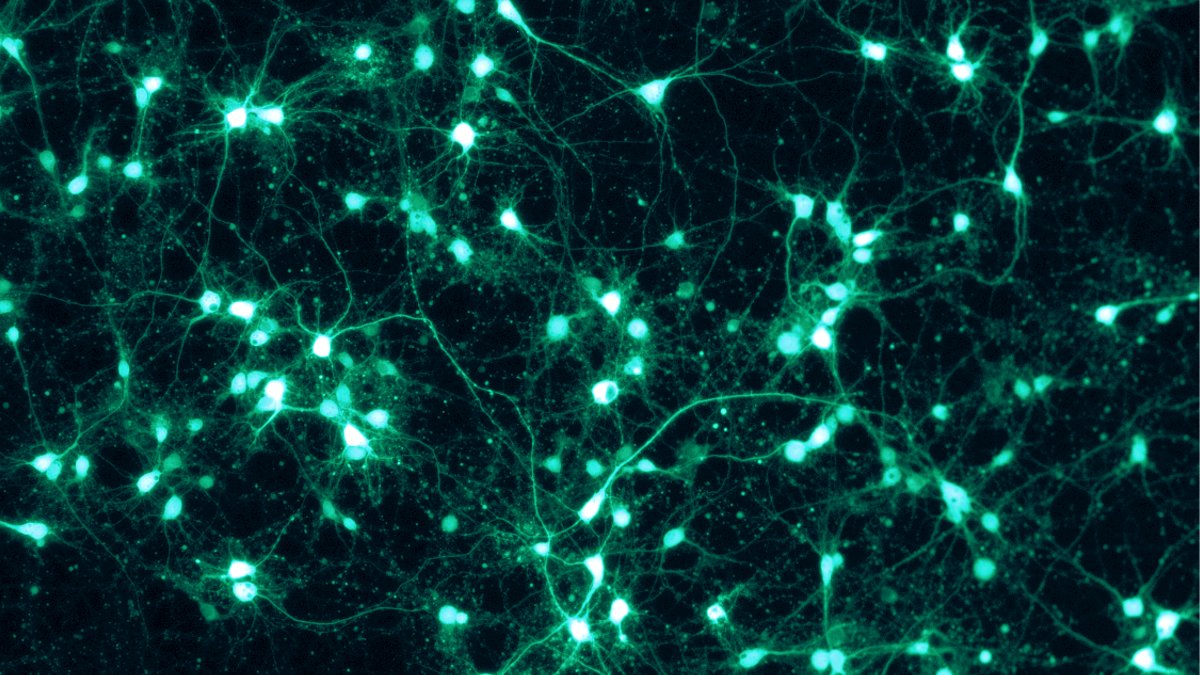
The dataset is a whole-brain CRISPR atlas recording how millions of mouse brain cells responded when roughly two thousand genes were disrupted, one at a time. The bottleneck in such experiments is no longer generating data but interpreting it: connecting each perturbation effect to decades of scattered literature to figure out what it might mean for human disease.
The method, which the team calls distributed biological reasoning, assigns one agent per gene disruption. Each agent examines the cellular response, searches the scientific literature, and proposes a possible mechanism. The reports are then merged into a reasoning atlas linking genes, cellular effects, papers and candidate mechanisms, which is being made publicly available for other researchers to explore.
The company offers a controlled comparison that makes the case for the swarm approach. With the model and resources held fixed, a single agent at the largest workload cited 11 references, while the distributed run cited more than 700. In blinded reviews, human experts preferred the distributed interpretations 75 percent of the time. The gap, OpenAI argues, is not a smarter model but wider coverage: thousands of agents reading in parallel simply miss less.
Two leads from the run were rated worth following up by human experts. One concerns Tsc1 and Tsc2, two genes in the mTOR pathway: disrupting either produced similar effects in most neurons, but in the cerebellum the Tsc2 disruption changed the activity of dozens of genes involved in neuronal communication while Tsc1 barely registered, consistent with the link between TSC2 mutations and cerebellar abnormalities in tuberous sclerosis.
The second is a testable hypothesis about Perry syndrome, a rare neurodegenerative disorder with Parkinson-like symptoms. DCTN1, a gene linked to the disease, raised the expression of cholesterol-making genes in neurons when disrupted. GPT-Rosalind proposed that cholesterol may not be reaching where neurons need it, and suggested that restoring cholesterol transport could protect neurons from degeneration. OpenAI stresses the idea is novel and worth testing but has not been confirmed experimentally.
The collaboration is being expanded to hunt for new drug targets, and OpenAI says researchers using the public reasoning atlas may surface further findings. The near-term deliverable is not a drug but a ranking of which experiment deserves the next budget line.
For the life-sciences arms race, the interesting number is not 32 minutes but 700 citations versus 11. If breadth of literature coverage is what agents buy, the labs selling parallelism will keep pulling ahead of the ones selling smarter single models, and biology, drowning in unread papers, is the natural first market.
Comments (0)
Log in to join the discussion
Log InNo comments yet